Trumpeter Swan
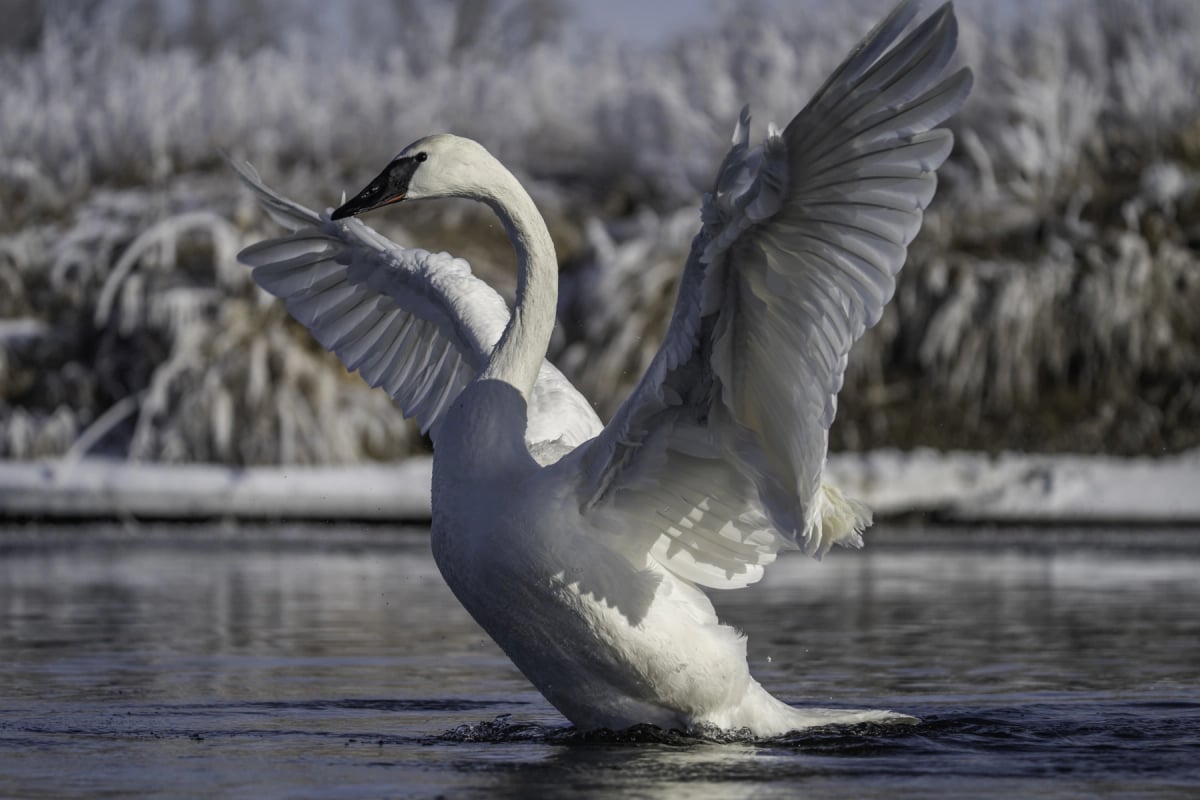
The Trumpeter Swan is the largest native waterfowl in North America, with a body stretching up to 1.5 meters and a wingspan that can reach 3 meters. Adults are entirely white, with a solid black bill and a booming call that carries across open water like a trumpet. The species was pushed to the edge of extinction in the early 1900s by overhunting for feathers and meat, with fewer than 100 birds surviving in the contiguous United States. Decades of protection, reintroduction programs, and wetland conservation brought the population back from the brink. Today, roughly 80,000 mature individuals live across Canada and the northern United States. They feed on aquatic plants, roots, and tubers in shallow lakes and wetlands, and pairs bond for life, returning each year to the same nesting sites.
Largest waterfowl
The Trumpeter Swan holds the title of largest native waterfowl in North America, and the numbers back that up. Adults typically weigh between 10 and 13 kilograms, though large males can tip the scales past 17 kilograms. The body can stretch to around 1.5 meters from bill to tail, and the wingspan reaches up to 3 meters across. That combination of length and weight makes these birds among the heaviest flying birds on the continent. The plumage of adults is entirely white, and the bill is solid black, which helps tell them apart from the Tundra Swan, a close relative with a small yellow patch near the eye. Young birds, called cygnets, are born with gray plumage that gradually fades to white over their first two years.
Habitat
Trumpeter Swans are closely tied to wetland environments throughout their lives. For breeding, they seek out shallow lakes, ponds, and marshes with abundant growth of aquatic plants, preferring areas where the water is calm and the shoreline offers thick vegetation for nesting. These habitats are found across a broad stretch of western Canada, Alaska, and the northern United States, including parts of the Pacific Northwest and the Great Plains. When temperatures drop and northern wetlands freeze over in autumn, the birds move to areas where open water remains, such as rivers kept ice free by currents, coastal estuaries, and managed wetland reserves. In states like Washington and Oregon, wintering flocks gather in agricultural fields and flooded meadows alongside rivers, taking advantage of whatever food and open ground the season provides.
Diet
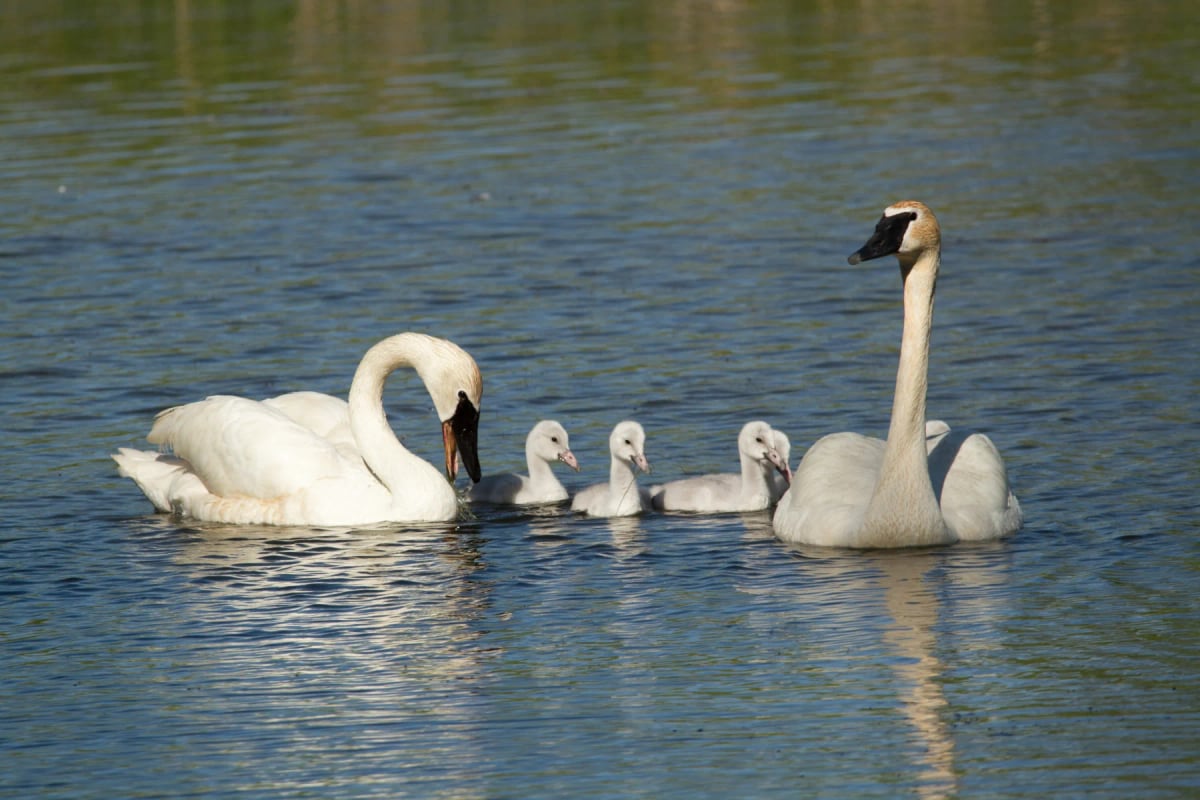
Food for the Trumpeter Swan comes almost entirely from plants. In the water, they feed by dipping their long necks below the surface to pull up aquatic vegetation, including the roots, stems, and tubers of plants such as pondweeds, bulrushes, and water milfoil. Their reach underwater is impressive, and they can access food in depths that most other waterfowl cannot. On land and in shallow wet areas, they graze on grasses, sedges, and the green shoots of various plants. During winter, some populations shift toward agricultural fields, where they feed on leftover grain and the roots of crops such as potatoes and corn. Young cygnets rely on insects and small invertebrates in their earliest weeks, which provides the protein they need to grow quickly before switching to a diet based on plants.
Behavior
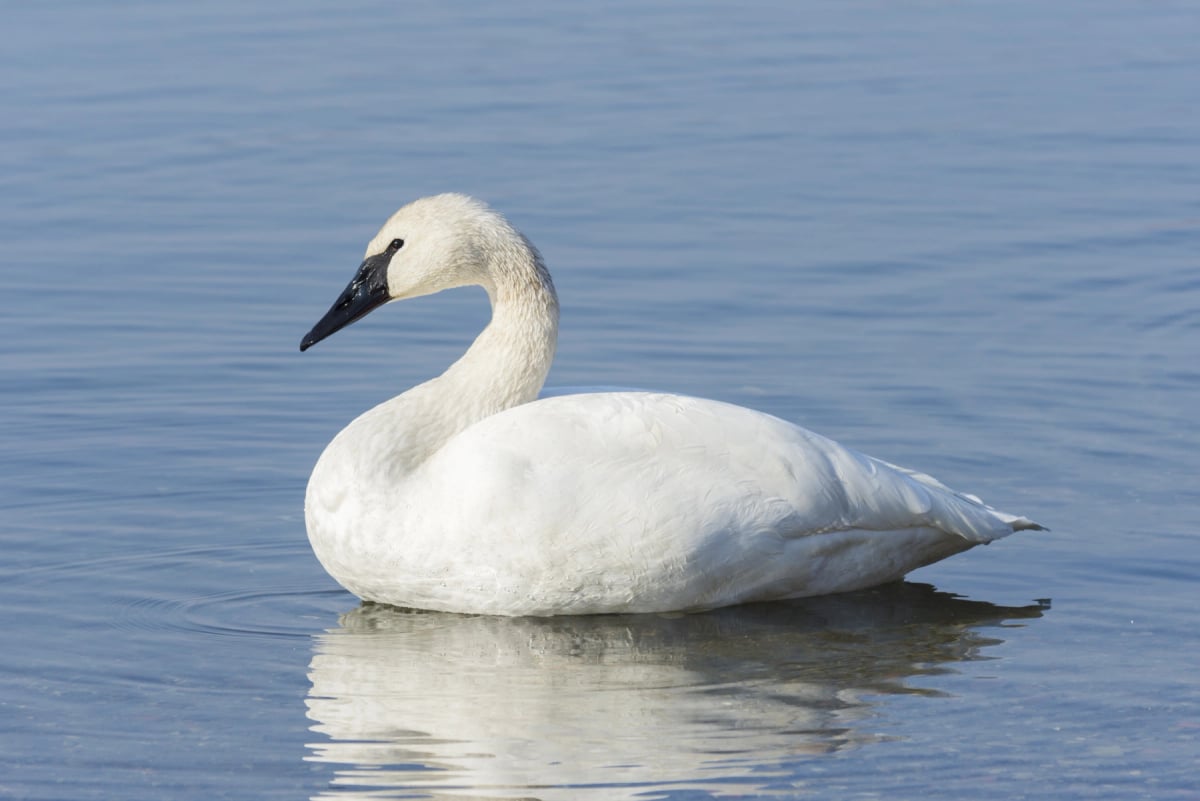
Pair bonds in Trumpeter Swans are among the strongest of any bird species. Males and females typically choose a mate between the ages of two and four years, and most pairs stay together for life, reuniting at the same nesting territory each spring. Nests are built on mats of vegetation near the water's edge, on muskrat lodges, or on small islands, and the same site is often reused year after year. The call of this species is one of its most distinctive features. A deep, resonant honk carries far across open water and is used to communicate between mates, warn off rivals, and keep family groups together during migration. In winter, swans gather in loose flocks, and younger birds without mates tend to form their own groups, separate from the breeding pairs traveling with their young.
Conservation success
Few wildlife recoveries in North America are as striking as that of the Trumpeter Swan. By the early twentieth century, heavy hunting for feathers and meat had reduced the population in the contiguous United States to fewer than 100 individuals. The species was considered on the verge of disappearing entirely. Protection under the Migratory Bird Treaty Act of 1918 gave the remaining birds a chance to recover, and dedicated reintroduction programs began moving swans into parts of their former range across the Midwest and the East Coast from the 1960s onward. Wetland conservation efforts supported that recovery by restoring the shallow water habitats the birds depend on. Today, the global population stands at roughly 80,000 mature individuals, and the IUCN lists the species as Least Concern. It remains one of the clearest examples of what sustained conservation effort can achieve.
Where it is found
The Trumpeter Swan can be found in places such as:
Researched and written by Juan Pablo. Sources: IUCN Red List, scientific literature and regional field guides. Last updated: .
Technical factsheet





Frequently Asked Questions
How long do Trumpeter Swans live?
Trumpeter Swans are long-lived birds. In the wild, they commonly reach 20 to 25 years of age, and some individuals have been recorded living past 30 years in captivity. Their survival over the long term depends heavily on the availability of clean wetlands and freedom from disturbance, especially during the nesting season. Strong pair bonds and loyalty to the same territory each year also seem to contribute to their overall health and longevity.
Are Trumpeter Swans aggressive?
They can be, especially when defending a nest or cygnets. Males in particular will charge at animals or people that get too close, using their large wings and body to push back a threat. Outside of breeding season, they are generally calm and tend to avoid conflict. Most aggression is directed at other swans competing for territory or at predators such as foxes or coyotes that wander too close to a nesting site.
Where do Trumpeter Swans migrate to in winter?
When northern wetlands freeze over, Trumpeter Swans move south to areas where open water remains through the colder months. Key wintering areas include coastal estuaries and river valleys in the Pacific Northwest, as well as parts of the Great Plains and the Mississippi River corridor. Some populations in milder climates, such as coastal British Columbia, stay close to their breeding grounds year round rather than making long seasonal journeys.
How many eggs do Trumpeter Swans lay?
A typical clutch contains between three and nine eggs, with five being a common number. The female does most of the incubating, which lasts around 32 to 37 days. Once hatched, the cygnets can swim within a day or two, though both parents watch over them closely for several months. Families usually stay together through the first winter, with the young birds gradually becoming independent by their second year of life.
Why were Trumpeter Swans almost extinct?
By the early 1900s, decades of intensive hunting had pushed the species to the edge of disappearing entirely. Their feathers were in demand for hats, powder puffs, and quill pens, and their meat was also prized. Fewer than 100 birds survived in the contiguous United States at the population's lowest point. Legal protection beginning in 1918, followed by active reintroduction programs and wetland conservation, allowed the population to recover to around 80,000 individuals today.
What is the difference between a Trumpeter Swan and a Tundra Swan?
The two species look very similar, but there are reliable ways to tell them apart. The Tundra Swan is noticeably smaller and usually has a small yellow patch at the base of its bill, near the eye. The Trumpeter Swan has a fully black bill with no yellow. Their calls also differ clearly. The Trumpeter produces a deep, low honk, while the Tundra Swan has a higher and more musical sound. Range and habitat overlap in winter, making the bill the easiest field mark to check.
What are the main threats to Trumpeter Swans today?
Despite their strong recovery, Trumpeter Swans still face several pressures. Lead poisoning from accidentally swallowing spent fishing weights or old shotgun pellets in wetland sediment is a serious concern. Collisions with power lines are another documented cause of death, particularly for young birds. Habitat loss through the draining of wetlands for agriculture or development also limits the areas available for breeding and feeding. Climate change is an emerging concern, as shifting weather patterns can affect the timing and quality of their wetland habitats.