Pronghorn
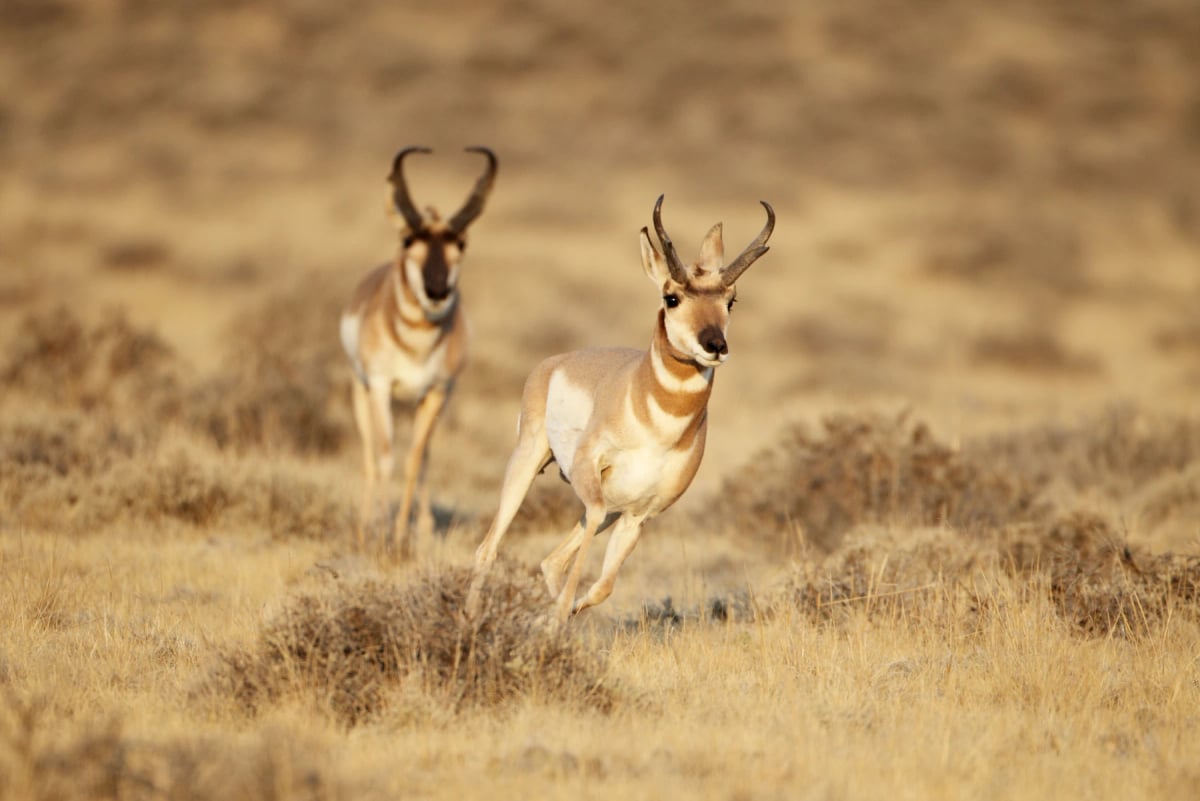
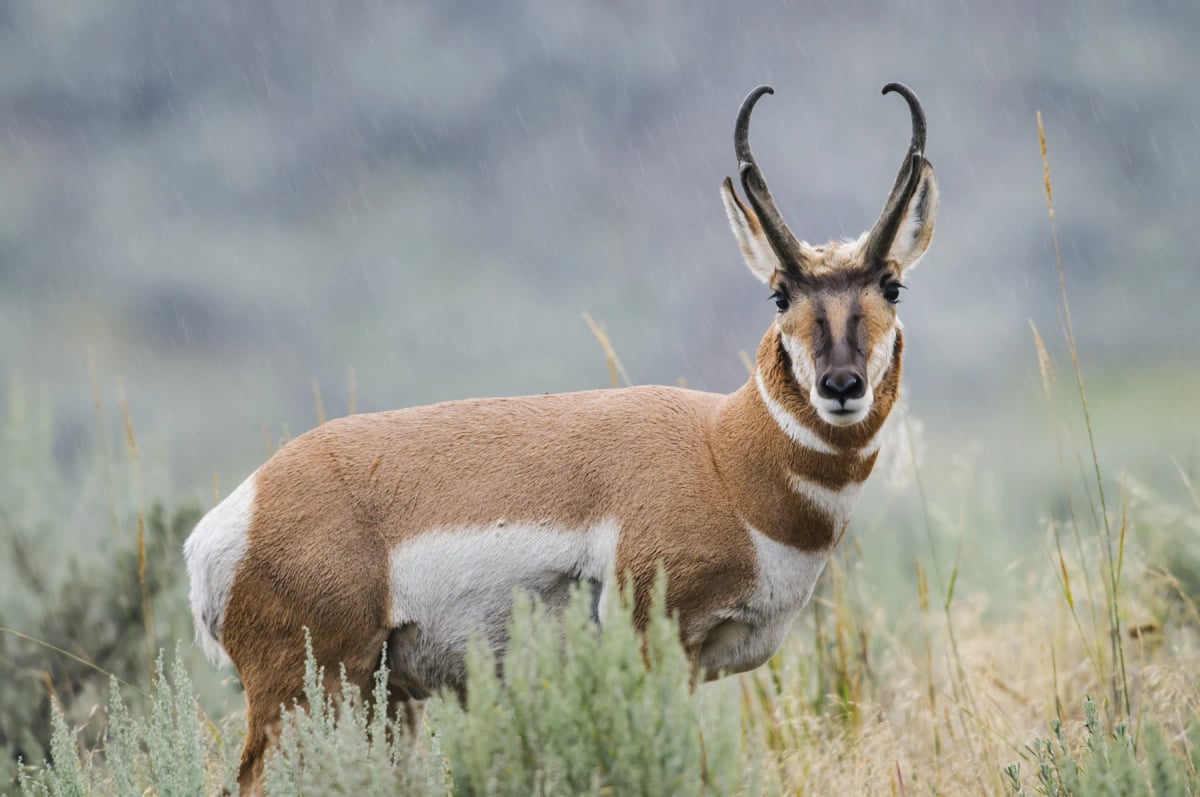
The pronghorn is North America's most extraordinary runner and the only living member of a family that dates back millions of years. It can reach 88 km/h (55 mph) and, unlike the cheetah, it sustains that pace over long distances thanks to an oversized windpipe, large lungs, and a heart built for endurance. Both males and females grow horns, a trait shared by no other animal in the world. Its tawny coat contrasts sharply with the bright white patches on its rump and sides, which it flares as a warning signal to other pronghorns. Across western North America it inhabits open grasslands, sagebrush flats, and desert shrublands. In winter, pronghorns gather in herds, while males establish and defend breeding territories each autumn. They follow ancient migration routes that can stretch hundreds of kilometres across the landscape.
Habitat and range
Pronghorns are creatures of wide open spaces. They thrive across the grasslands, sagebrush flats, and desert shrublands of western North America, ranging from the southern plains of Canada through most of the western United States and into the arid plateaus of northern Mexico. States such as Wyoming, Montana, and Nevada hold some of the largest populations. Pronghorns strongly prefer terrain with good visibility in every direction, which helps them spot predators from a great distance. They generally avoid dense forests and areas broken up by tall vegetation. At higher elevations, some populations move to lower ground in winter to escape deep snow that would otherwise block access to food. Their distribution closely follows the availability of low shrubs and grasses year round.
Speed and endurance
Few animals on Earth can match the pronghorn when it comes to raw speed combined with the ability to keep going. It can reach 88 km/h (55 mph) and hold speeds above 56 km/h for several kilometres without slowing down. This remarkable endurance comes from a set of physical traits that work together: an oversized windpipe, lungs that are several times larger than expected for an animal of its size, and a heart built for sustained effort. Its lightweight legs and cushioned hooves also reduce the energy cost of each stride. Biologists believe this extraordinary capacity evolved alongside fast predators that are now extinct, such as the American cheetah. Today no predator in North America can keep pace with a pronghorn running at full speed across open ground.
Diet
Pronghorns are browsers and grazers, and what they eat shifts with the seasons. Sagebrush makes up a large part of their diet through the winter months, as it stays accessible even when snow covers other plants. In spring and summer, they shift toward grasses, forbs, and flowering plants that offer higher nutritional value. In drier desert regions, cacti and other succulent plants also provide both food and moisture. Pronghorns are selective feeders, choosing the most nutritious parts of a plant rather than consuming it whole. Because they do not have upper front teeth, they tear vegetation by pressing it between their lower teeth and a tough pad on their upper jaw. They obtain most of their water needs from the plants they eat, though they will drink from streams and water sources when available.
Behavior
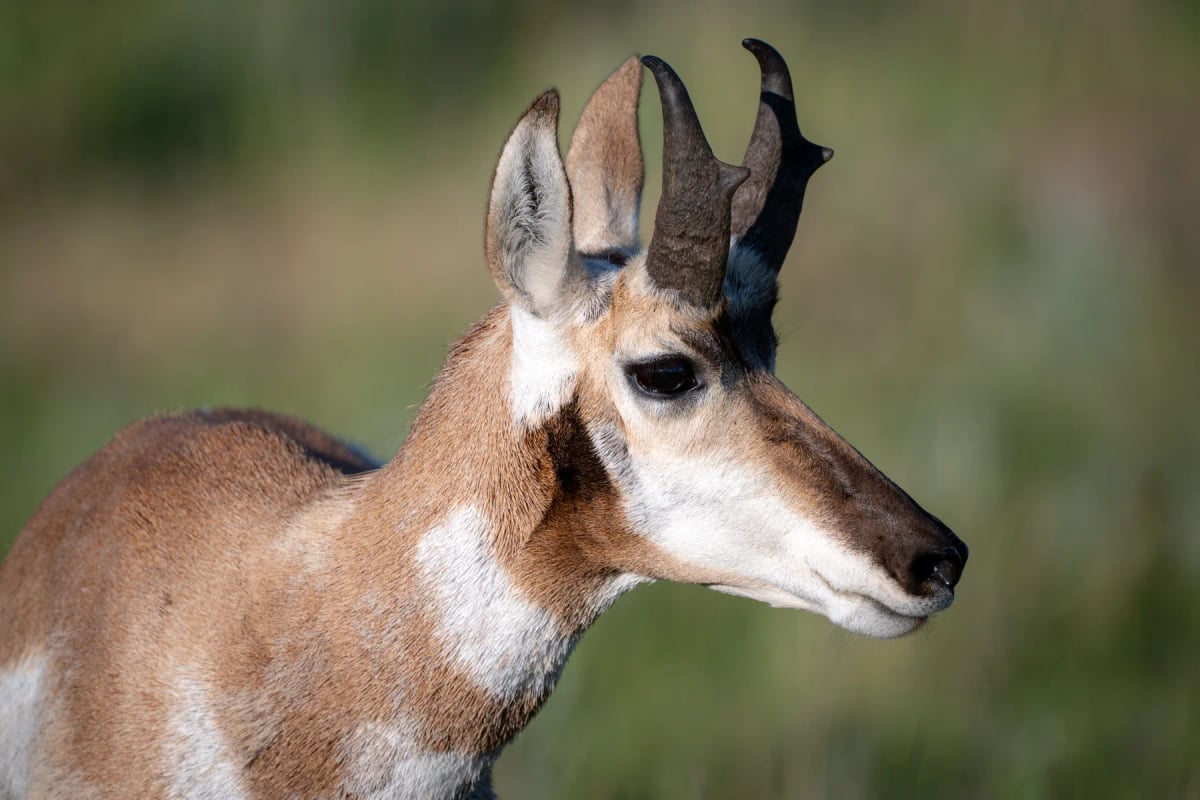
Active mainly during daylight hours, pronghorns are alert and highly social animals. Outside of the breeding season, they gather in herds that can number in the dozens or even hundreds, moving together across the landscape in search of food. Each autumn, males compete for breeding territories, using vocalizations, scent marking, and physical displays to challenge rivals. Serious fights do occur but are less common than posturing and chasing. One of the pronghorn's most recognizable behaviors is the flaring of the white hairs on its rump when alarmed, a visual signal that alerts nearby animals to potential danger. Pronghorns also follow migration routes that have been used for generations, some stretching over 160 kilometres. These corridors are among the longest land migrations of any mammal in the continental United States.
Conservation
The story of the pronghorn is one of dramatic decline followed by a genuine recovery. By the early 1900s, unregulated hunting and habitat loss had reduced a population once estimated at 35 million animals to fewer than 15,000. Protective hunting laws, wildlife management programs, and habitat conservation efforts brought numbers back substantially, and today the population is estimated at roughly 700,000 individuals across North America. The IUCN currently lists the species as Least Concern. However, the pronghorn still faces real challenges. Fences built across its range block ancient migration routes, and habitat fragmentation remains a serious concern in many areas. Some regional populations, such as the Sonoran pronghorn in the southwestern United States and northern Mexico, are listed separately as endangered. Ongoing conservation work focuses on removing barriers, restoring corridors, and monitoring isolated herds.
Where it is found
The Pronghorn can be found in places such as:
Researched and written by Juan Pablo. Sources: IUCN Red List, scientific literature and regional field guides. Last updated: .
Technical factsheet


Frequently Asked Questions
How fast can a pronghorn run?
The pronghorn is the fastest land animal in the Western Hemisphere, reaching speeds of 88 km/h (55 mph). What makes it truly special is its endurance. Unlike a cheetah, which tires quickly, a pronghorn can hold speeds above 56 km/h for several kilometres. This stamina comes from oversized lungs, a large windpipe, and a heart built for sustained effort rather than short bursts.
Where do pronghorns live?
Pronghorns live across the open grasslands, sagebrush flats, and desert shrublands of western North America. Their range stretches from the southern plains of Canada through much of the western United States and into the arid plateaus of northern Mexico. They strongly prefer wide open terrain where they can spot predators from a distance, and they avoid dense forests or areas with tall vegetation that blocks their line of sight.
What do pronghorns eat?
Pronghorns eat a mix of shrubs, grasses, and flowering plants, adjusting their diet with the seasons. In winter, sagebrush becomes a key food source because it stays exposed even under snow. In spring and summer, they favor grasses and forbs that are rich in nutrients. In desert areas, they also eat cacti and other succulents for both food and moisture. They are selective feeders, always going for the most nutritious parts of a plant.
Do both male and female pronghorns have horns?
Yes, and that makes the pronghorn unique. It is the only animal in the world where both sexes grow true horns with a branching point. Males have larger horns that can reach about 25 cm (10 inches) or more, while females grow much shorter ones, sometimes barely visible. Unlike antlers, which are shed each year, pronghorn horns have a bony core that stays, but the outer sheath is shed and regrown annually.
Why do pronghorns flare the white patch on their rump?
That white patch is a communication tool. When a pronghorn senses danger, it raises the long white hairs on its rump, creating a bright flash that is visible from a great distance across open terrain. This signals other pronghorns nearby to stay alert or flee. The animal also releases a scent at the same time, adding a second layer to the warning. It is a fast and effective way to alert the whole herd without making a sound.
Are pronghorns endangered?
The species as a whole is listed as Least Concern by the IUCN, with a population of around 700,000 individuals today. That is a remarkable recovery from fewer than 15,000 animals in the early 1900s. However, some regional populations face serious trouble. The Sonoran pronghorn, found in the southwestern United States and northern Mexico, is listed as endangered. Fences that block migration routes and habitat fragmentation remain real threats across much of their range.
How long do pronghorns live?
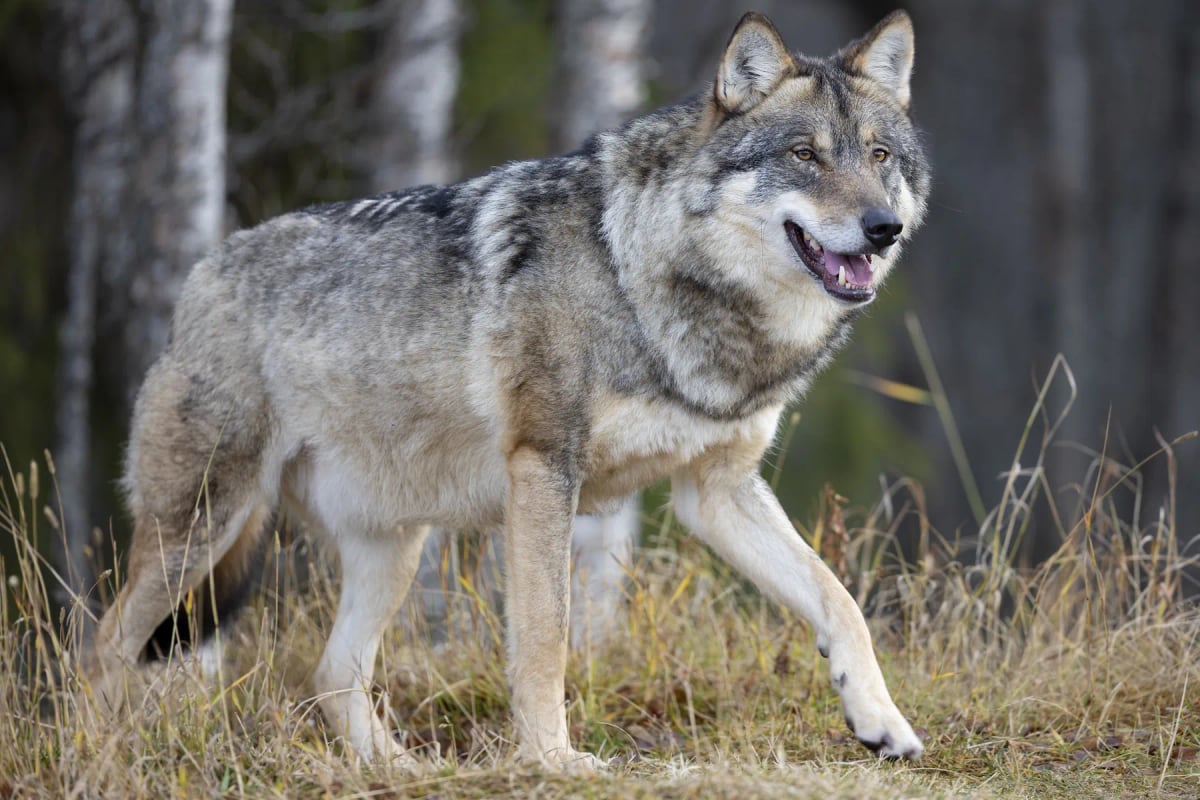
In the wild, pronghorns typically live between 7 and 10 years, though some individuals reach up to 12 years. Females tend to live slightly longer than males. Predators such as coyotes, wolves, and mountain lions are a constant pressure, especially on fawns during their first weeks of life. In captivity, pronghorns can live longer due to the absence of predation and reliable access to food, but they are not commonly kept in zoos.