Golden Jackal
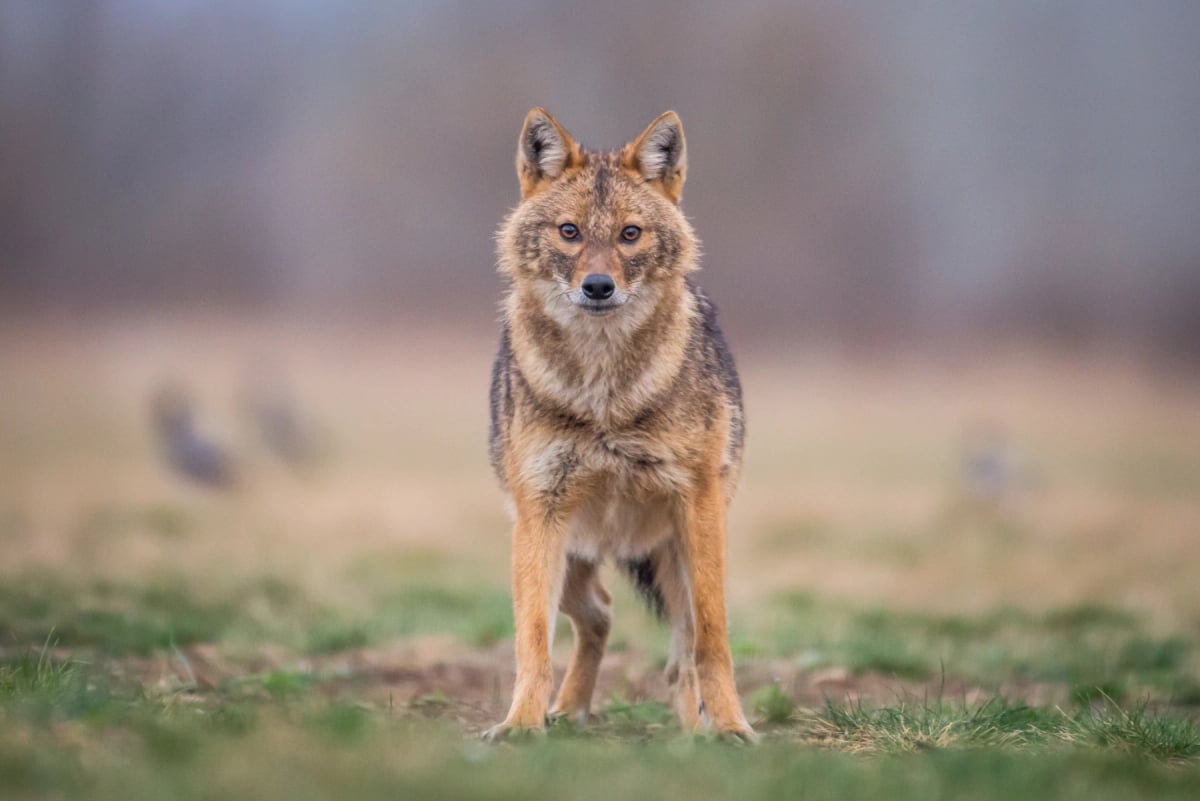
The golden jackal (Canis aureus) is a canid of medium size with a tawny, golden coat that ranges from southeastern Europe across the Middle East to South Asia. One of the most adaptable wild dogs in the world, it thrives in a remarkable variety of settings: open grasslands, wetland margins, agricultural fields, scrubland and the edges of forests. Its diet is equally flexible. It takes small mammals, birds, reptiles, insects, fruit and carrion, and it is quick to make use of food near villages and towns. Golden jackals live mainly in bonded pairs or small family groups, with older offspring often helping to raise the next litter. They are most active at dusk and through the night, and their sharp, wailing howls are one of the most recognizable sounds of the rural landscapes they call home.
Habitat and distribution
Few wild canids cover as much geographic ground as the golden jackal. Its range stretches from southeastern Europe, where populations have expanded into countries like Italy, Austria, and Germany in recent decades, all the way through the Middle East and into South and Southeast Asia. Within that vast territory, it occupies an impressive variety of environments. Wetland edges, open grasslands, scrubland, agricultural fields, and the fringes of forests all suit it well. It tends to avoid dense forest interiors and very high elevations, but otherwise shows a striking ability to settle wherever food and cover are available. In some areas it lives comfortably on the outskirts of villages and towns, making it one of the most geographically widespread wild dogs on Earth.
Diet
The golden jackal eats almost anything it can find, and that flexibility is one of its greatest strengths. Small mammals such as rodents and hares make up a large share of its diet, but it also takes birds, lizards, snakes, frogs, insects, and even crabs near wetlands. Fruit, berries, and other plant matter round out the menu during seasons when animal prey is harder to come by. Carrion is eaten readily, and jackals will follow larger predators to scavenge leftovers from kills. Near farms and villages, they raid fruit orchards and rubbish, which sometimes brings them into conflict with people. This broad, opportunistic approach to feeding means the golden jackal rarely goes without a meal, regardless of the season or landscape it inhabits.
Behavior
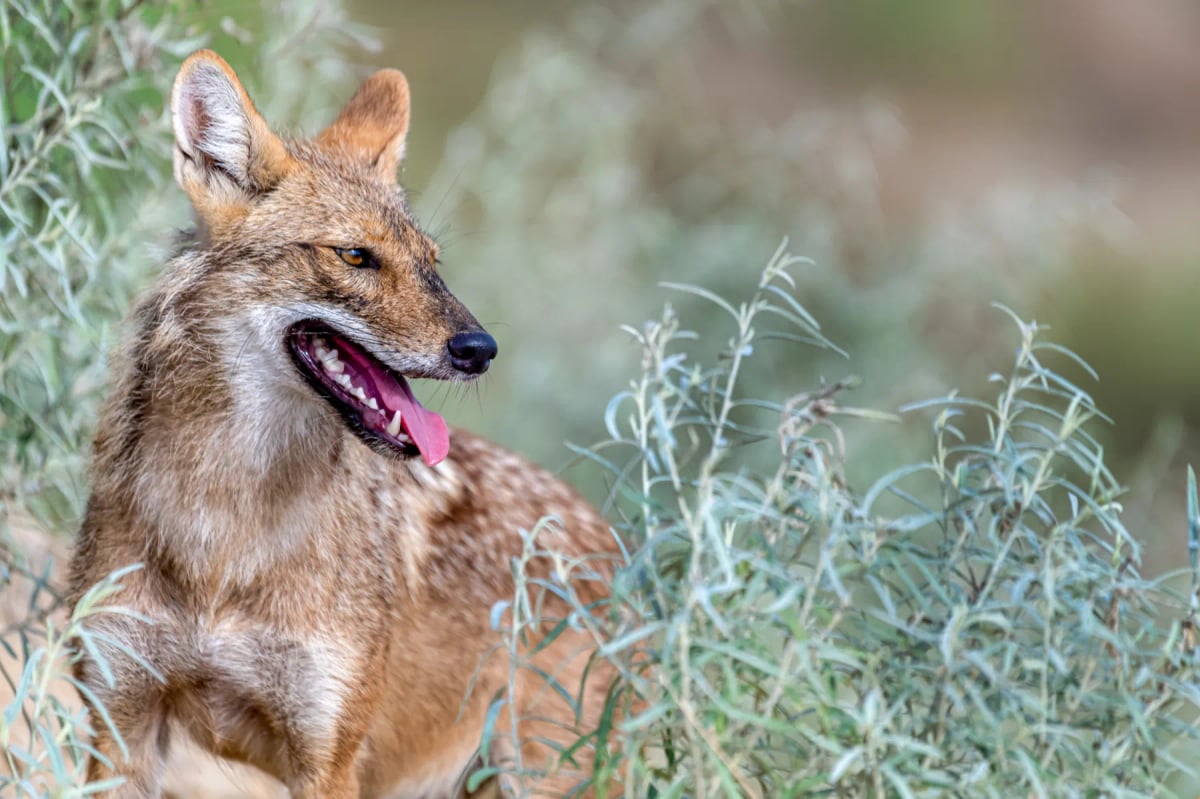
Golden jackals are most active from dusk through the night, though they can be seen moving about during the day in quieter areas. They typically live in bonded pairs that hold a territory together, and family bonds are genuinely strong. Older offspring from a previous litter often stay on to help their parents care for the next set of pups, a cooperative arrangement that improves survival rates for the young. The pair defends its territory against rival jackals through scent marking and direct confrontation. When prey is plentiful, a mated pair may hunt together to take down animals larger than either could manage alone. Outside the breeding season, younger individuals sometimes gather in loose groups around rich food sources such as carcasses or harvested fields.
Communication
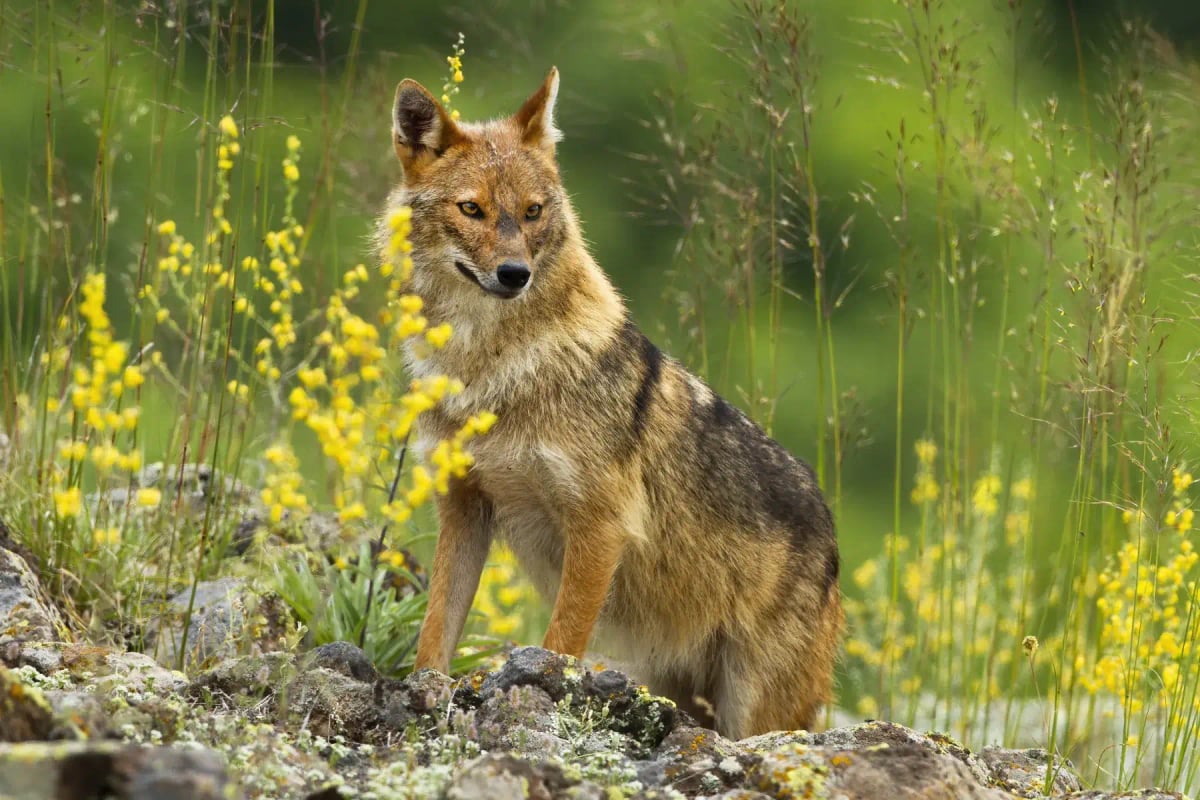
Vocal communication plays a central role in jackal society. The most distinctive call is a rising, wailing howl, often joined by other family members within seconds to create a chorus that carries far across open countryside. These group howls advertise territory to neighboring packs and help scattered family members locate one another after a hunt. Calls peak around sunset and in the hours just after dark, which is why the jackal's voice is so strongly tied to the atmosphere of rural evenings across Asia and Europe. Beyond howling, jackals produce a range of shorter sounds including yelps, barks, and whines that carry specific social meanings within the family group. Scent marking with urine and gland secretions adds a layer of communication that works around the clock, even when the animals are silent.
Conservation
The IUCN currently lists the golden jackal as Least Concern, reflecting a species that is broadly stable and, in parts of Europe, actively expanding its range. This expansion is linked to reduced hunting pressure, land use changes, and the species' own adaptability. That said, the picture is not entirely positive everywhere. In some regions jackals are persecuted as pests because they prey on livestock or raid crops, and they can be killed in large numbers through poisoning campaigns aimed at other predators. Habitat loss and the decline of prey species put additional pressure on local populations in parts of Asia and the Middle East. Continued monitoring is important to ensure that regional declines do not go unnoticed beneath the generally healthy global status.
Where it is found
The Golden Jackal can be found in places such as:
Researched and written by Juan Pablo. Sources: IUCN Red List, scientific literature and regional field guides. Last updated: .
Technical factsheet

Frequently Asked Questions
What does the golden jackal eat?
Golden jackals are true opportunists. They eat small mammals, birds, lizards, frogs, insects, fruit, and carrion. Near farms, they raid orchards and rubbish bins. They will also trail larger predators to scavenge leftovers from kills. This willingness to eat almost anything is one of the main reasons the species does so well across such a wide range of landscapes and seasons.
Where does the golden jackal live?
The golden jackal has one of the widest ranges of any wild dog. It lives across southeastern Europe, the Middle East, and South and Southeast Asia, in countries from Italy and Greece all the way to India, Thailand, and Vietnam. It favors open grasslands, wetland edges, scrubland, and farmland, but adapts readily to life near villages and towns as long as food and cover are available.
Is the golden jackal dangerous to humans?
Golden jackals are naturally shy around people and attacks on humans are extremely rare. They are far more likely to run away than to stand their ground. However, like any wild animal, a cornered or sick individual can bite. They can also carry rabies in some regions, so it is always wise to keep a respectful distance and never try to feed or handle one.
Do golden jackals live alone or in groups?
Golden jackals usually live in bonded pairs that share and defend a territory together. What makes them special is that offspring from a previous litter often stay with their parents to help raise the next set of pups. This cooperative family system improves the survival of the young. Outside the breeding season, younger jackals sometimes gather in loose groups around large food sources like carcasses or freshly harvested fields.
Why are golden jackals expanding into Europe?
Golden jackals have been steadily moving into central and western Europe over recent decades, reaching countries like Austria, Italy, Germany, and the Netherlands. Reduced hunting pressure, changes in land use, and the recovery of prey populations have all helped. Their remarkable ability to adapt to new environments does the rest. Scientists consider this one of the most notable range expansions of any large carnivore in Europe in modern times.
What is the golden jackal's conservation status?
The IUCN lists the golden jackal as Least Concern, meaning the species as a whole is stable and not facing an immediate risk of extinction. In fact, populations are growing in parts of Europe. Even so, in some regions jackals are killed as pests through poisoning campaigns, and local populations in parts of Asia and the Middle East face pressure from habitat loss and declining prey. Regional monitoring remains important.
Why do golden jackals howl?
Howling is one of the golden jackal's most important tools for communication. A pair or family group will often howl together to announce their territory to neighboring jackals and to keep in contact after hunting separately. These chorus howls can carry far across open countryside. They are most common around sunset and in the first hours of darkness, which is why the jackal's call feels so tied to the atmosphere of rural evenings across Asia and Europe.