Grizzly Bear
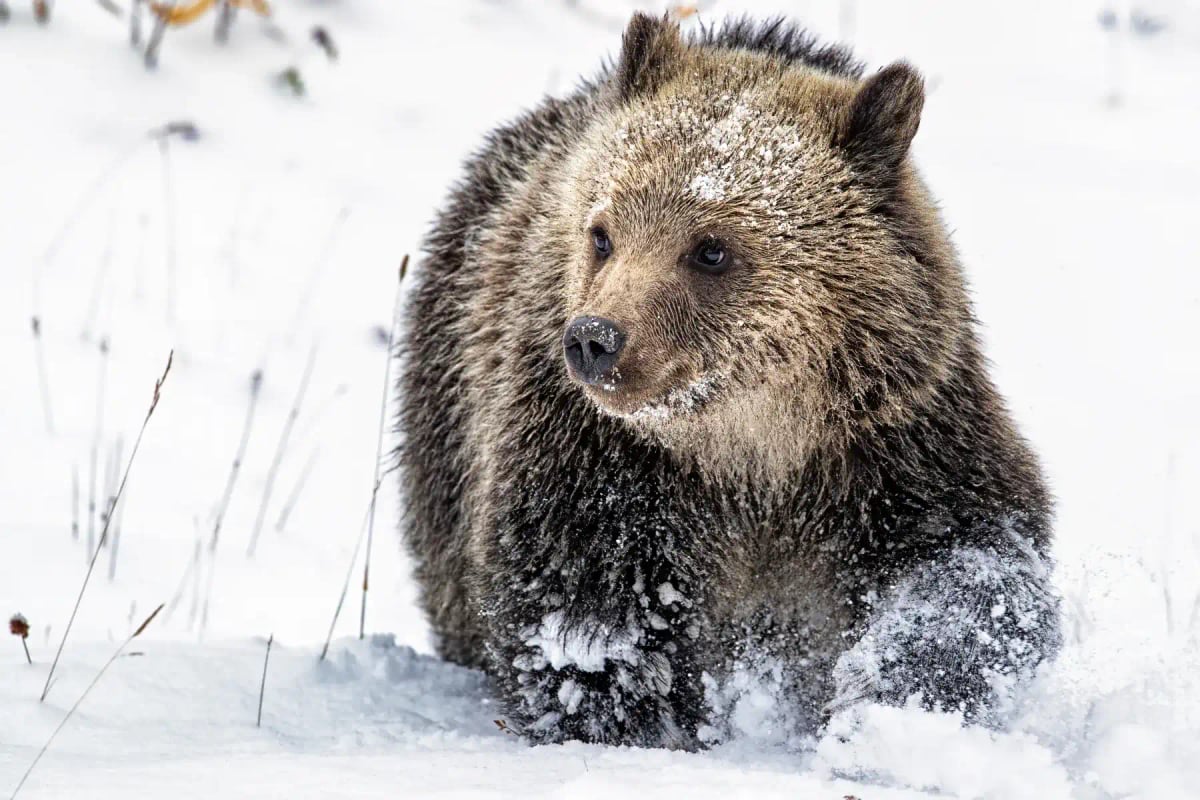
The grizzly bear (Ursus arctos horribilis) is a subspecies of the brown bear native to western Canada, Alaska, and scattered pockets of the northwestern United States. One of the largest land mammals in North America, it is built for power: a prominent hump of muscle sits above the shoulders, the face dips in a concave profile, and the front claws can reach lengths of up to 10 centimeters. Coat color ranges from dark brown to blond, and individual hairs are often tipped with silver or cream, giving the bear its grizzled look. Grizzlies are true omnivores, shifting their diet with the seasons: roots, grasses, and berries make up most meals, while salmon become critical in late summer and early autumn. Females raise cubs with intense devotion for two to three years. Habitat loss and conflict with people remain the main pressures on the species.
Appearance
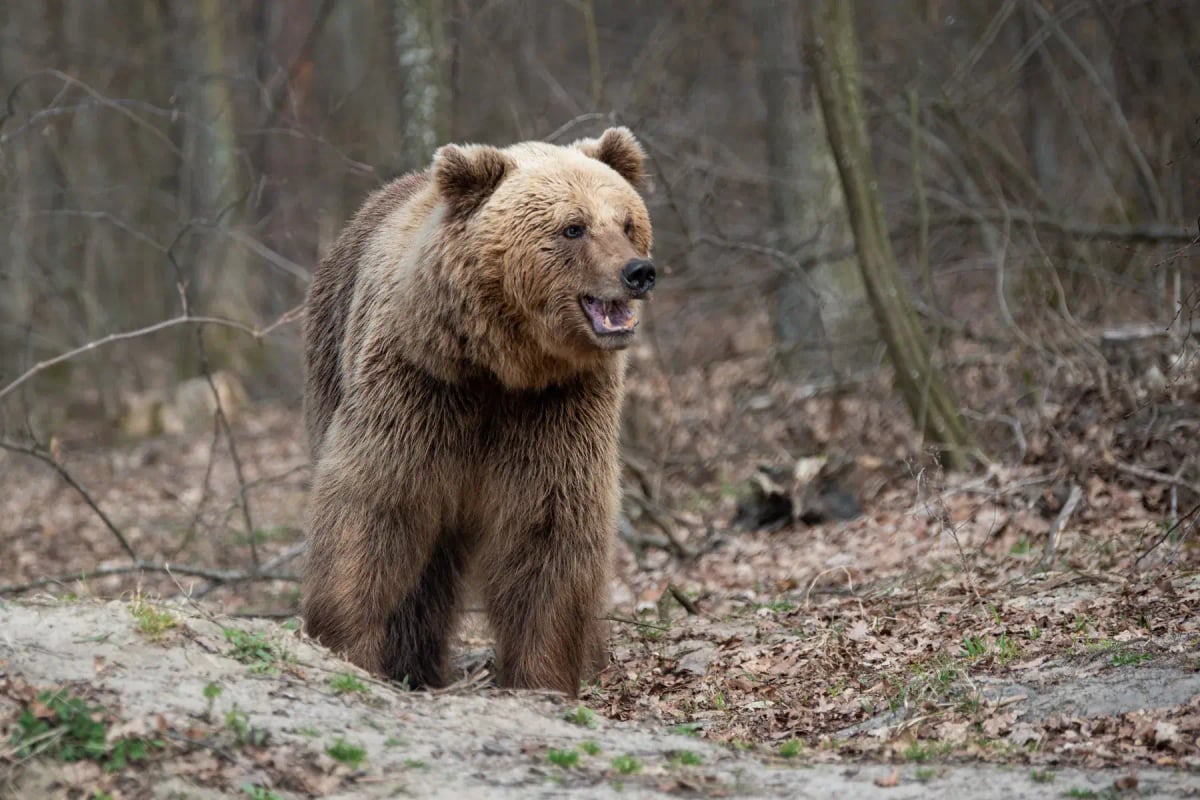
The most distinctive feature of a grizzly bear is the large hump of muscle that rises above the shoulders. This hump powers the front legs for digging, which the bear does constantly in search of food. The face has a noticeably dished profile, setting grizzlies apart from the straighter face of the American black bear. Fur color varies widely, from deep chocolate brown to pale blond, and many individual hairs are tipped with silver or cream, producing the grizzled appearance that gives the bear its name. Adult males typically weigh between 180 and 360 kilograms, though bears in coastal areas with access to salmon can grow considerably heavier. The front claws are long and only slightly curved, ideal for digging rather than climbing.
Diet
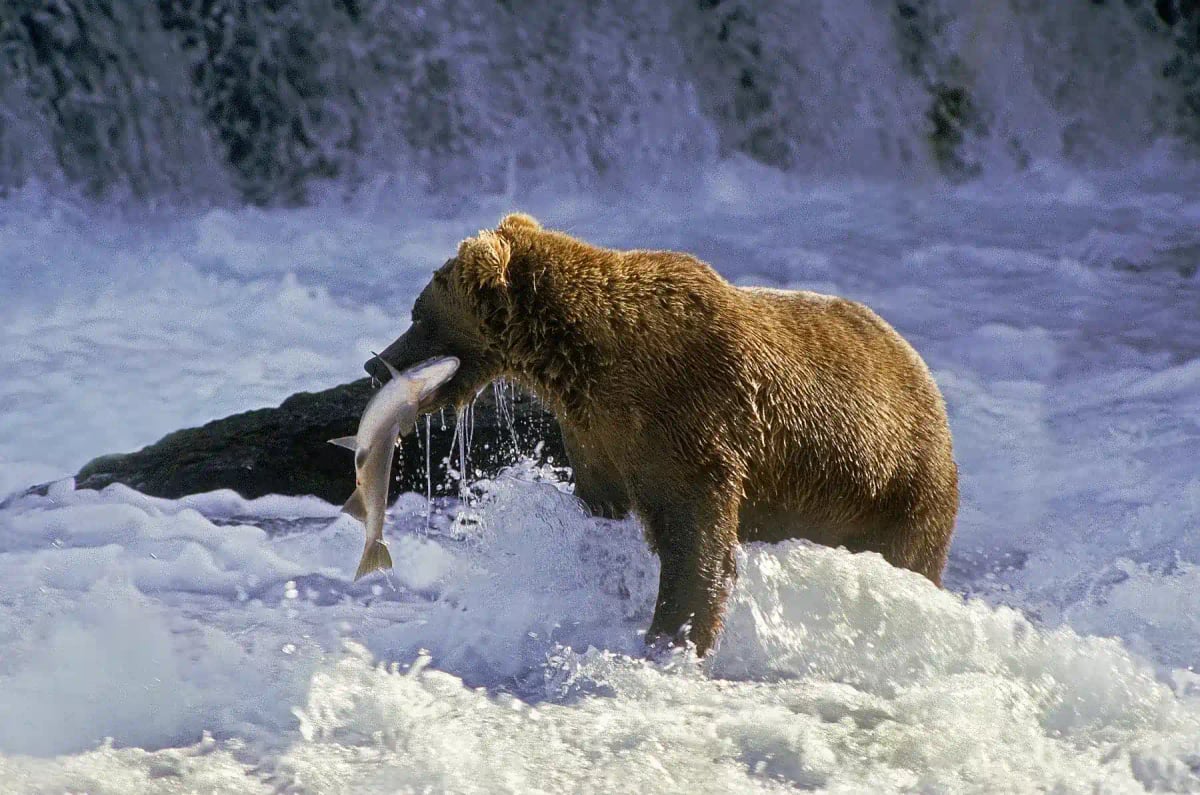
Few large animals match the grizzly bear's flexibility at the dinner table. Across the year, plant matter makes up the bulk of its calories: grasses, sedges, roots, tubers, and fruit, especially berries in late summer, are all consumed in large quantities. Insects such as army cutworm moths and colonial beetles round out the warmer months. When Pacific salmon run upstream to spawn, grizzlies gather at rivers to feast, sometimes consuming dozens of fish in a single day. This salmon season is critical because the fat gained during it fuels the bear through winter dormancy. Grizzlies will also feed on carrion and occasionally prey on young ungulates such as elk calves or moose calves, though large healthy prey is rarely targeted.
Behavior and hibernation
Grizzly bears are generally solitary outside of the breeding season and the bond between a mother and her cubs. They hold large home ranges and communicate through scent markings and scratch posts on trees. Although they tend to avoid people when given the chance, they will defend themselves, their cubs, or a food source with great force. From roughly October or November through March or April, grizzlies enter a state of winter dormancy in dens they dig into hillsides. During this period their heart rate and body temperature drop, but they do not eat, drink, or pass waste. Pregnant females give birth in the den, typically to two cubs, and nurse them through the coldest months entirely on stored fat. Cubs stay with their mother for two to three years.
Conservation
At the global level, the grizzly bear is assessed as Least Concern by the IUCN, with a world population estimated at around 55,000 individuals, the majority living in Canada and Alaska. The picture is more complicated in the contiguous United States, where grizzlies were once found across much of the West but now occupy a fraction of that range. There, populations in areas such as the Greater Yellowstone Ecosystem and the Northern Continental Divide are monitored closely and remain protected under the Endangered Species Act. Habitat loss from development, roads that fragment bear country, and conflicts with livestock producers and hunters are the main pressures the species faces. Conservation efforts focus on reducing the number of bears killed by people, which is the factor most likely to determine survival over the long term.
Where it is found
The Grizzly Bear can be found in places such as:
Researched and written by Juan Pablo. Sources: IUCN Red List, scientific literature and regional field guides. Last updated: .
Technical factsheet
Frequently Asked Questions
What do grizzly bears eat?
Grizzly bears eat almost anything available, which makes them highly adaptable. Most of their diet is plant based: grasses, roots, berries, and tubers. They also eat insects and carrion. In late summer and early autumn, Pacific salmon become their most important food source. A single bear can catch and eat dozens of fish in one day, packing on the fat needed to survive the winter months inside a den.
Where do grizzly bears live?
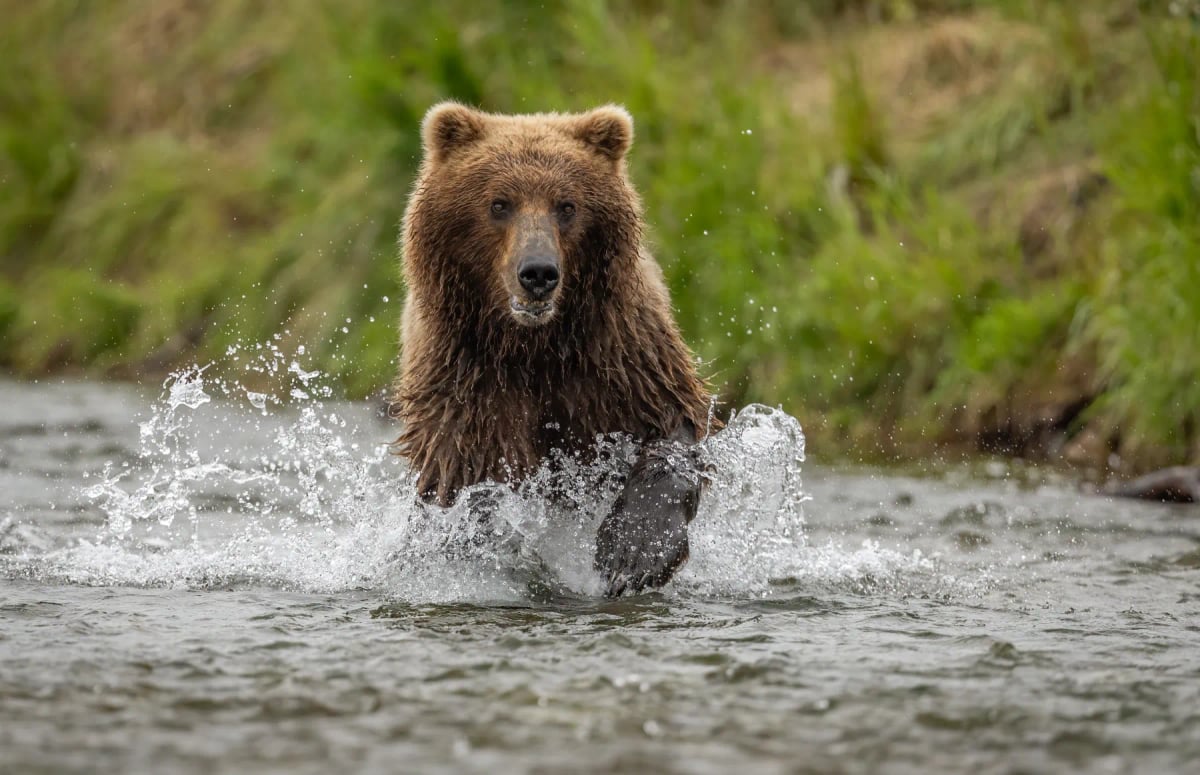
Grizzly bears are found across western Canada, throughout Alaska, and in a handful of areas in the northwestern United States, including the Greater Yellowstone Ecosystem and the Northern Continental Divide region. They thrive in a wide range of habitats: mountain forests, open meadows, river valleys, and coastal areas. They need large territories with access to varied food sources and minimal disturbance from human activity.
Are grizzly bears dangerous to humans?
Grizzly bears generally avoid people when they detect them early. Most encounters end without incident. However, a grizzly will defend itself, its cubs, or a food source with serious force if it feels threatened or surprised. Attacks on humans are rare but can be severe. Experts recommend making noise while hiking in bear country, carrying bear spray, and never approaching or feeding a wild bear under any circumstances.
Do grizzly bears really hibernate?
Not exactly. Grizzlies enter a state of winter dormancy that is deeper than sleep but different from true hibernation. From around October to April, they den up and stop eating, drinking, and producing waste. Their heart rate slows significantly, but their body temperature does not drop as dramatically as in animals like ground squirrels. Pregnant females give birth during this period and nurse their cubs entirely on stored body fat.
How fast can a grizzly bear run?
Despite their large build, grizzly bears can reach speeds of around 55 kilometers per hour over short distances. That is faster than most humans can sprint and fast enough to cover ground very quickly across open terrain. This speed is one reason wildlife experts strongly advise against running when you encounter a grizzly. Running can trigger a chase response in the bear, which is a situation you want to avoid.
How many grizzly bears are left in the world?
The global population of grizzly bears is estimated at around 55,000 individuals, most of them living in Canada and Alaska. The IUCN lists the species as Least Concern overall. The situation is more delicate in the contiguous United States, where grizzlies once roamed widely but now survive in a few isolated regions. Those populations are closely monitored and protected under federal law due to their small size.
How long do grizzly bears live?
In the wild, grizzly bears typically live between 20 and 25 years. Females tend to outlive males. In captivity, where they face no predators and receive regular food and veterinary care, some individuals have reached their early 30s. The survival of young cubs depends heavily on their mother, which is why she keeps them close for two to three years before they go off on their own.