Maned Wolf
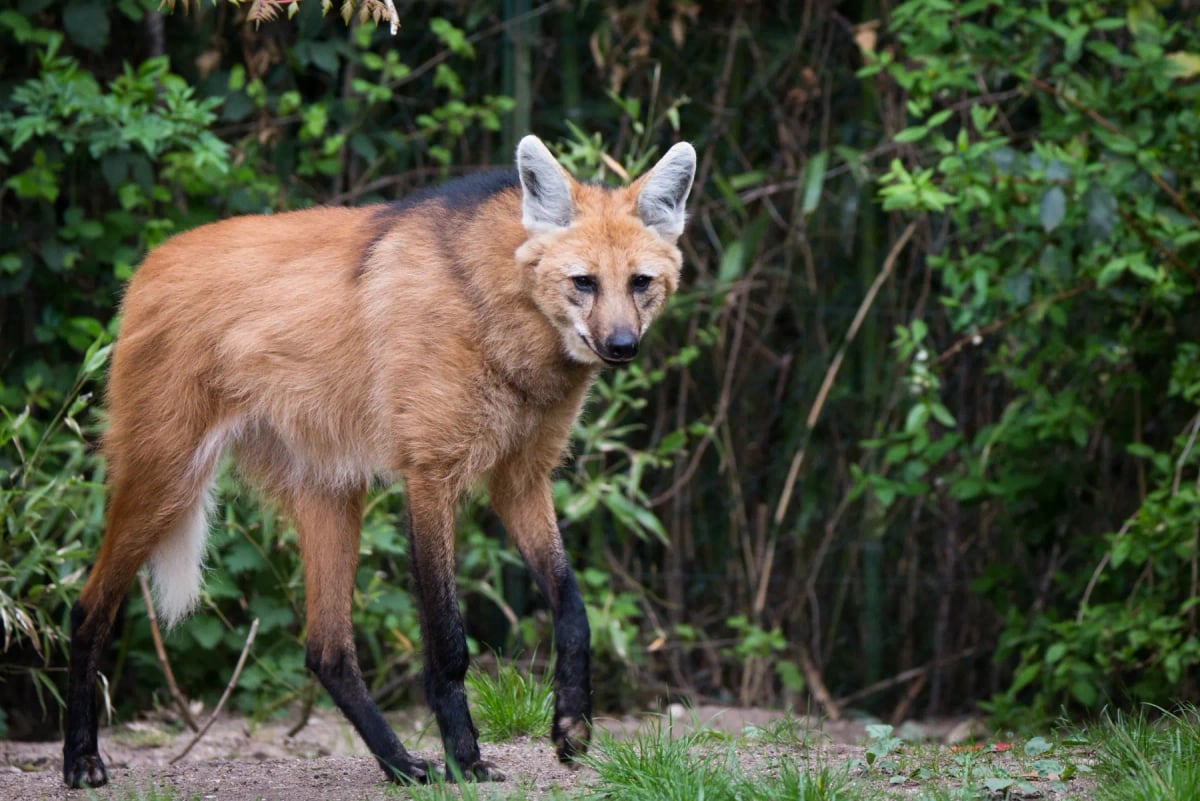
The maned wolf is the largest canid in South America, instantly recognizable by its long black legs, reddish orange coat, and the dark mane of fur that rises along its neck and shoulders. It roams the open grasslands, savannas, and scrublands of central Brazil, Bolivia, Paraguay, and northern Argentina. Despite its name and appearance, it is neither a wolf nor a fox but belongs to a genus all its own, Chrysocyon. It is active mainly at dawn and dusk and travels alone across territories that can stretch up to 30 square kilometers. Its diet is unusually varied for a canid, with roughly half of what it eats coming from plant matter. The fruit known as the wolf apple is a staple food and also plays a role in seed dispersal across the savanna. Habitat loss from agriculture and cattle ranching, combined with road collisions and fires, has placed this species on the IUCN Near Threatened list.
Habitat and distribution
Cerrado is the word most closely associated with the maned wolf. This vast tropical savanna of central Brazil is the heart of its range, a mosaic of open grasslands, scattered trees, and gallery forests that lines the rivers. The species also occurs in eastern Bolivia, across much of Paraguay, and in the northern provinces of Argentina. Smaller populations have been recorded in Peru and Uruguay at the edges of its range. It tends to avoid dense forest and prefers areas where visibility is good and prey is easy to locate. Elevations below 1,500 meters suit it well. As agricultural expansion converts cerrado into farmland and pasture, suitable habitat has become increasingly fragmented, pushing maned wolves into closer contact with human settlements and roads.
Diet
Few large carnivores rely on fruit as heavily as the maned wolf does. Studies consistently show that plant matter makes up roughly half of its diet, with the wolf apple, known in Portuguese as lobeira, being the single most important food source throughout the year. This tomato relative grows abundantly across the cerrado and is eaten in large quantities. Beyond fruit, the maned wolf hunts small mammals such as armadillos, rodents, and rabbits, as well as birds, reptiles, and insects. It uses its large ears to detect prey moving beneath the grass, then leaps to pin it down. Seasonal shifts in food availability mean that the balance between animal and plant foods changes across the year, but fruit never disappears entirely from its diet.
Behavior
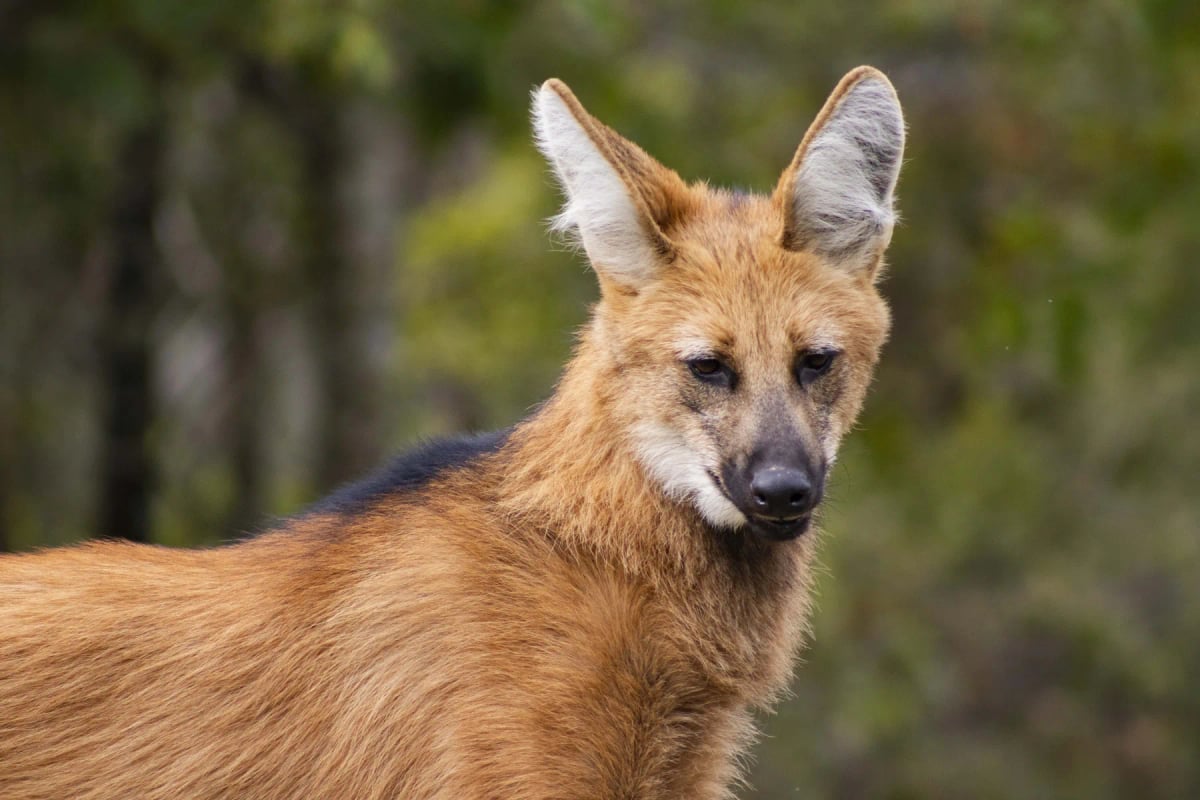
Dawn and dusk are when the maned wolf comes alive. It spends the hottest hours of the day resting in dense vegetation and begins moving as the light fades, covering several kilometers each night in search of food. Adults live alone for most of the year, with mated pairs sharing an overlapping territory of up to 30 square kilometers but rarely traveling together outside the breeding season. They communicate through a loud, hoarse bark called a roar bark, which carries across open terrain and helps individuals stay aware of one another. Scent marking is equally important, with urine deposits placed at regular intervals along regular paths. Captive studies show that pairs remain bonded over multiple years, yet in the wild each animal functions largely as an independent unit.
Ecological role
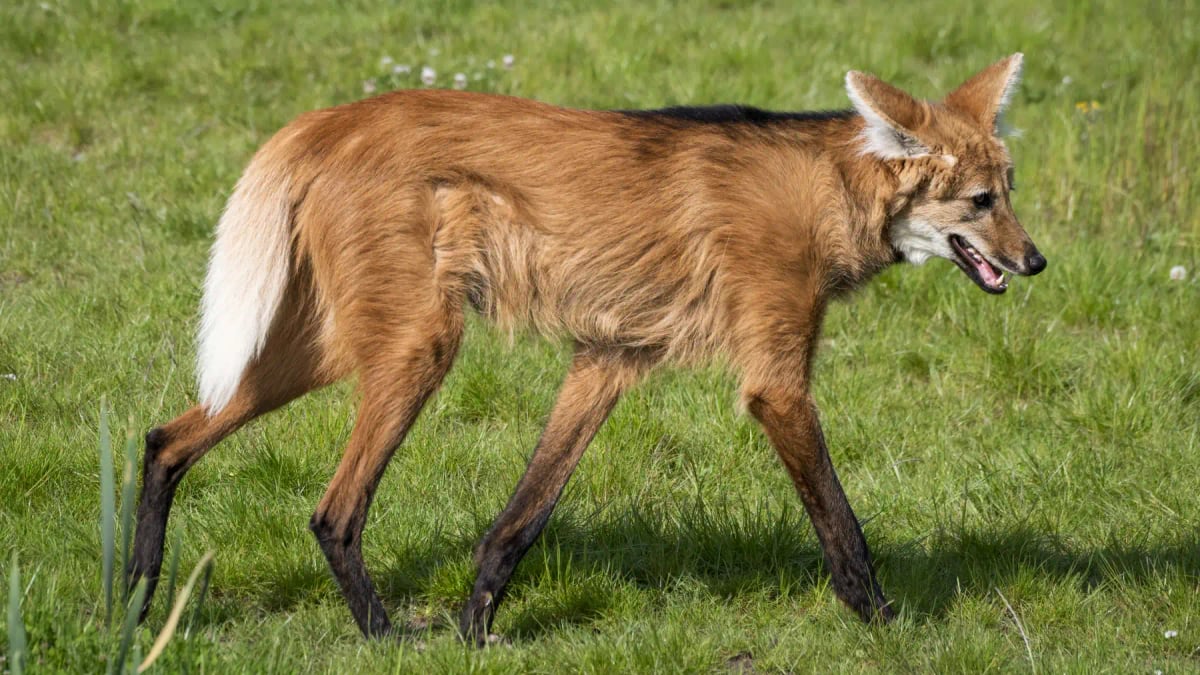
Seed dispersal is where the maned wolf makes its greatest contribution to the cerrado. After eating wolf apples and other fruits, it deposits the seeds across wide areas through its droppings, often far from the parent plant. Research has shown that seeds passed through the digestive system of a maned wolf germinate at higher rates than those that fall directly to the ground, suggesting a close relationship built over a long period between this animal and its food plants. Beyond dispersal, the maned wolf helps regulate populations of small rodents and insects through predation. Because it occupies a broad niche, sitting somewhere between apex predator and frugivore, its presence supports the structure of an entire ecosystem. Losing it would have ripple effects that are difficult to predict.
Conservation
Classified as Near Threatened on the IUCN Red List, the maned wolf faces a combination of pressures that continue to grow. The cerrado is one of the most threatened biomes on Earth, with more than half of its original extent already converted to agriculture and pasture for cattle. Roads that cut through remaining habitat claim many lives each year through vehicle collisions. Wildfires, both natural and set deliberately to clear land, destroy food sources and force animals into unfamiliar terrain. Domestic dogs carry diseases such as canine distemper and parvovirus, which can spread to wild populations. Conservation efforts focus on protecting corridors between habitat patches, reducing road deaths through wildlife crossing infrastructure, and managing disease risks near rural communities. Breeding programs in zoos across South America and Europe provide an additional safety net.
Researched and written by Juan Pablo. Sources: IUCN Red List, scientific literature and regional field guides. Last updated: .
Technical factsheet




Frequently Asked Questions
Is a maned wolf actually a wolf?
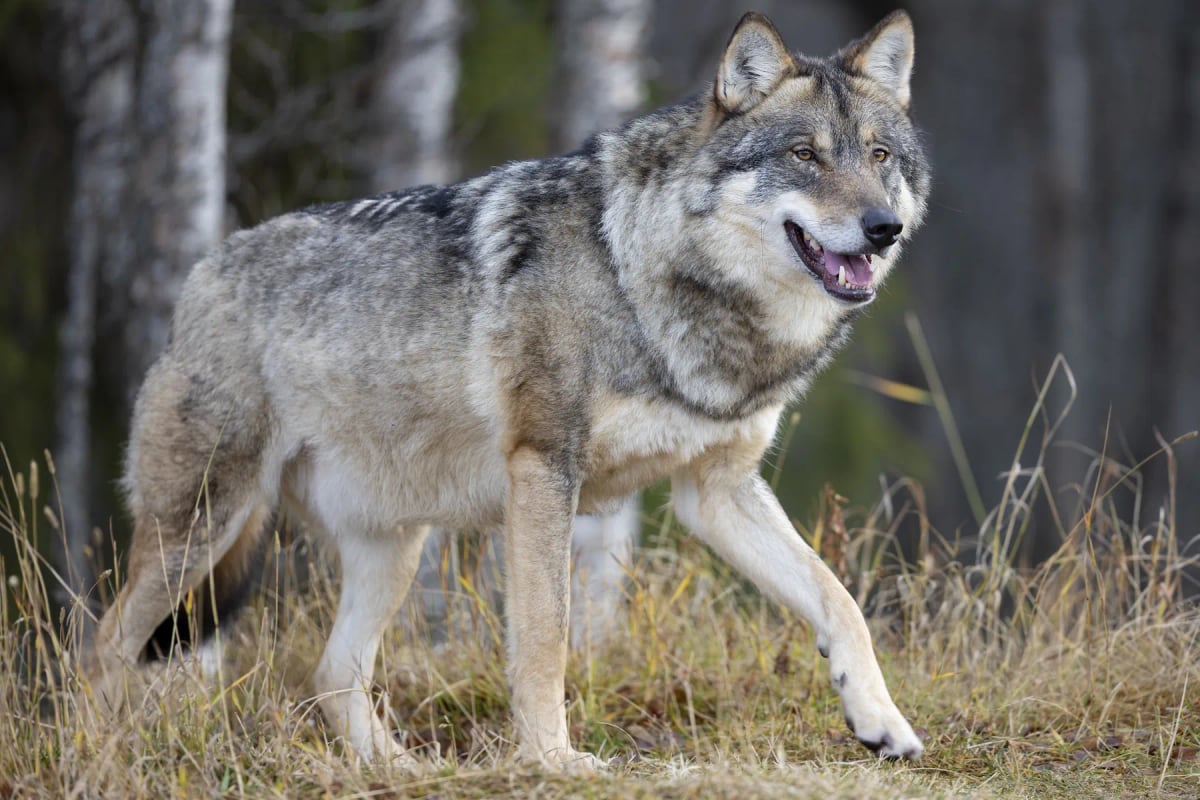
Not exactly. Despite the name, the maned wolf is not a true wolf, a fox, or a dog. It belongs to its own genus, Chrysocyon, and has no close living relatives. Scientists consider it a unique branch of the canid family tree. Its long black legs and reddish coat give it a fox-like look, but genetically it stands apart from every other member of the family.
What does the maned wolf eat?
The maned wolf has a surprisingly varied diet. About half of what it eats comes from plants, and the wolf apple, a fruit that grows across the cerrado, is its most important food source. It also hunts small animals like rodents, armadillos, rabbits, birds, and insects. Very few large carnivores rely on fruit as heavily as this one does, which makes its diet quite unusual among animals of its size.
Where does the maned wolf live?
The maned wolf is found mainly in central South America. Brazil's cerrado is the core of its range, but it also lives in eastern Bolivia, much of Paraguay, and northern Argentina. Small populations exist at the edges of its range in Peru and Uruguay. It prefers open grasslands and savannas where it can spot prey easily, and it avoids dense forests. Most individuals live below 1,500 meters in elevation.
Is the maned wolf endangered?
The maned wolf is currently listed as Near Threatened on the IUCN Red List. It is not yet endangered, but the pressures it faces are serious and growing. More than half of the cerrado has already been converted to farmland and cattle pasture. Road collisions kill many individuals every year, and diseases carried by domestic dogs pose an additional risk. If habitat loss continues at its current pace, its status could worsen.
Why does the maned wolf have such long legs?
Those remarkable legs are an adaptation to life in tall grasslands. By standing higher off the ground, the maned wolf can see over the vegetation to spot prey or danger at a distance. The legs also help it move efficiently across open terrain. It is the tallest wild canid in the world, reaching about 90 centimeters at the shoulder, and those long limbs are a big part of what makes it so distinctive.
Does the maned wolf live alone or in groups?
Maned wolves are solitary animals. Each adult spends most of the year on its own, roaming a territory that can cover up to 30 square kilometers. Mated pairs share overlapping territories and stay bonded over multiple years, but they rarely travel together outside the breeding season. They keep in touch mainly through scent marks and a distinctive loud bark known as the roar bark, which carries far across open ground.
What is the wolf apple and why is it important?
The wolf apple, called lobeira in Portuguese, is a fruit in the tomato family that grows widely across the cerrado. It is the single most important food in the maned wolf's diet throughout the year. After eating the fruit, the wolf spreads the seeds across the savanna through its droppings, and research shows those seeds germinate at higher rates than seeds that fall directly to the ground. The two species depend on each other in a remarkable way.