White backed Vulture
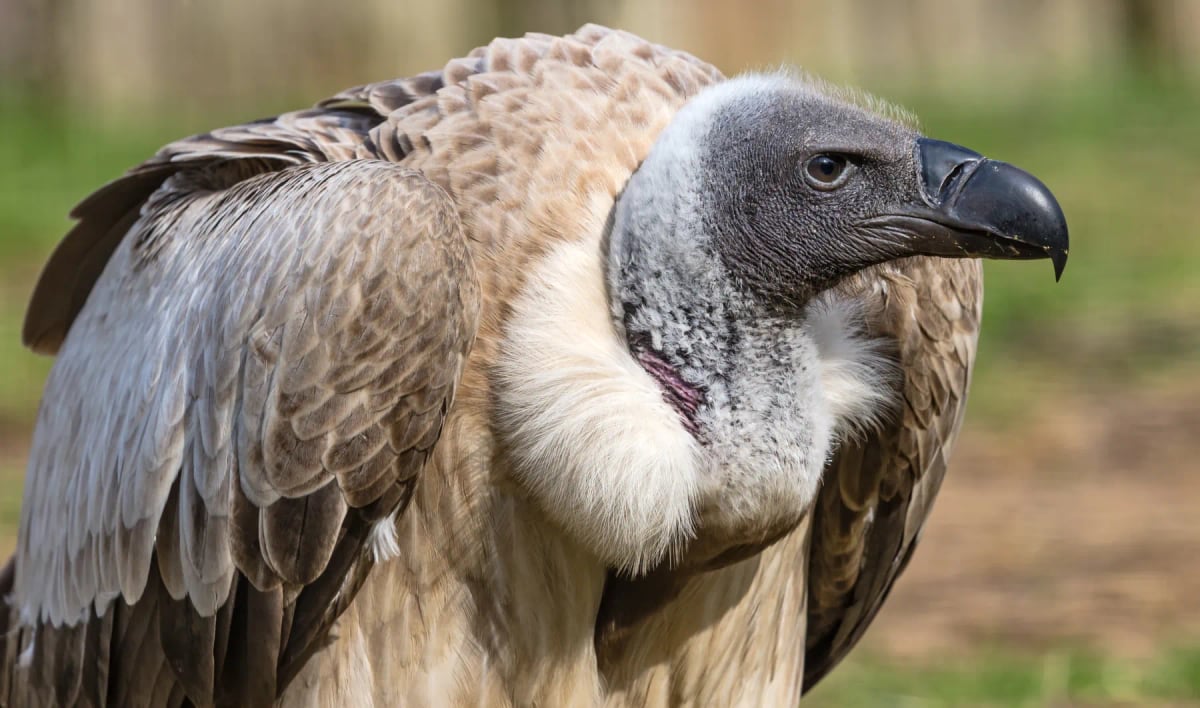
The white backed vulture (Gyps africanus) is the most widespread large vulture in sub-Saharan Africa. It is built for a life in the air: a wingspan that can reach 2.2 metres allows it to ride thermals for hours, scanning enormous areas for carcasses below. The white patch on the back, visible mainly in flight, gives the bird its name. Adults carry a bare, pinkish neck and a ruff of pale feathers at the base. They nest in loose colonies on tall trees, often within or near protected areas where herds of large mammals guarantee a steady food supply. Stomach acid strong enough to destroy anthrax and other pathogens makes this bird an essential sanitation service for African ecosystems. The species is now critically endangered, primarily due to poisoning events that can kill dozens of birds at a single carcass.
Habitat and distribution
Across sub-Saharan Africa, the white backed vulture occupies a remarkably broad range, from the Sahel's dry scrublands in the north to the savannas and open woodlands of East and southern Africa. It is strongly tied to landscapes where large herds of ungulates roam, since reliable concentrations of wildlife mean a steady supply of carcasses. The species nests and roosts in colonies, favouring tall trees such as baobabs and acacia species, often inside or close to national parks and game reserves. Countries like Tanzania, Kenya, Botswana, and Zambia hold some of the most important populations. Birds are capable of covering vast distances each day while soaring on thermals, which means a single individual can patrol hundreds of kilometres in search of food.
Diet
Carrion is the foundation of this vulture's diet, and the bird has evolved remarkable tools for finding and processing it. While soaring at altitude, white backed vultures keep a close watch on both the landscape and on each other: when one bird descends, others in the area follow almost immediately. At a carcass, they compete with other scavengers and often plunge their bare necks deep into the body cavity to reach soft tissue and organs. Their stomach acid is extraordinarily strong, capable of neutralising dangerous bacteria such as anthrax and botulinum toxins that would be lethal to most other animals. A single bird can consume several kilograms of meat in one sitting before returning to a roost tree to rest.
Identification
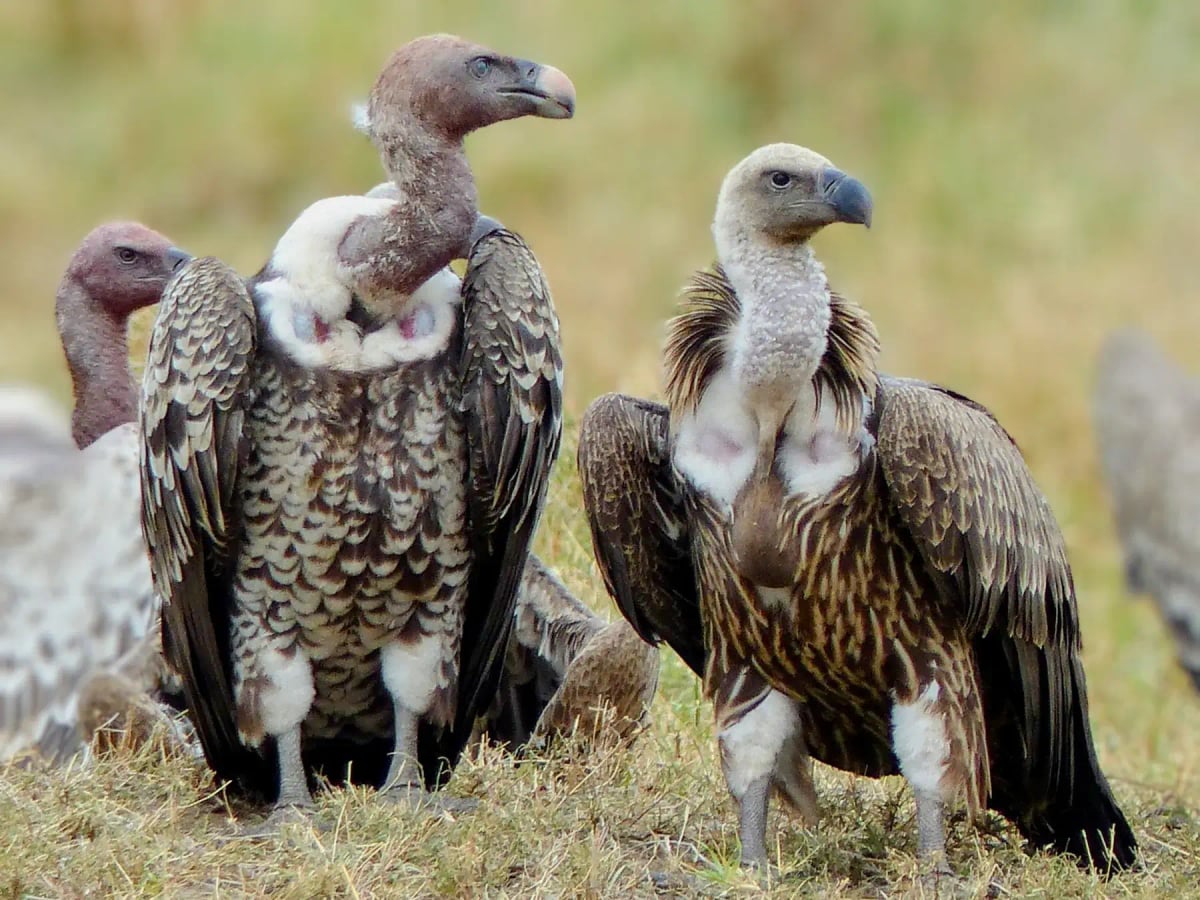
Spotting a white backed vulture is straightforward once you know what to look for. In flight, the pale whitish patch across the lower back and rump stands out clearly against the darker wings, and it is this feature that gives the species its name. Adults have a bare, pinkish skin on the neck and a collar of pale, fluffy feathers at the base. The upperparts appear brownish and somewhat scaly, while the underside of the wings shows a mix of dark flight feathers and paler coverts. Compared with the Eurasian griffon vulture, this species is noticeably smaller and slimmer. Juveniles are considerably darker, with streaked plumage, and take several years to develop the clean adult pattern. Wingspans on large adults can reach around 2.2 metres.
Ecological role
Few animals perform as vital a service in African ecosystems as the white backed vulture. A group of these birds can strip a large carcass to bare bone within an hour, preventing the build-up of rotting organic matter that would otherwise attract disease vectors such as rats and flies. Their highly acidic digestive system destroys pathogens including anthrax spores, stopping outbreaks before they spread to livestock or other wildlife. By recycling nutrients from dead animals back into the soil, vultures support plant growth and, in turn, the entire food web. Where vulture populations have collapsed, there is clear evidence that populations of feral dogs have grown, bringing a rise in rabies cases. This makes the survival of vultures a matter of public health, not just wildlife conservation.
Threats
Poisoning is by far the gravest danger facing white backed vultures today. Poachers sometimes lace elephant or other large carcasses with agricultural poisons to kill vultures, whose circling above a carcass can alert wildlife rangers to illegal activity. In other cases, farmers poison livestock carcasses to target lions or hyenas, killing dozens of vultures as unintended victims. Demand for vulture body parts in traditional medicine, particularly in parts of West and southern Africa, adds further pressure. Power lines present another serious hazard: collisions and electrocutions account for significant numbers of deaths each year. Habitat loss, as wild landscapes are converted to farmland, reduces the availability of carcasses and nesting sites. Together, these pressures have caused population declines of more than 80 percent over three generations.
Conservation
The IUCN lists the white backed vulture as Critically Endangered, a status updated in 2021 that reflects the severity of population declines across its range. Conservation efforts centre on tackling the poisoning crisis directly: organisations such as the Vulture Conservation Foundation and BirdLife International work with governments and local communities to prosecute poisoners, promote the use of safe veterinary drugs, and educate farmers about the value of vultures. Retrofitting power lines to reduce the risk of electrocution is another priority, with progress recorded in South Africa and Kenya. Protected areas play a key role in safeguarding nesting colonies, and some reserves actively monitor nest success each breeding season. International cooperation is essential, since these birds cross national borders freely and threats in one country affect populations across the region.
Where it is found
The White backed Vulture can be found in places such as:
Researched and written by Juan Pablo. Sources: IUCN Red List, scientific literature and regional field guides. Last updated: .
Technical factsheet
Frequently Asked Questions
What does the white-backed vulture eat?
White-backed vultures feed almost entirely on carrion. They soar high on thermal currents, watching for carcasses and keeping an eye on other vultures in the area. When one bird drops, the rest follow. At a carcass, they often push their bare necks deep inside to reach soft organs. A single bird can eat several kilograms of meat in one sitting.
Where does the white-backed vulture live?
This vulture is found across a huge stretch of sub-Saharan Africa, from the dry scrublands of the Sahel down to the savannas of East and southern Africa. It prefers open landscapes where large herds of wildlife roam, since those areas offer a reliable supply of carcasses. Tanzania, Kenya, Botswana, and Zambia hold some of the largest populations today.
Why is the white-backed vulture endangered?
The biggest threat is poisoning. Poachers lace carcasses with agricultural toxins to kill vultures, whose circling in the sky can tip off park rangers to illegal hunting. Farmers also poison livestock carcasses to target predators, accidentally killing large numbers of vultures. Demand for vulture parts in traditional medicine, collisions with power lines, and habitat loss add to the pressure.
How big is the white-backed vulture?
It is the most widespread large vulture in sub-Saharan Africa, though it is noticeably smaller than its European cousin, the griffon vulture. Large adults can reach a wingspan of around 2.2 metres, which allows them to soar for hours on rising air currents without much effort. Despite their size in flight, they rely almost entirely on their sharp eyesight rather than smell to locate food.
Can white-backed vultures get sick from eating rotten meat?
No, and that is one of the most remarkable things about them. Their stomach acid is powerful enough to destroy bacteria that would be deadly to most other animals, including anthrax and botulinum toxins. This means they can safely consume carcasses in advanced stages of decay. That ability makes them an essential natural cleanup service, stopping dangerous pathogens from spreading through the environment.
Do white-backed vultures nest in groups?
Yes, they are colonial nesters. Pairs build their nests close together, often in tall trees such as acacias and baobabs, usually inside or near protected areas. Nesting near large wildlife populations makes sense, since adults need to find food regularly while caring for a chick. Colonies can range from just a handful of pairs to several dozen, and the same trees are often used year after year.
How far can a white-backed vulture fly in a single day?
These birds are remarkable fliers. By riding thermals, columns of warm rising air, they can cover hundreds of kilometres in a single day with very little physical effort. This ability lets a single vulture patrol a vast area of savanna in search of carcasses. It also means that threats in one country, such as a mass poisoning event, can affect birds whose home range crosses several national borders.