Animals in Kazakhstan
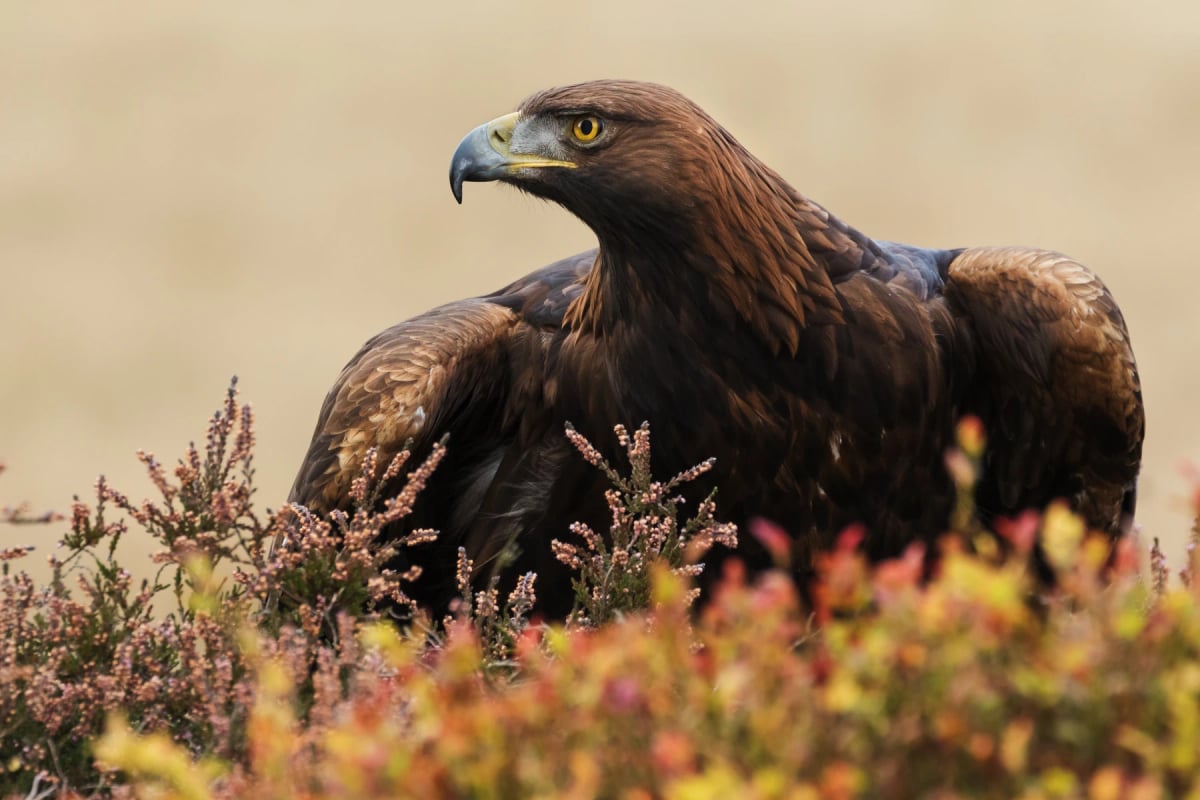
Golden Eagle
Aquila chrysaetos
The golden eagle is used as a strong national symbol of Kazakhstan and appears on the state emblem and in many cultural events. Traditional hunting with trained eagles is still shown in festivals and tourist displays in some regions. For many people this bird represents open sky, wide steppe and the long link between local families, horses and the high mountain slopes around them.
View details→Wildlife in Kazakhstan
Kazakhstan has wide steppe plains, forests, deserts and high mountain ranges, so its wildlife areas feel very open and spacious. Visitors often meet nature on long road trips, simple steppe tours and walks in valleys near towns or mountain resorts. From these routes it is possible to see gazelles, camels, foxes, wolves and eagles while staying close to basic tourist services.
Most Dangerous Animals in Kazakhstan
Danger for visitors in Kazakhstan appears mainly in wide rural areas with few people. Large carnivores like leopards, lynx, wolves and honey badgers usually avoid direct contact, while moose and wild boar can react with force if they feel cornered. Along normal tourist routes encounters are rare and are mostly limited to distant views, tracks or brief movement in the scrub.
Top 10 Animals in Kazakhstan
The top 10 list for Kazakhstan highlights big cats, large herbivores, camels, lynx, wolves and a fast falcon that match its main habitats. Some animals use forests and river valleys, others prefer rocky hills, cold mountains or dry steppe. Visitors often learn about them on guided trips, short wildlife stops along major roads and simple hikes to viewpoints above open plains.
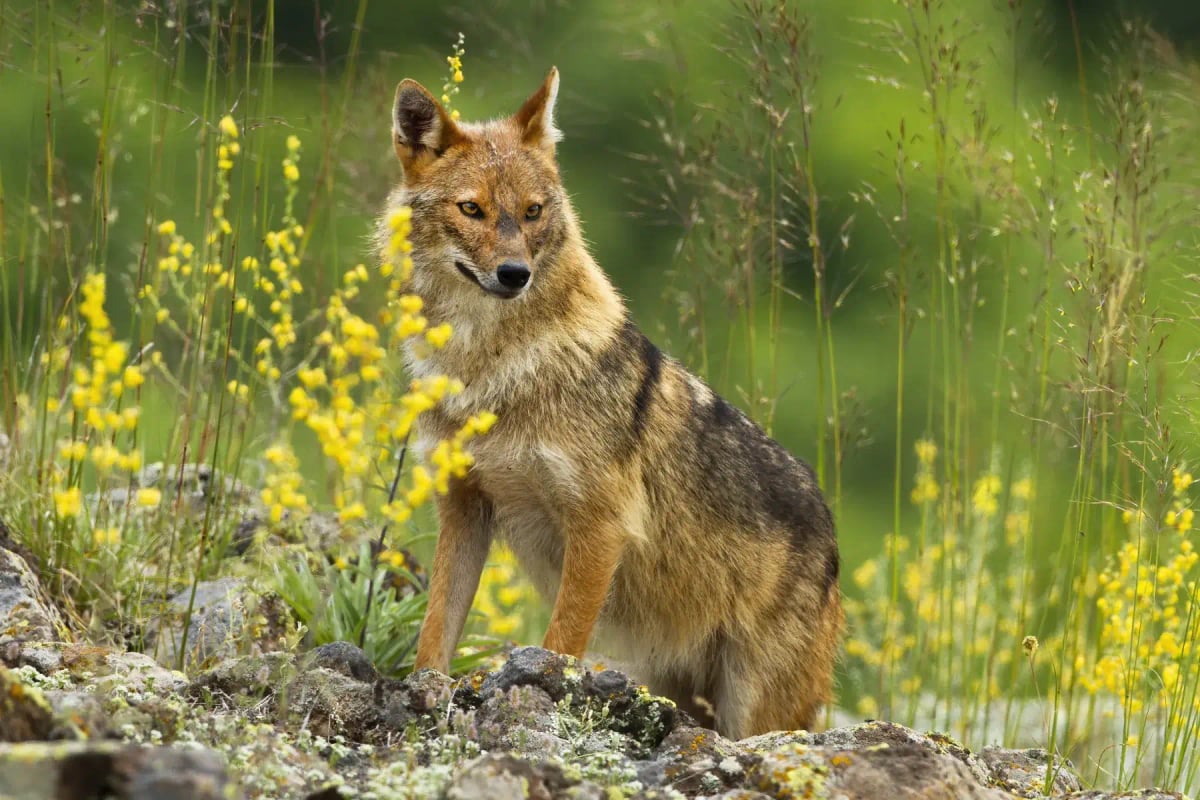
Golden Jackal
Canis aureus
In Kazakhstan, the golden jackal is found mainly in the south and along the Caspian coast, favouring reed beds, river deltas, and the margins of the Aral Sea basin. It struggles in regions where wetlands have shrunk due to water diversion, yet it persists in suitable pockets of habitat. Its flexible diet, ranging from rodents to berries, helps it cope with changing conditions. Its status is Least Concern.
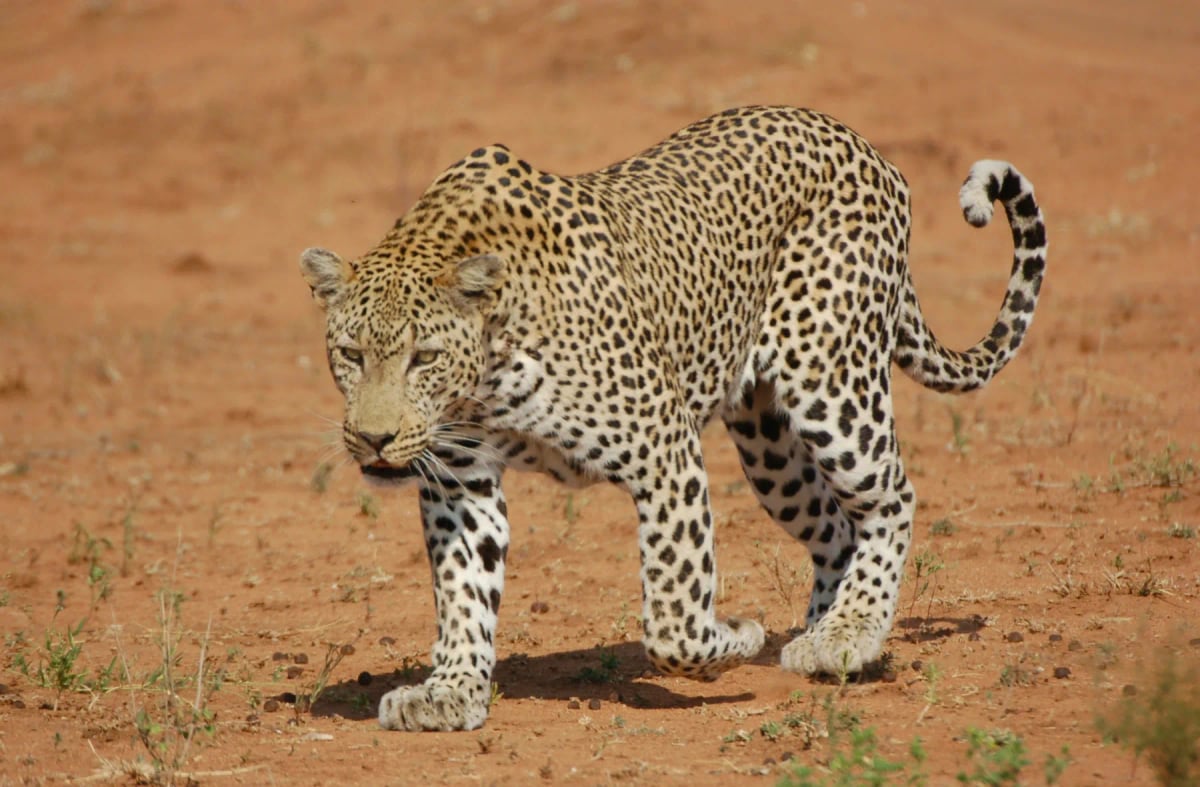
Leopard
Panthera pardus
The leopard's presence in Kazakhstan is considered marginal and historically based, linked to mountain ranges along the southern border. The Persian leopard subspecies (Panthera pardus saxicolor) occasionally crossed into this territory from neighboring Central Asian countries. There is no confirmed breeding population in Kazakhstan today, and any individuals recorded are likely dispersing animals moving through remote terrain in search of food and territory.
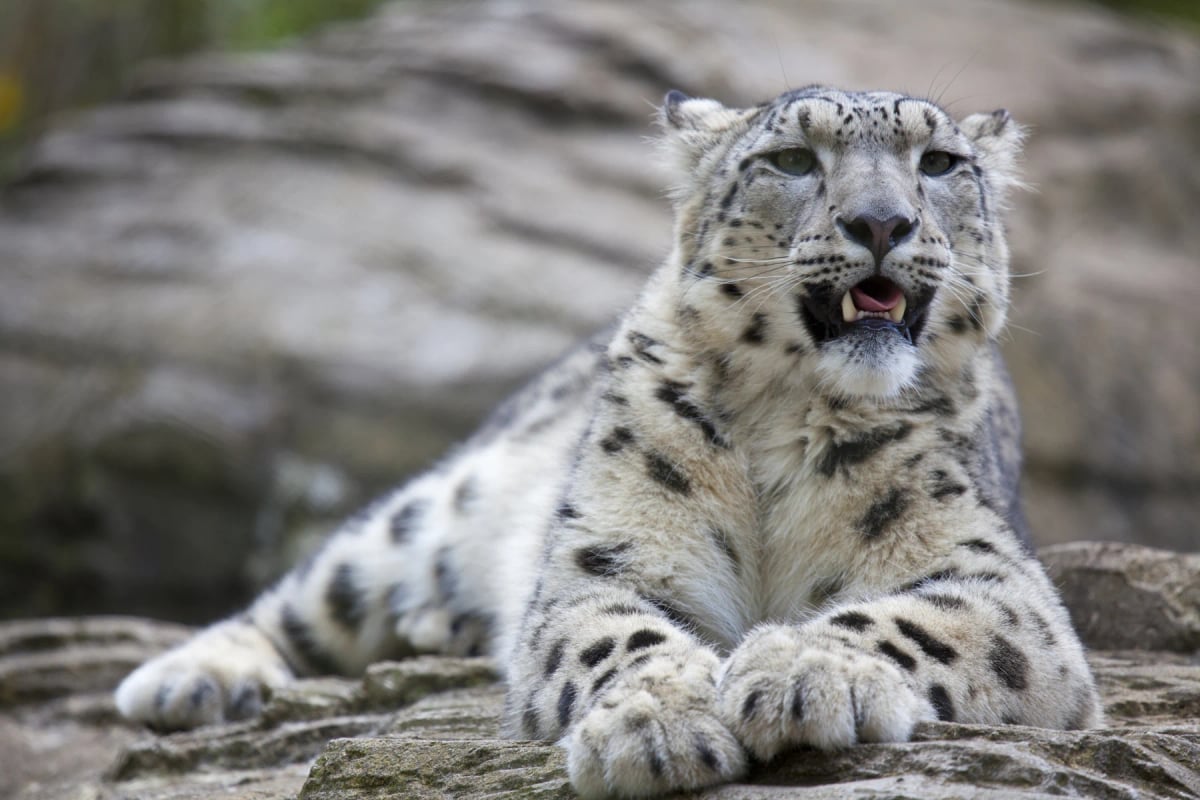
Snow Leopard
Panthera uncia
In Kazakhstan, snow leopards occur in the Tian Shan and Altai mountain ranges along the country's eastern borders. The population is considered small and faces significant pressure from poaching and a decline in wild prey such as ibex and argali sheep. Kazakhstan participates in regional initiatives to monitor and protect the species across Central Asia. The remote and sparsely monitored terrain makes accurate counts difficult. IUCN status: Vulnerable.
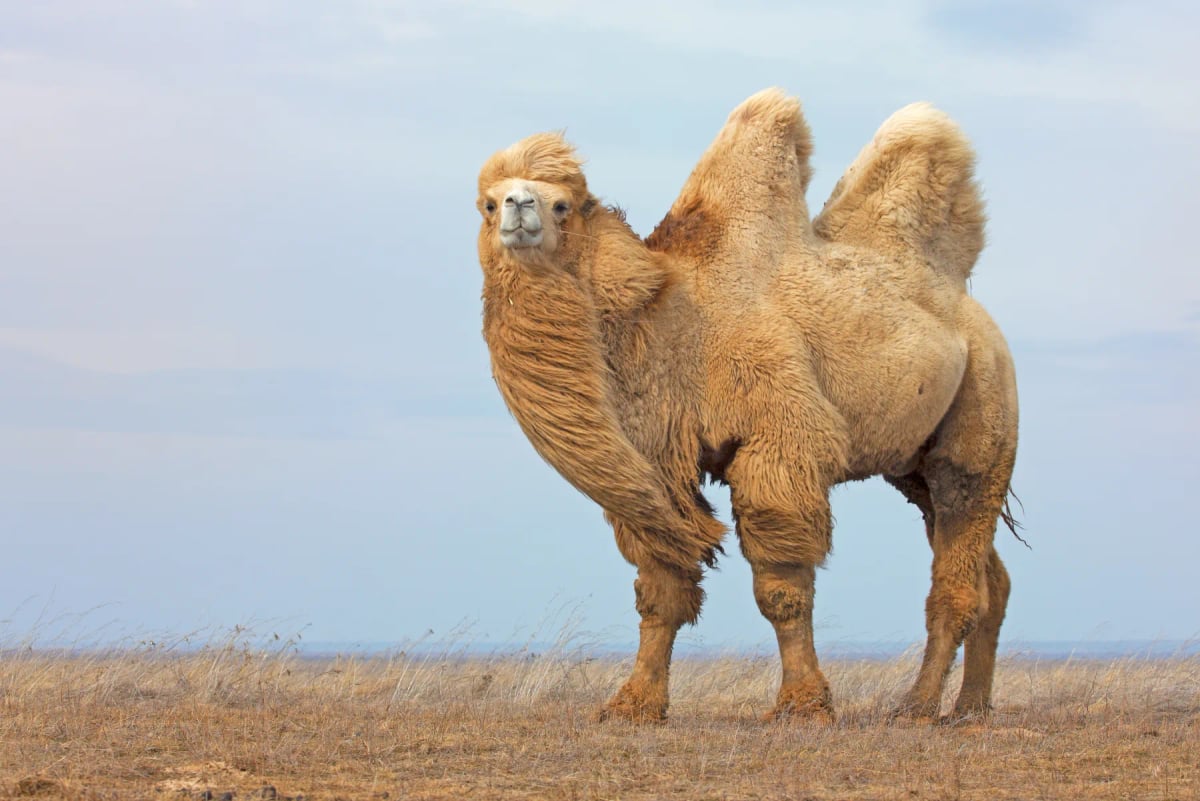
Bactrian Camel
Camelus bactrianus
Kazakhstan has one of the largest domesticated Bactrian camel populations in Central Asia, with an estimated 200,000 individuals kept across the country's vast steppes and semi-arid regions. Camel herding has been central to Kazakh nomadic culture for thousands of years, and the animals remain valued for their milk, which is consumed fresh and fermented into a traditional drink called shubat, as well as for their wool and meat. The species is well suited to Kazakhstan's continental climate, where winters can be severe and grazing land is sparse.
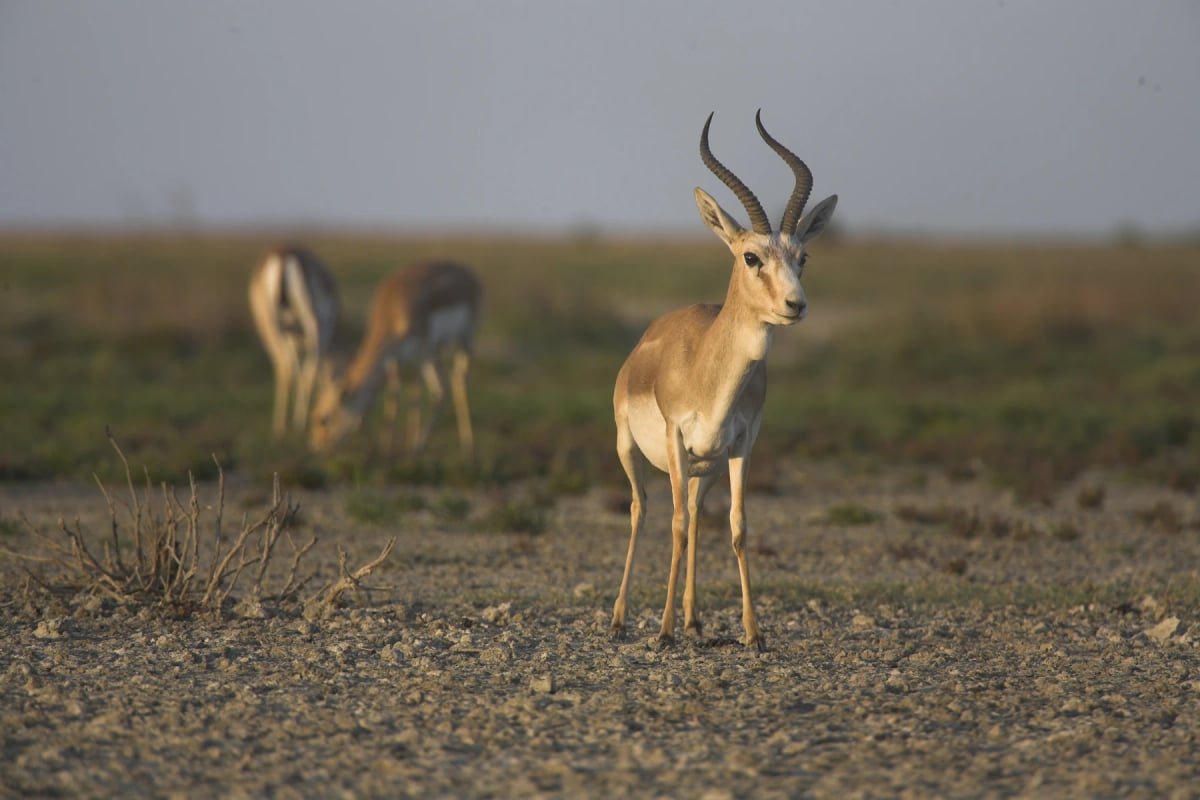
Goitered Gazelle
Gazella subgutturosa
Kazakhstan is home to one of the largest remaining populations of the goitered gazelle in Central Asia. The species roams vast steppe and semi-desert landscapes, particularly in the south and west of the country. It can reach speeds close to 70 km/h when fleeing predators. Poaching, along with border fencing that cuts across migration corridors, remains a serious threat. The IUCN lists the species as Vulnerable.
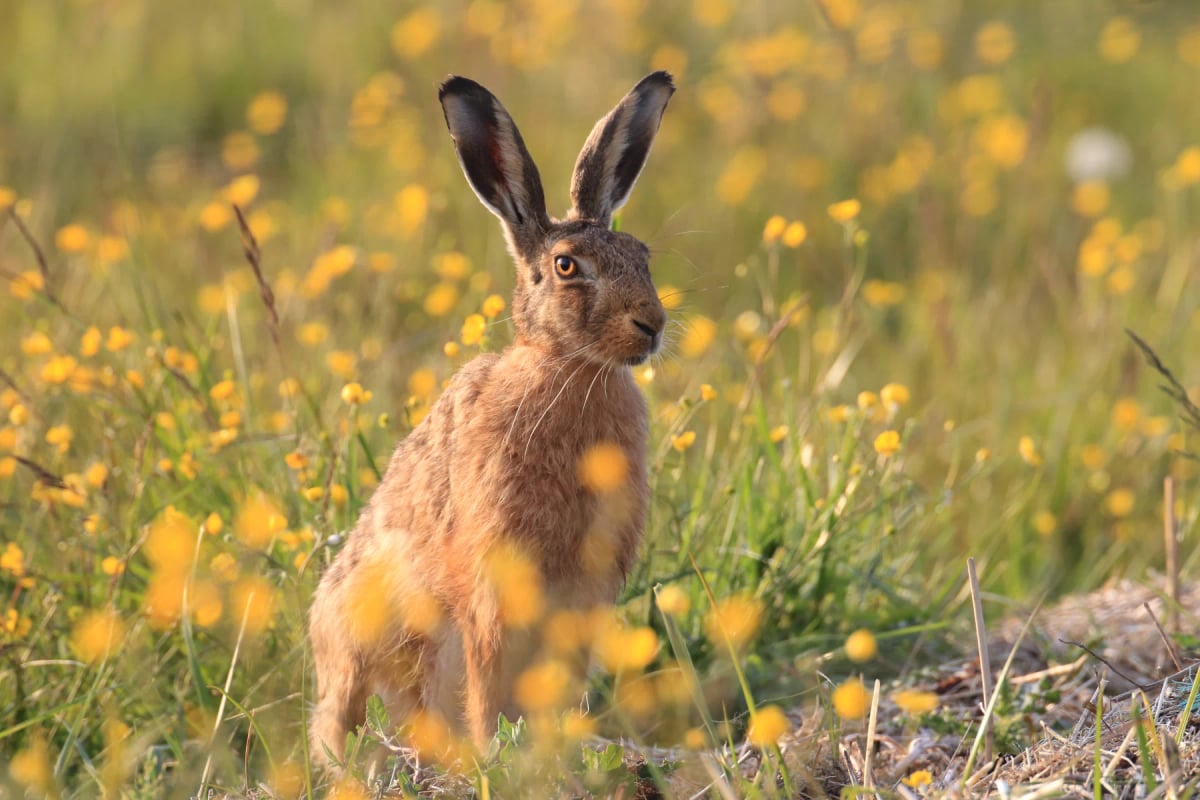
Hare
Lepus europaeus
The European hare is native to the western parts of Kazakhstan, where it inhabits the vast open steppes and agricultural plains. It is well suited to the semi-arid grasslands of the region and can be found across a broad stretch of territory where the steppe meets cultivated land. It is a game species in Kazakhstan and is hunted during designated seasons. Populations are generally considered stable across its native steppe range.
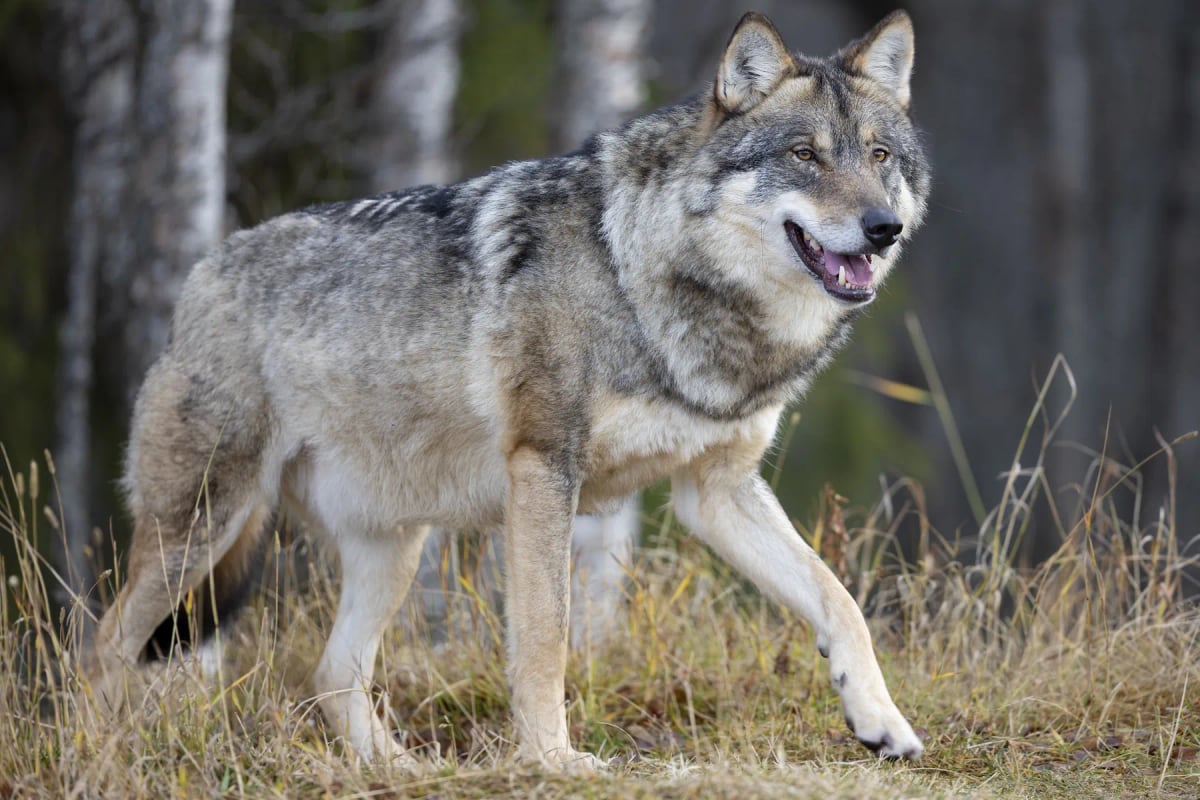
Gray Wolf
Canis lupus
Kazakhstan is home to one of the largest wolf populations in the world, spread across its vast steppes, semi-deserts, and mountain regions including the Altai and Tian Shan. Wolves here play a key role in regulating populations of ungulates such as saiga antelope. The species is not protected in Kazakhstan and is actively managed through hunting, as it is considered a threat to livestock across rural areas.
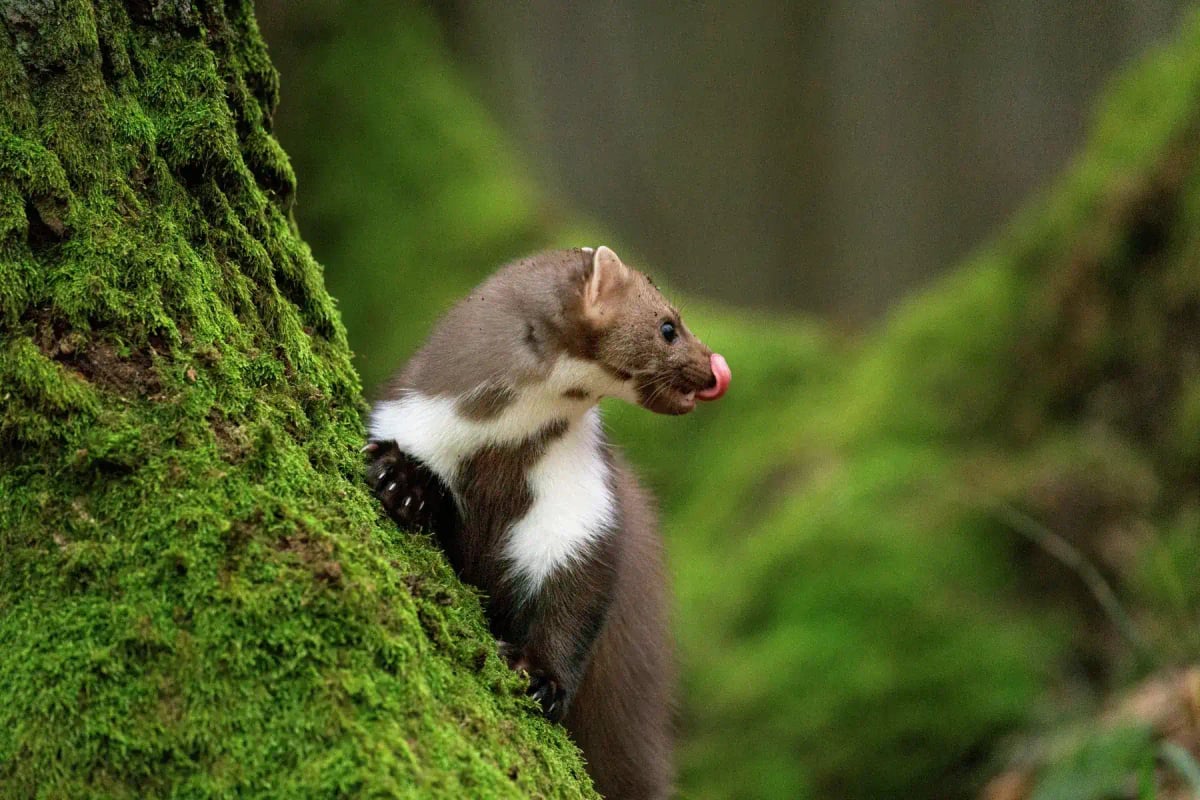
Marten
Martes martes / Martes foina
In Kazakhstan, the stone marten is the resident species, found across the southern mountain ranges including the Tian Shan foothills and rocky terrain further west. It adapts well to arid and semi-arid landscapes, sheltering in rock crevices and ruins. Nocturnal and opportunistic, it feeds on small mammals, birds, eggs, and fruit. Its ability to thrive in harsh, open environments sets it apart from its woodland relatives. Its IUCN status is Least Concern.
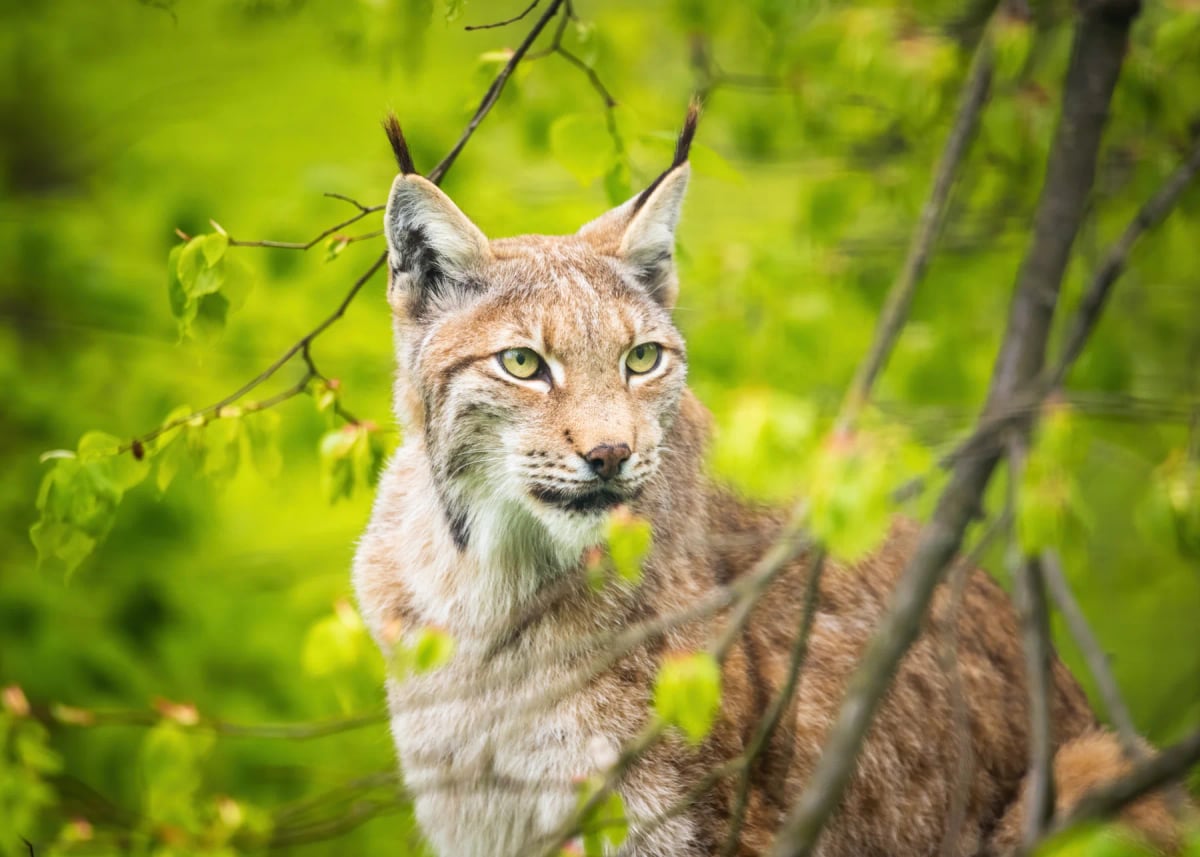
Eurasian Lynx
Lynx lynx
The Eurasian Lynx is found across the forests and mountain ranges of Kazakhstan, including the Altai and Tian Shan regions. It is the largest of the four lynx species, weighing up to 30 kg, and hunts roe deer, hares, and other prey depending on the season. Its broad paws help it move through snow with ease. It is listed as Least Concern by the IUCN.
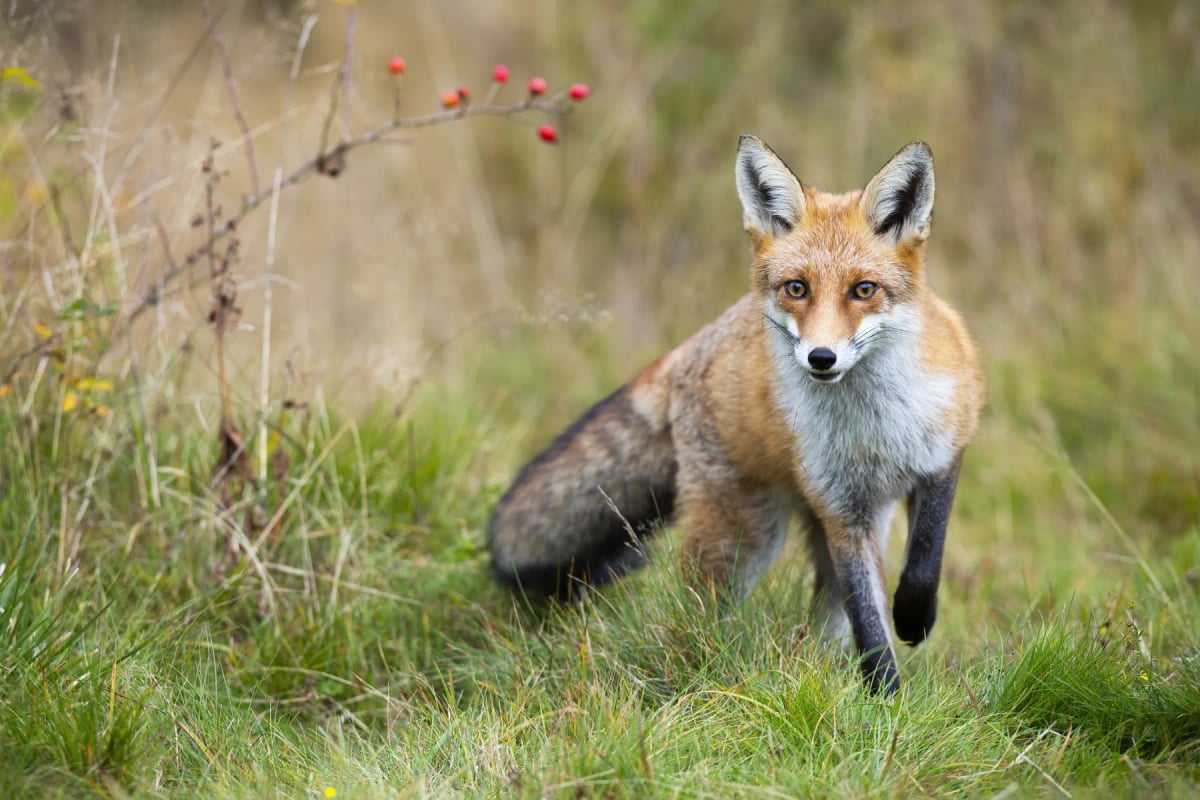
Red Fox
Vulpes vulpes
Kazakhstan's vast steppes, semi-deserts, and forested mountain ranges in the Tian Shan and Altai provide the red fox with an enormous range to roam. It is one of the most widespread carnivores in the country and plays an important role in controlling rodent populations across agricultural zones. Historically, it has been heavily trapped for its fur. Its IUCN status is Least Concern.
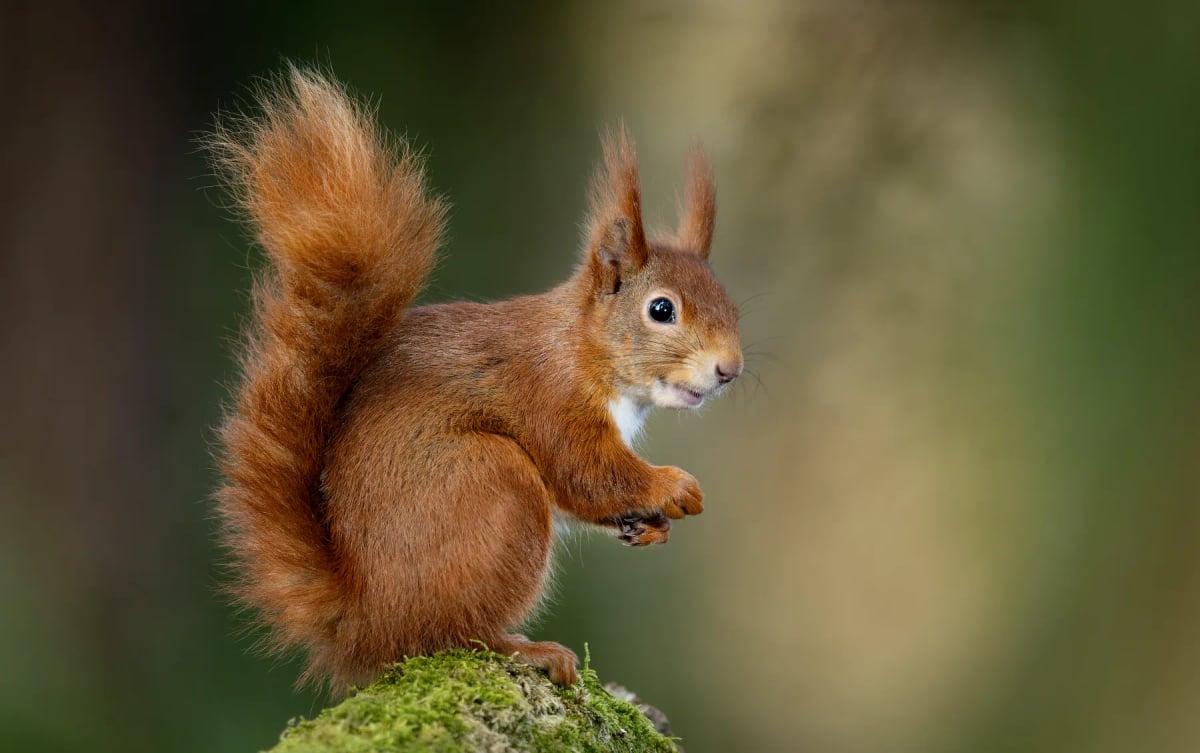
Red Squirrel
Sciurus vulgaris
The red squirrel occurs in Kazakhstan mainly in the pine and birch forests of the northern regions, including the forests of the Altai Mountains in the east and the boreal belt that extends into Siberia. It relies on conifer seeds and cached nuts to survive the long winters of this continental climate. Populations are stable across its range in the country. Its IUCN status is Least Concern.
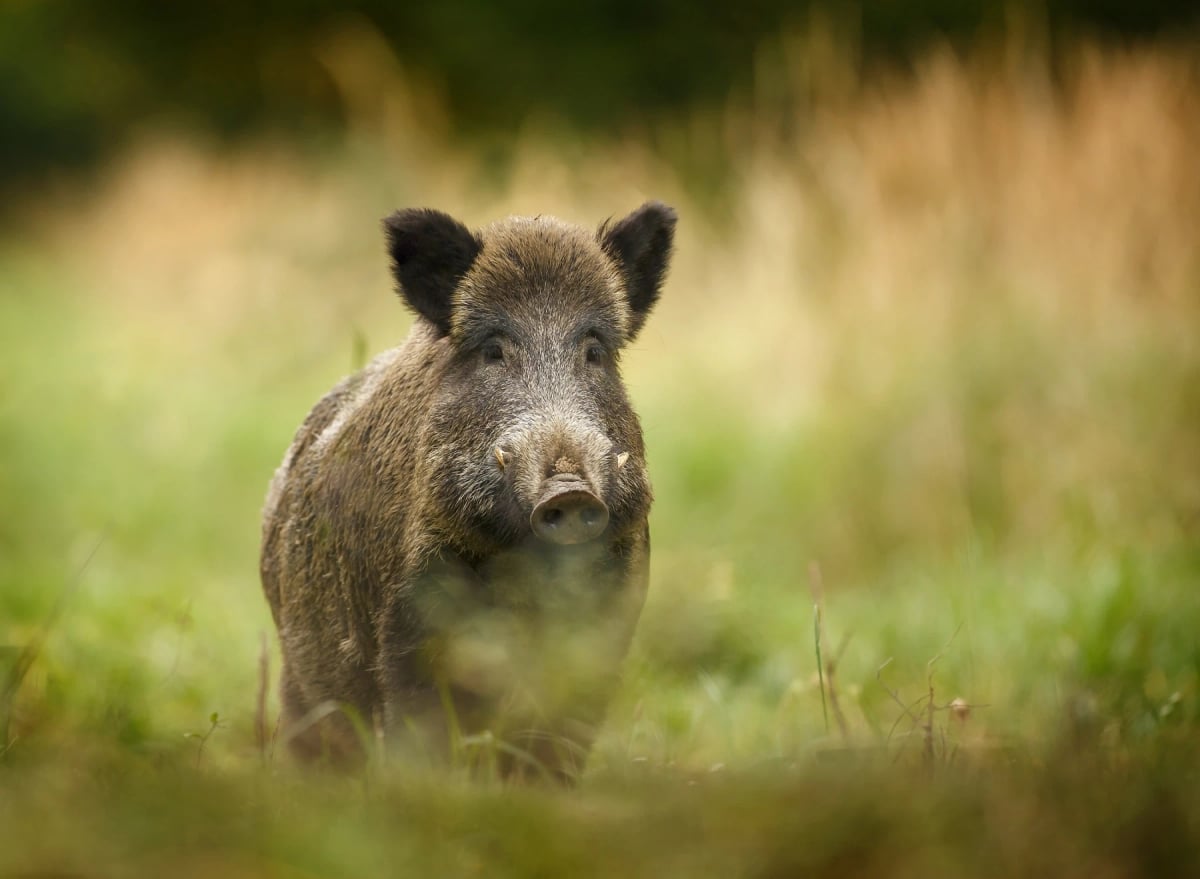
Wild Boar
Sus scrofa
Wild boars live in the reed lined riverine forests and wetlands of Kazakhstan, including areas along the Ili and Syr Darya rivers, as well as forested foothills near the Tien Shan mountains in the east. These dense tugai forests provide cover and abundant food. Wild boar hunting is a popular activity among the country's large non Muslim population, and the species remains an important game animal across many rural regions.
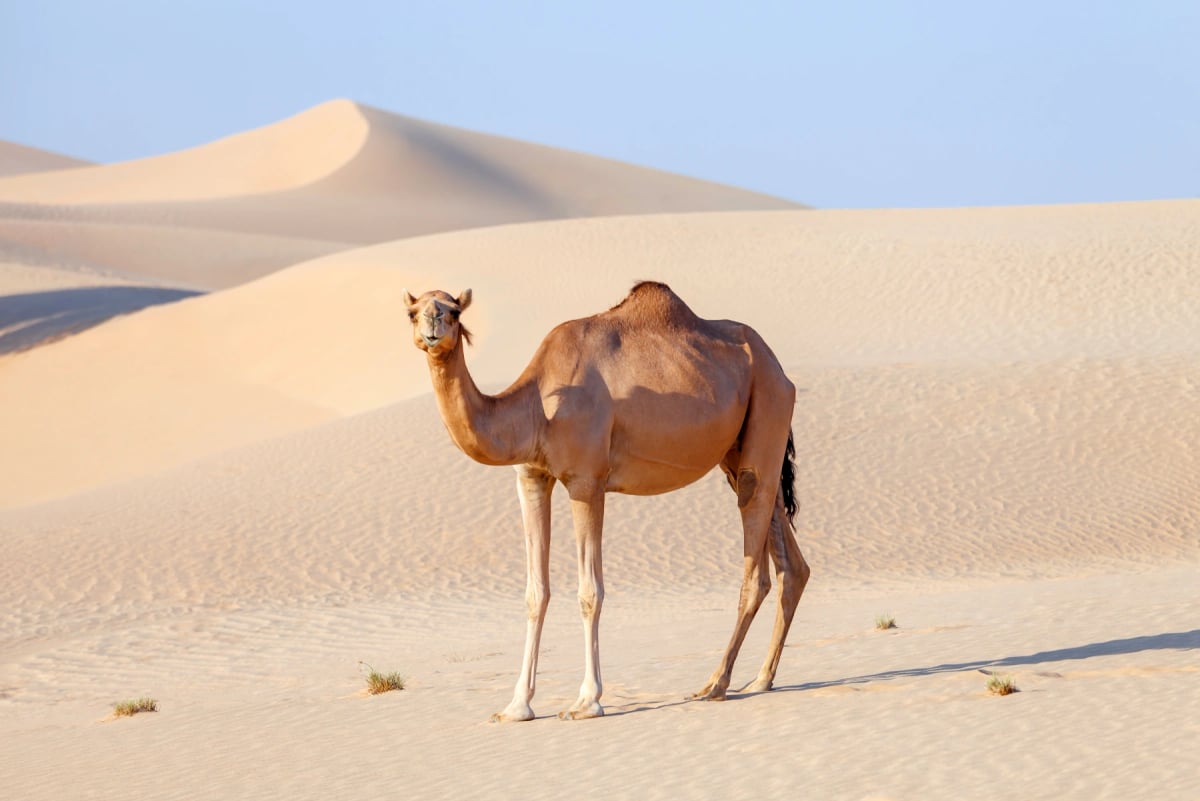
Dromedary Camel
Camelus dromedarius
The dromedary camel is found in the arid steppe and desert regions of southern Kazakhstan, particularly around the Aral Sea basin and the Kyzylkum Desert edges. Kept mainly as a domestic animal, it provides milk, meat, and wool to local communities. Its ability to endure extreme temperature swings, from bitter winters to scorching summers, makes it especially well suited to the harsh Central Asian climate.
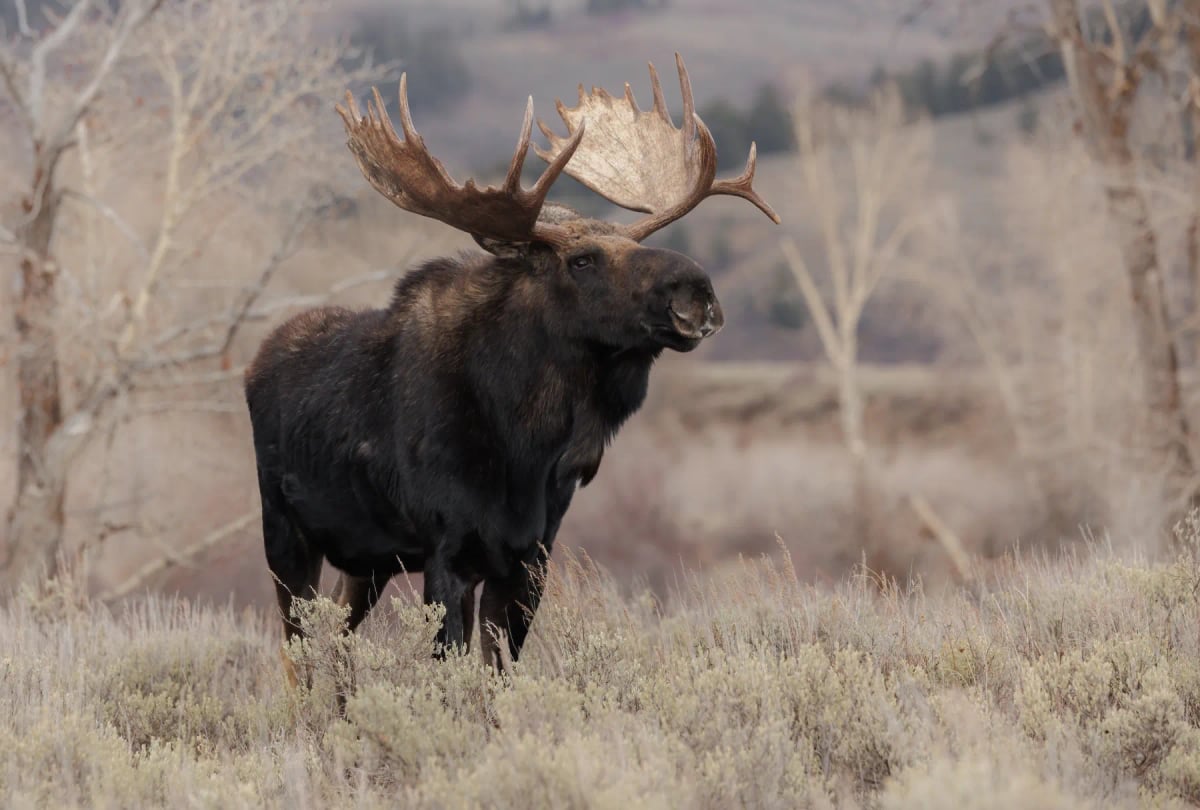
Moose
Alces alces
In Kazakhstan, moose are found in the northern regions of the country, particularly in the forested areas around the Ural River basin and the Altai foothills, where boreal conditions extend south from Russia. The population is modest and largely connected to the much larger Russian population across the border. Wetlands and river corridors in the north of the country provide the riverine habitat that moose depend on throughout the year.
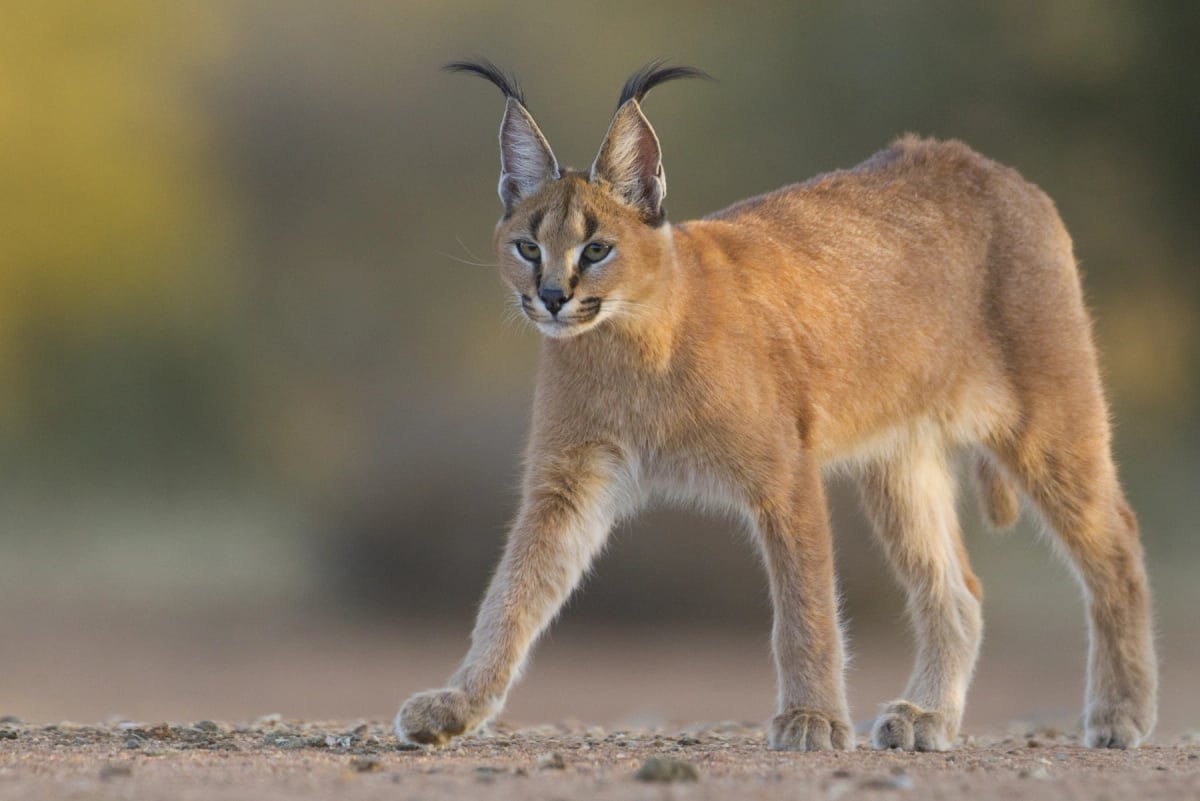
Caracal
Caracal caracal
In Kazakhstan, the caracal reaches the northern edge of its Asian range, appearing in the arid lowlands around the Caspian Depression and the Ustyurt Plateau. This population is considered rare and is sparsely distributed across the country's vast desert and semi-desert landscapes. The species is listed as Least Concern by the IUCN globally, but within Kazakhstan it is regarded as vulnerable due to its very limited numbers and ongoing habitat pressure.
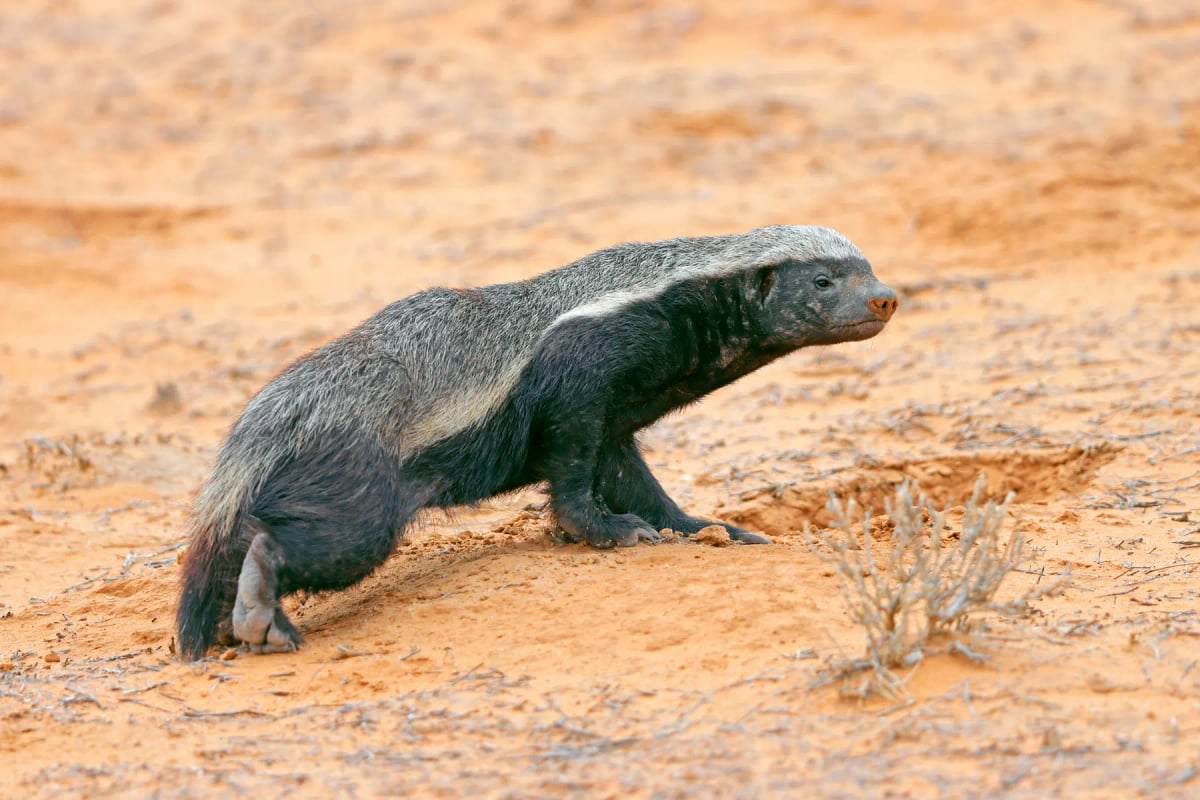
Honey Badger
Mellivora capensis
Kazakhstan marks close to the northern limit of the honey badger's range, with populations found in the arid south near the borders with Uzbekistan and Turkmenistan. It favors desert and semi desert terrain with loose soil suitable for digging burrows. Sightings are rare and scattered, reflecting both low population density and the difficulty of surveying such remote terrain. The IUCN lists the species as Least Concern.
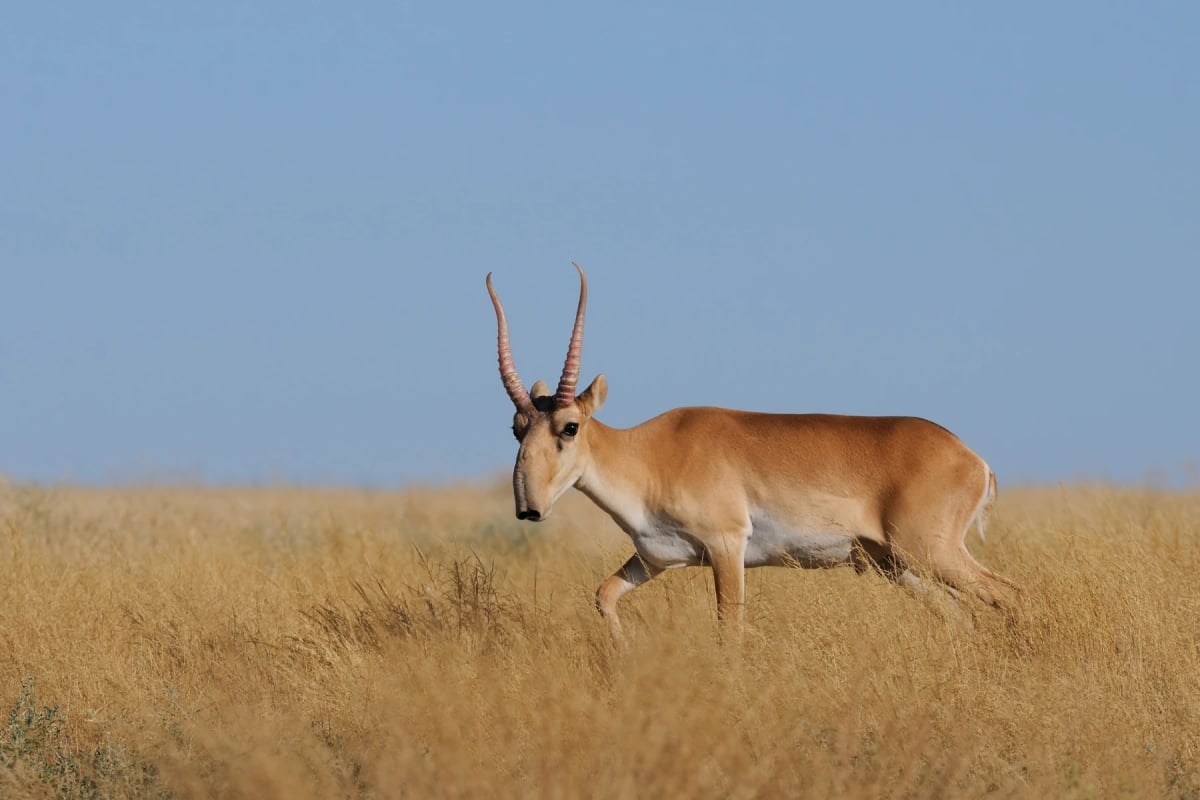
Saiga
Saiga tatarica
Kazakhstan is the stronghold of the saiga, home to the largest remaining populations on Earth. Vast herds roam the open steppes, particularly across the Betpak-Dala plateau and the Ustyurt region. This is where the catastrophic 2015 die-off struck hardest, killing over 200,000 animals in days. Kazakh authorities now run intensive anti-poaching patrols and monitoring programs to protect these recovering herds.
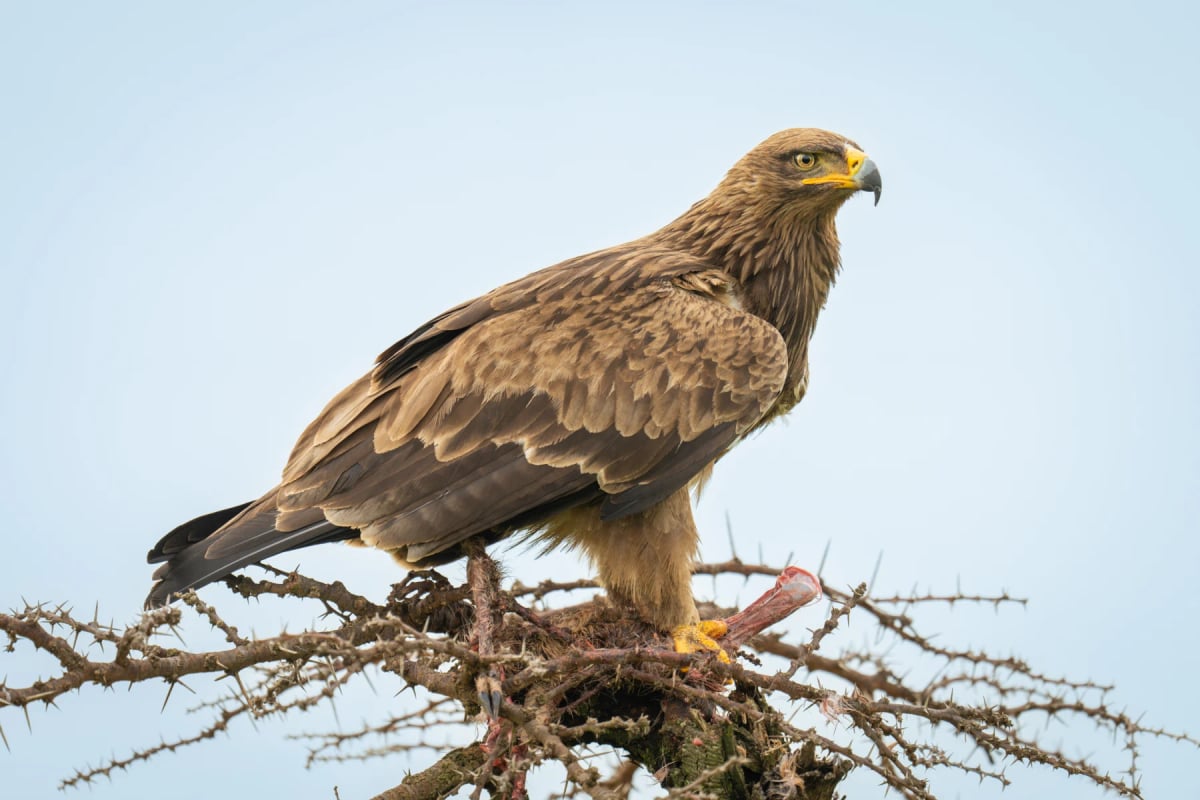
Steppe Eagle
Aquila nipalensis
Kazakhstan is one of the most important breeding grounds for the Steppe Eagle. The vast grasslands and semi-deserts stretching across the country provide ideal nesting habitat. Eagles raise their young on the open steppe before embarking on their long autumn migration southward. The species is Endangered, and power line electrocution remains a serious threat to birds across the Kazakh steppe.
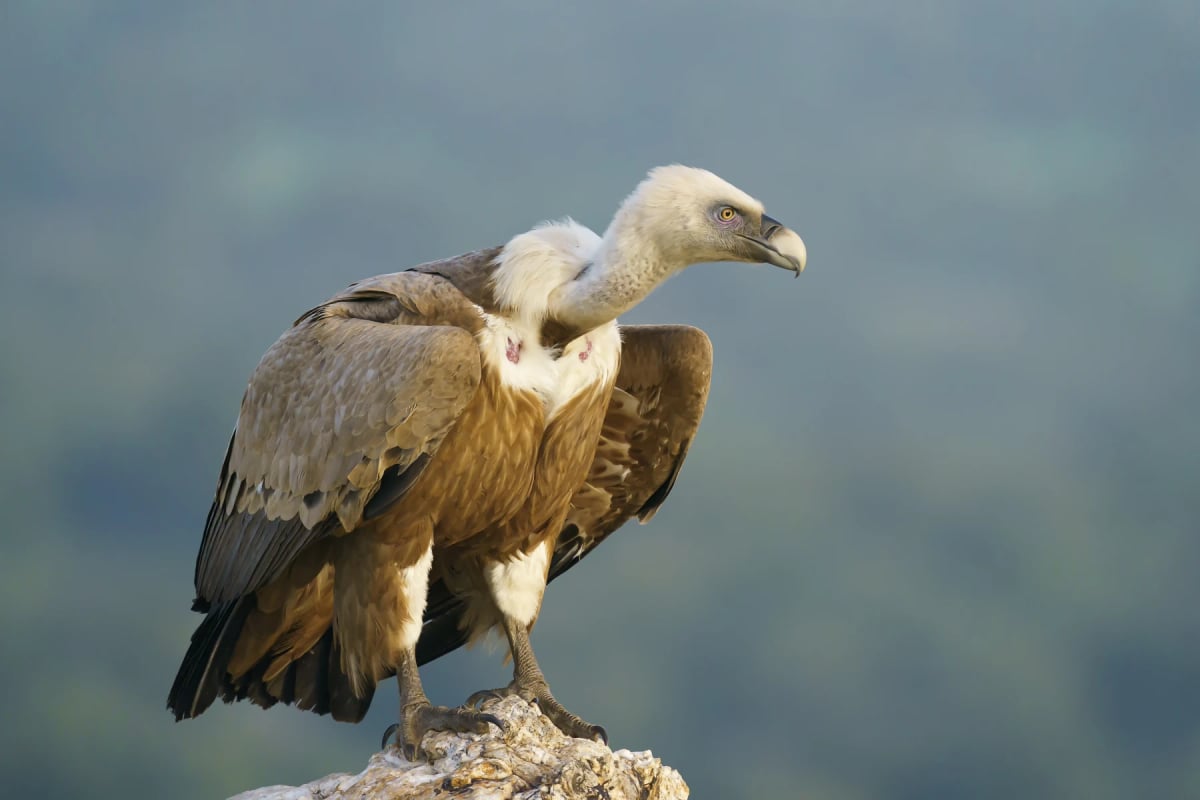
Griffon Vulture
Gyps fulvus
Kazakhstan's vast steppes, mountain ranges, and canyon systems provide important habitat for griffon vultures. The Tian Shan and Altai ranges in the east and south offer nesting cliffs, while the open grasslands allow these birds to soar for hours searching for carrion. Kazakhstan's large livestock herds historically provided a reliable food source, though poisoning from carcasses treated with veterinary drugs has been a concern for vulture populations across Central Asia. IUCN status: Least Concern.
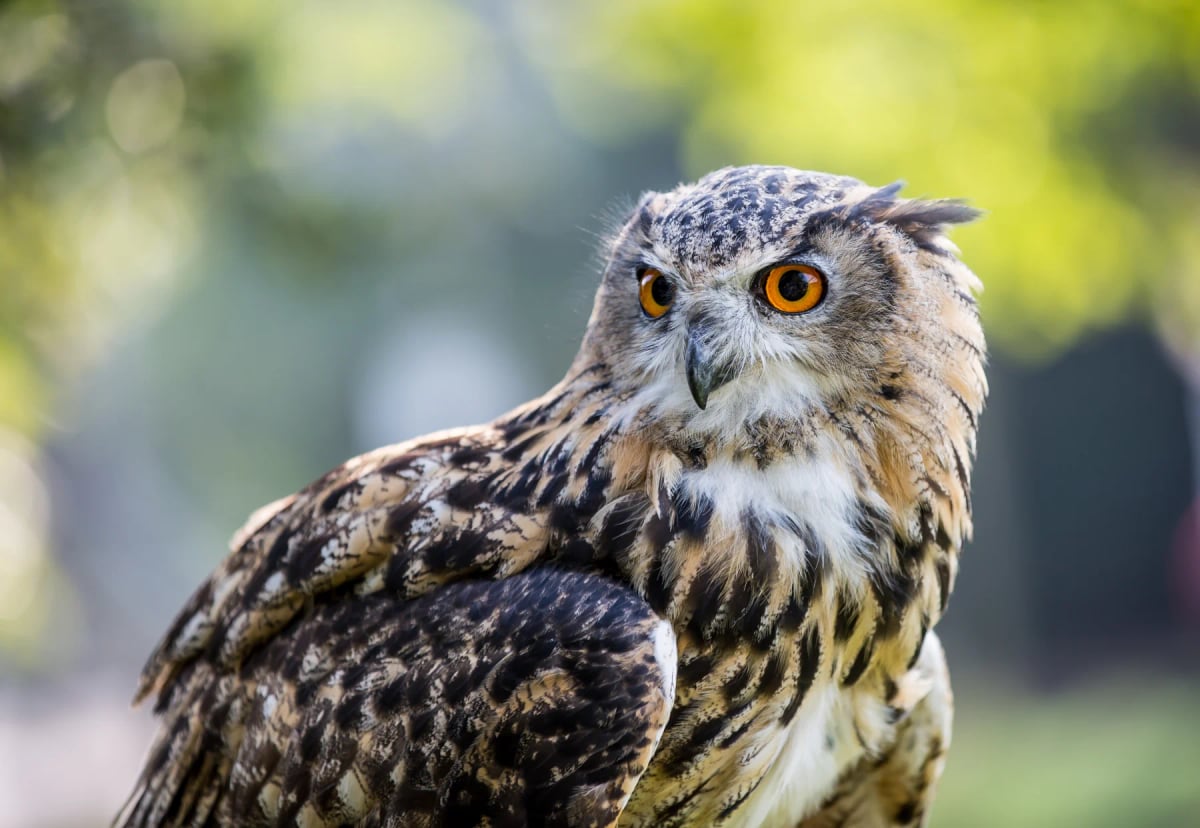
Eagle Owl
Bubo bubo
Kazakhstan is one of the most important countries for the Eurasian eagle owl in all of Central Asia. The species is widespread across the country's vast steppes, semi-deserts, and mountain ranges including the Tian Shan and Altai. It nests on rocky outcrops and cliff faces, hunting rodents, hares, and birds across enormous territories. The IUCN considers it Least Concern, and Kazakhstan's open landscapes support healthy populations.
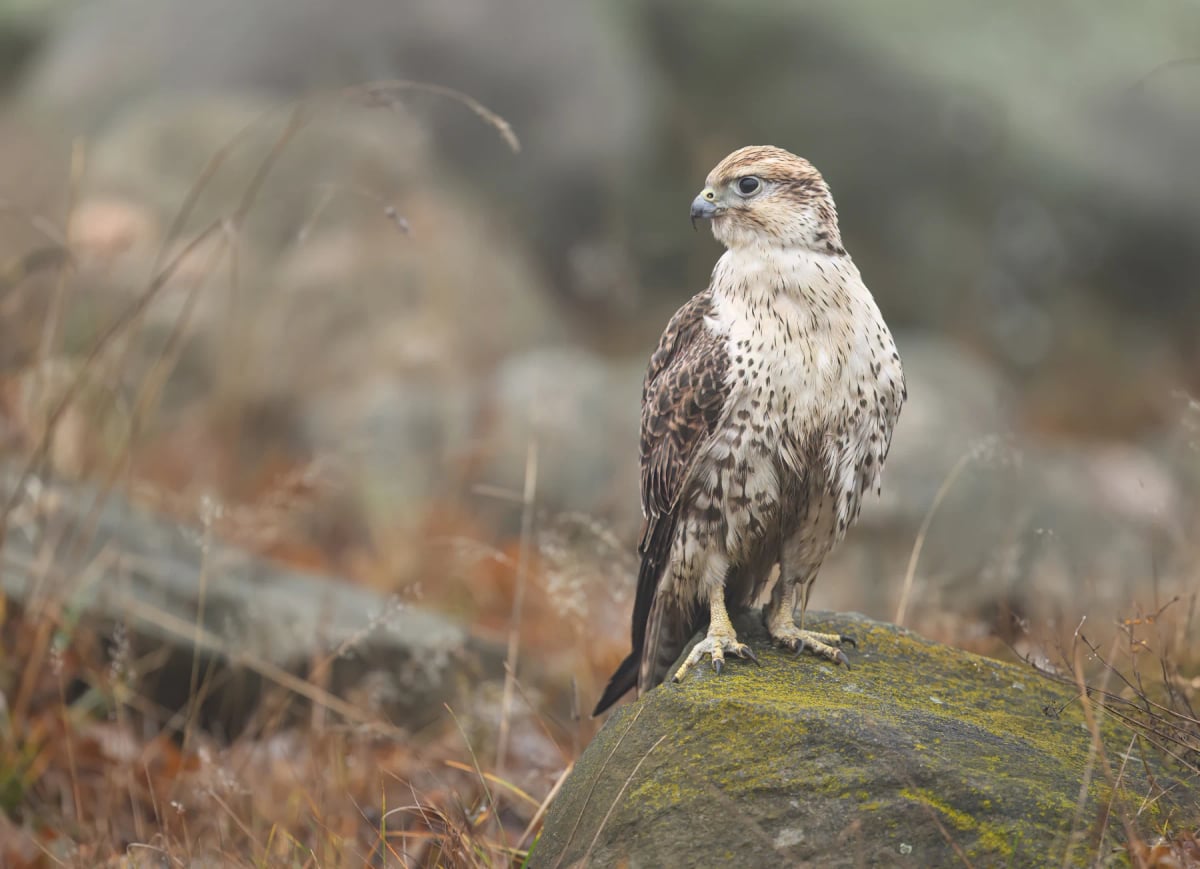
Saker Falcon
Falco cherrug
Kazakhstan holds some of the most significant saker falcon populations in the world. The vast steppes and grasslands of the country provide ideal nesting and hunting habitat, with the bird preying heavily on ground squirrels known locally as sousliks. Kazakhstan is central to international conservation efforts for the species, though illegal trapping for export to the Gulf falconry market remains a serious and ongoing threat. The IUCN lists the saker falcon as Endangered.
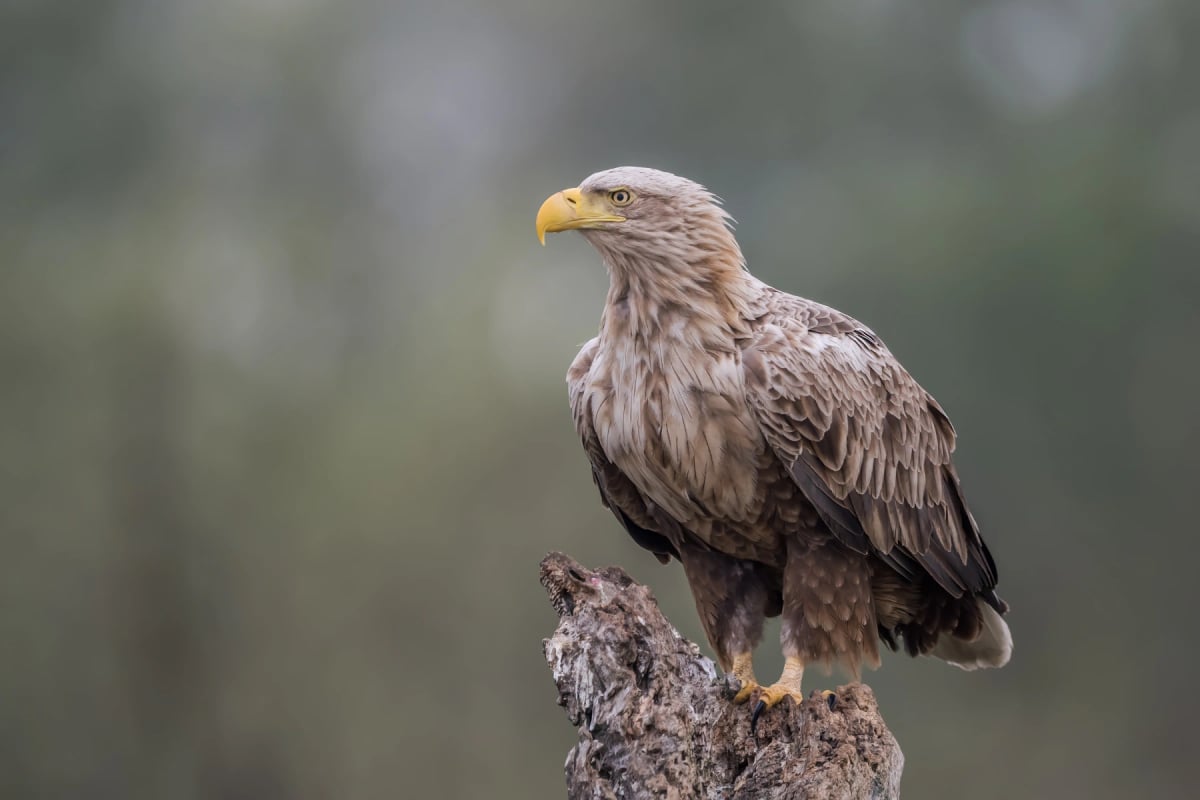
White tailed Eagle
Haliaeetus albicilla
Kazakhstan's vast steppe and river systems, including the Ural, Irtysh, and Ili rivers, support both resident and wintering white tailed eagles. The Caspian Sea coastline and the Aral Sea basin, despite its ecological degradation, attract eagles during migration. Nesting takes place mainly in riparian forests along major waterways. Poisoning from illegally set traps and lead contamination from carcasses remain the most pressing threats to the species in the country.
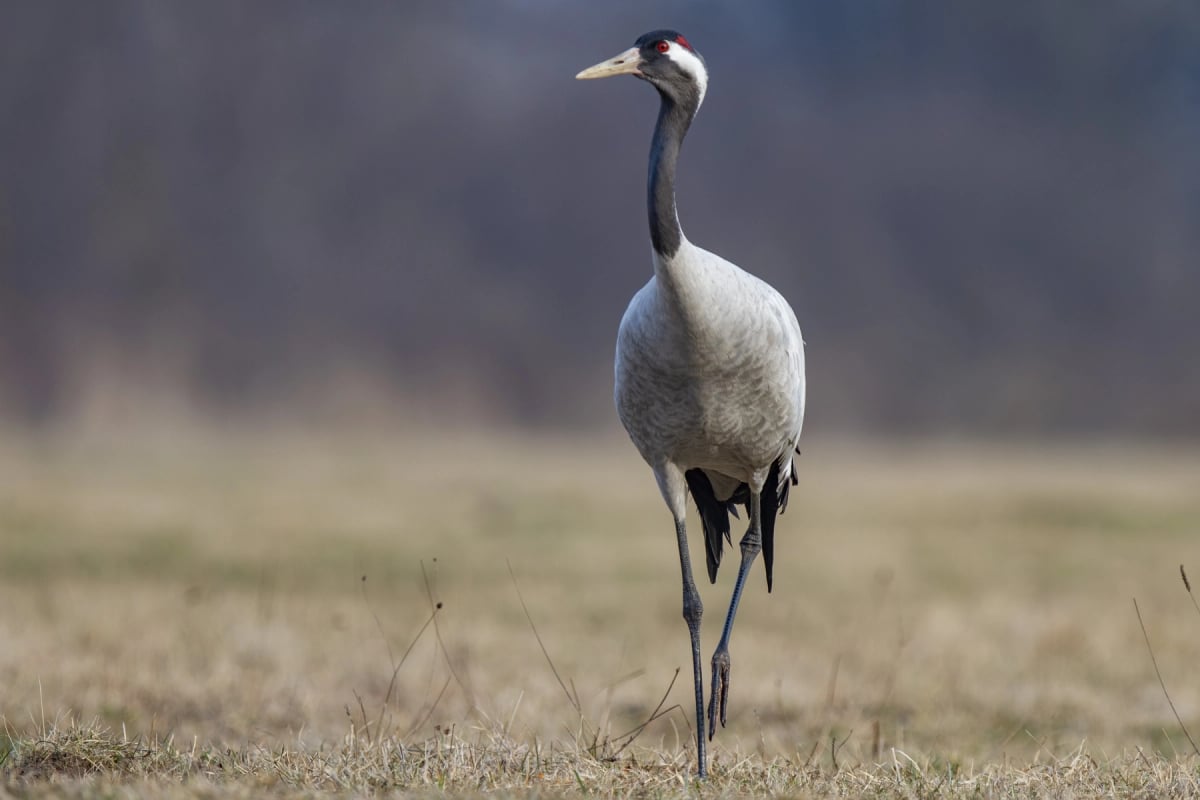
Crane
Grus grus
Kazakhstan sits along one of the most important migration corridors for the common crane, with large flocks crossing the vast steppes and wetlands of the north each spring and autumn. The Tengiz and Korgalzhyn lakes in central Kazakhstan are among the key staging areas where cranes stop to rest and feed. The species has a status of Least Concern on the IUCN Red List, and Kazakhstan's open landscapes support impressive numbers during passage.
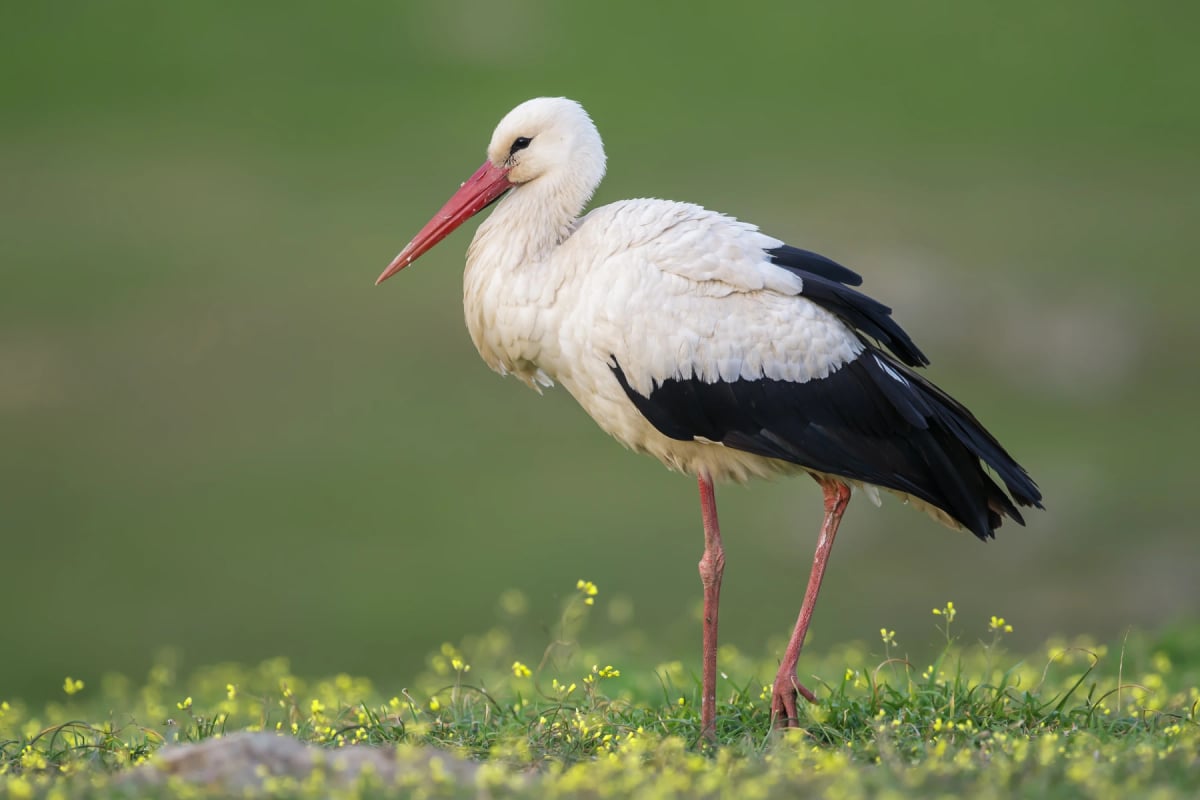
Stork
Ciconia ciconia
The white stork breeds in the western regions of Kazakhstan, particularly along river valleys and wetlands near the Ural River and in areas bordering the Caspian Sea. This represents the eastern fringe of the species' breeding range in Central Asia. Birds passing through Kazakhstan on migration use the region's rivers and wetlands as stopover points before continuing south toward wintering grounds in Africa and South Asia. IUCN status: Least Concern.
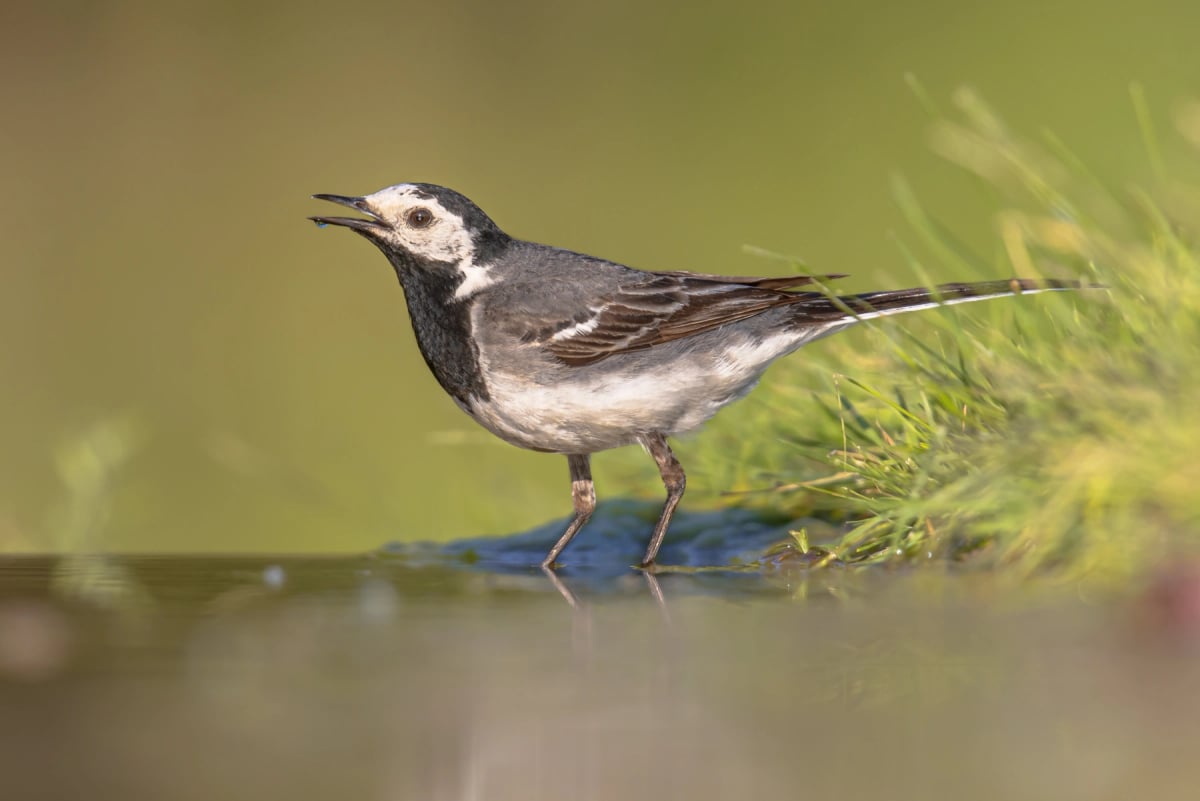
White Wagtail
Motacilla alba
Small black, white and grey bird with a slender tail that bobs up and down as it walks and feeds along the edges of water and open ground.
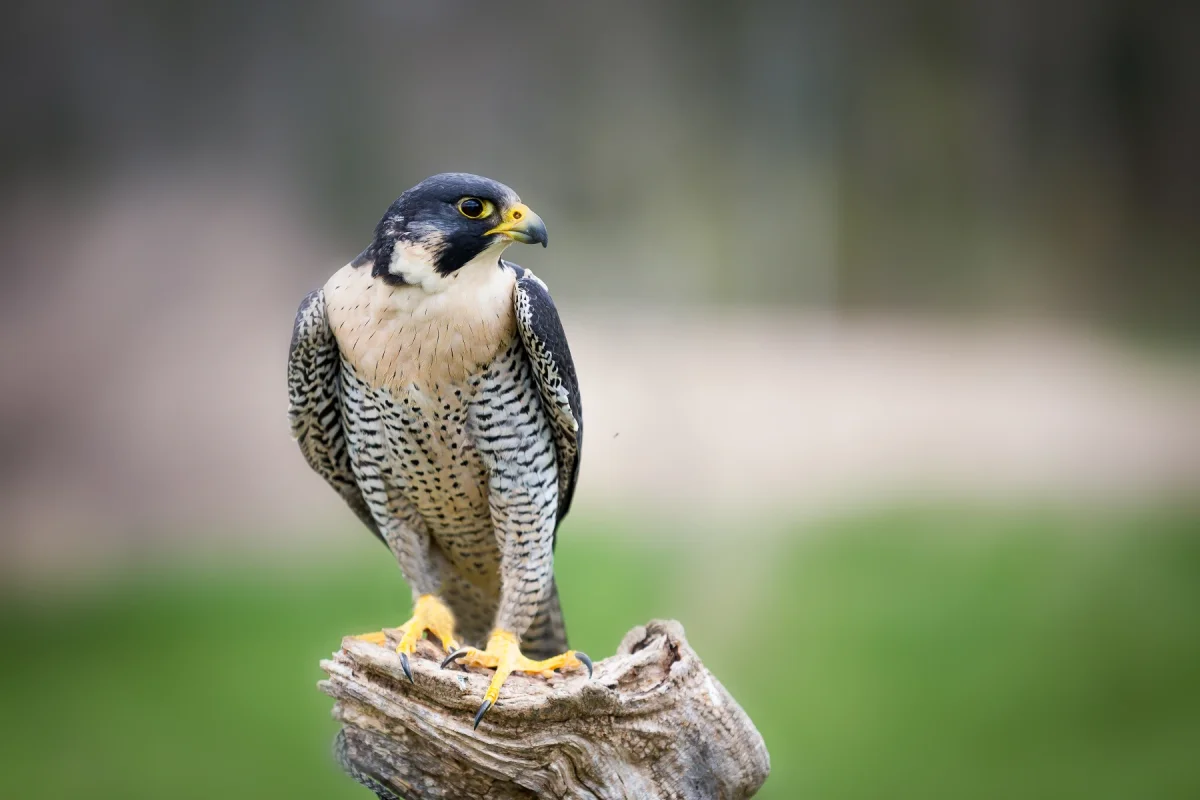
Peregrine Falcon
Falco peregrinus
Kazakhstan's vast steppes, mountain ranges like the Tian Shan and Altai, and its many river gorges all provide habitat for peregrine falcons. The species breeds in the rocky uplands and appears across the open lowlands during migration. Kazakhstan has historically been part of the falconry tradition in Central Asia, and the peregrine is among the most prized birds in that ancient practice. IUCN status: Least Concern.
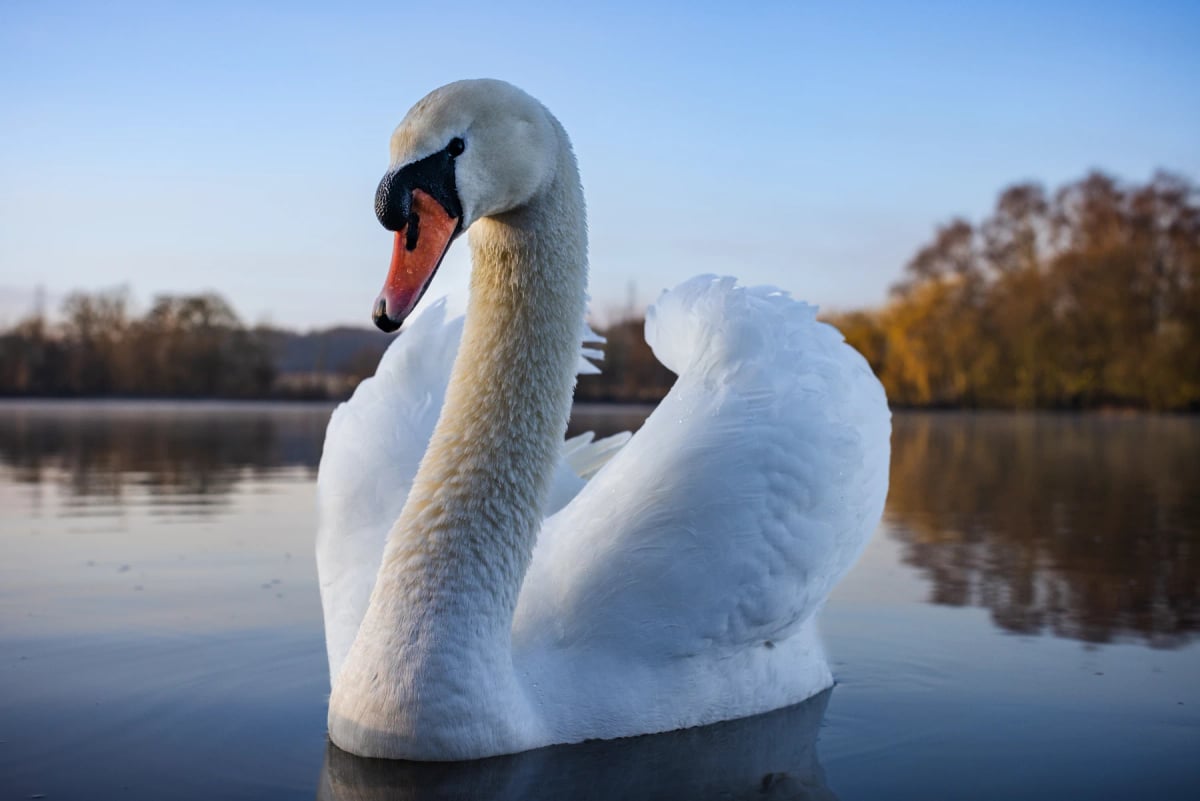
Mute Swan
Cygnus olor
Kazakhstan hosts mute swans both as breeding birds and as migrants passing through on their way between Central Asia and wintering grounds further south. Large steppe lakes such as those in the Kostanay region and wetlands around the Caspian Sea coast support nesting pairs and staging flocks. The vast network of shallow lakes across the northern steppes makes Kazakhstan an important country for this species. IUCN status: Least Concern.
Golden Eagle
Aquila chrysaetos
Kazakhstan is one of the most important countries in the world for the golden eagle, with vast populations spread across its steppes, mountains, and semi-arid plains. The Tian Shan and Altai ranges provide prime nesting habitat on cliff faces. Golden eagles also hold deep cultural significance here, as Kazakh falconers have trained them for hunting for centuries. The IUCN lists the species as Least Concern, and Kazakhstan remains a global stronghold.
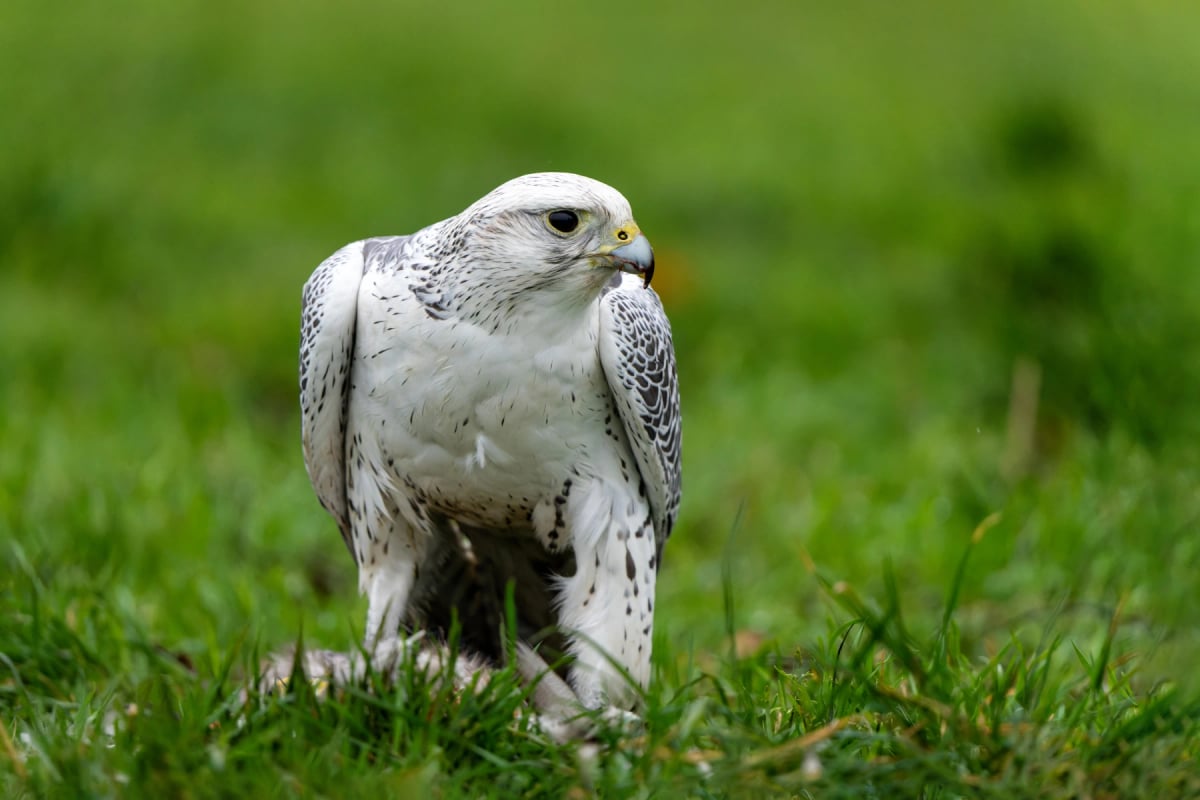
Gyrfalcon
Falco rusticolus
Kazakhstan's vast steppes and mountain ranges in the north and east provide seasonal habitat for the gyrfalcon, which visits mainly in winter. The open grasslands suit its hunting style perfectly, allowing it to chase prey across wide, unobstructed terrain. Ptarmigan and other birds make up most of its diet during these cold months. Falconry has deep cultural roots in Kazakhstan, and this species has long been admired as the finest bird for the sport. Its IUCN status is Least Concern.
Researched and written by Juan Pablo. Sources: IUCN Red List, scientific literature and regional field guides. Last updated: .