Koala
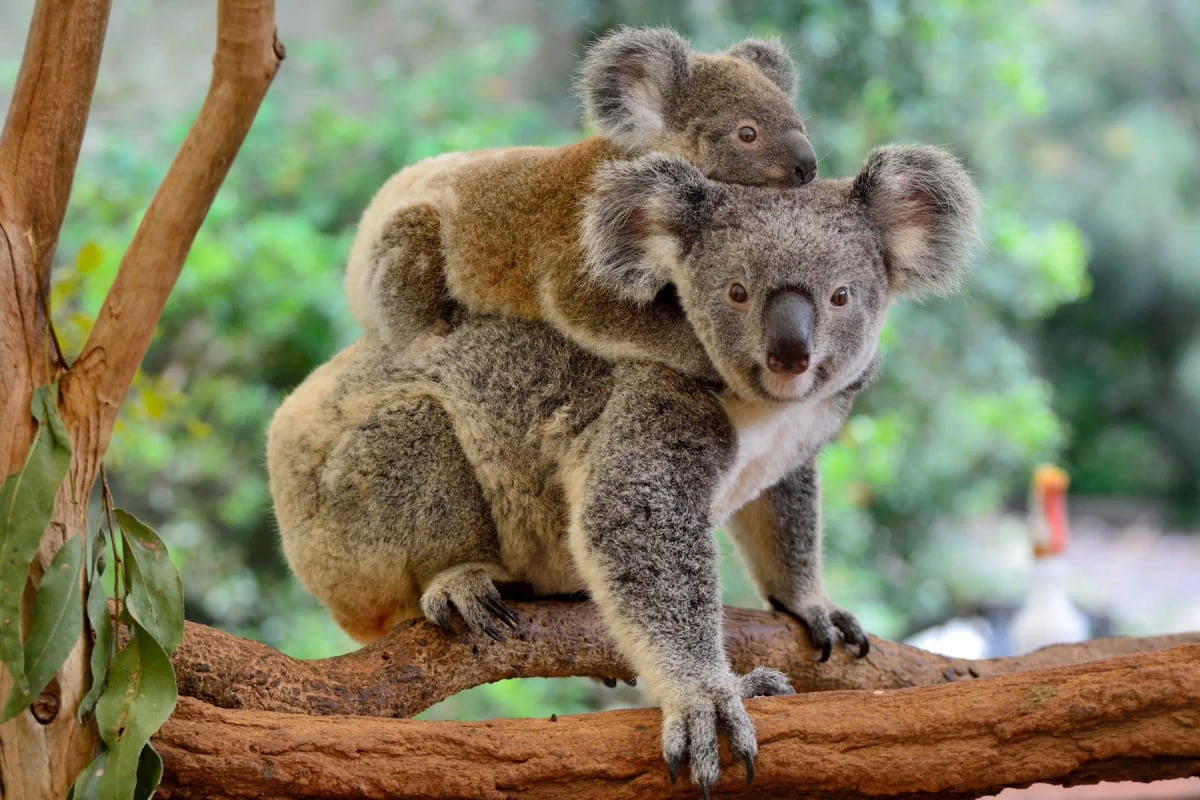
The koala is a tree-dwelling marsupial native to eastern and southeastern Australia, where it lives in eucalyptus forests and woodlands across Queensland, New South Wales, Victoria, and South Australia. It feeds almost entirely on eucalyptus leaves, which are toxic to most other mammals. A specially adapted digestive system, including an exceptionally long cecum, allows the koala to break down those toxins safely. Because eucalyptus leaves are low in nutrition, koalas conserve energy by resting for up to 20 hours each day. Adults are largely solitary, each holding a home range centered on a set of preferred trees. Males communicate through deep bellowing calls, especially during the breeding season. Females carry a single joey in their pouch for around six months, after which the young koala rides on its mother's back for several more months. The species is currently listed as Vulnerable by the IUCN.
Habitat and distribution
Found only in Australia, koalas occupy the eastern and southeastern portions of the continent, with populations spread across Queensland, New South Wales, Victoria, and South Australia. They rely almost entirely on eucalyptus forests and woodlands, and not just any eucalyptus will do. Different populations show strong preferences for particular species depending on the region, since the chemical profile of the leaves varies considerably from place to place. Koalas tend to favor tall, well-established trees close to water sources, which helps them cope during heat waves. Coastal and inland areas both support populations, though numbers are highest where large patches of connected forest remain. Fragmentation of these habitats is one of the biggest challenges the species faces today, as isolated patches leave koalas vulnerable and unable to move between areas.
Diet
Eucalyptus leaves make up nearly the entire diet of the koala, which makes this animal one of the most specialized feeders among all mammals. Those leaves contain toxic compounds called phenolics and terpenes that would be harmful to most other animals, but the koala handles them through a combination of adaptations. A very long cecum, one of the longest relative to body size found in any mammal, hosts bacteria that help break down the toxins before they can cause harm. The liver also plays an important role in processing whatever gets absorbed. Because eucalyptus leaves offer very little energy or protein, koalas must eat large quantities each day, typically between 200 and 500 grams. They obtain most of their water directly from the leaves, though they do drink during hot weather or illness.
Behavior
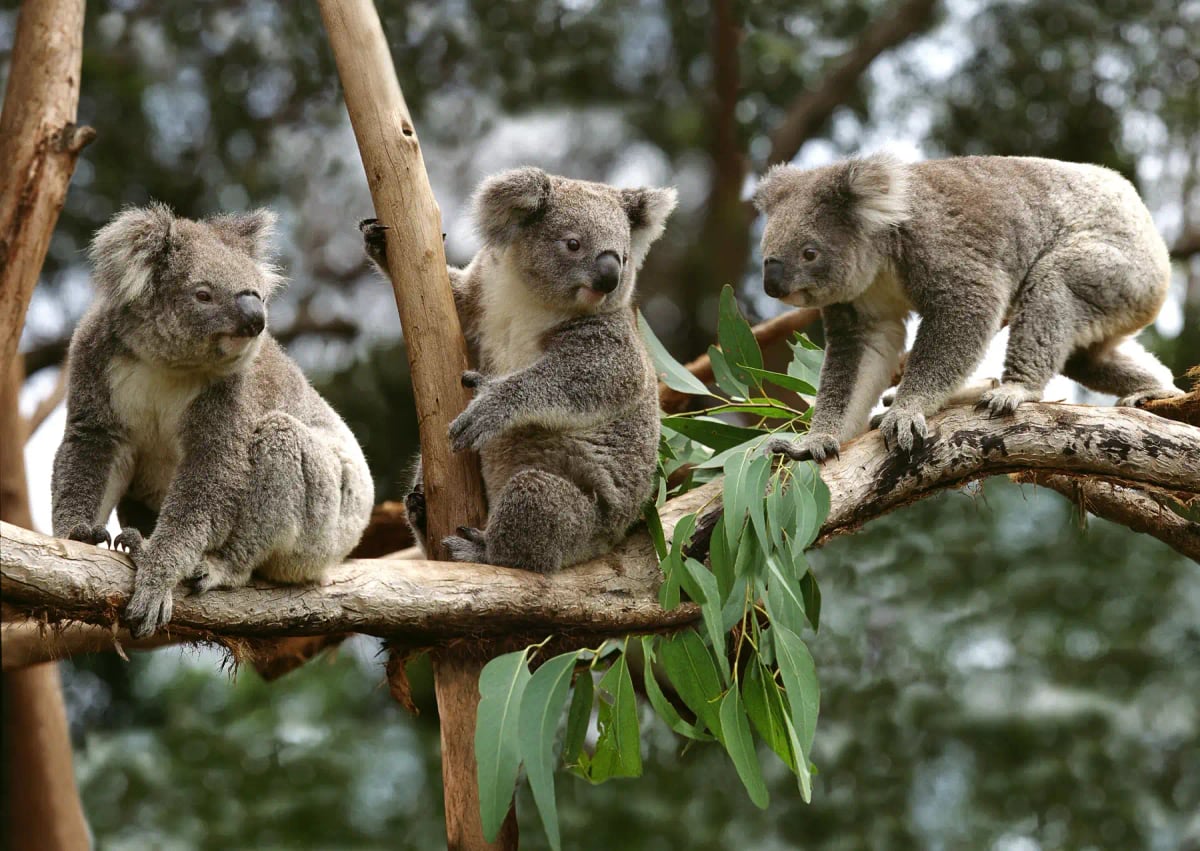
Resting is the defining activity of the koala's daily life. Because eucalyptus leaves deliver so little energy, koalas conserve what they have by sleeping or sitting still for up to 20 hours every day, usually wedged securely in the fork of a tree. They are mostly active at night, moving between trees to feed or, during the breeding season, to find a mate. Adults live largely solitary lives, each individual maintaining a home range built around a set of trees it returns to regularly. Males produce a deep, rumbling bellow that carries over long distances, used to announce their presence to rivals and attract females. Mothers carry a single joey in the pouch for around six months, and the young koala then spends several more months riding on its mother's back before becoming independent.
Threats
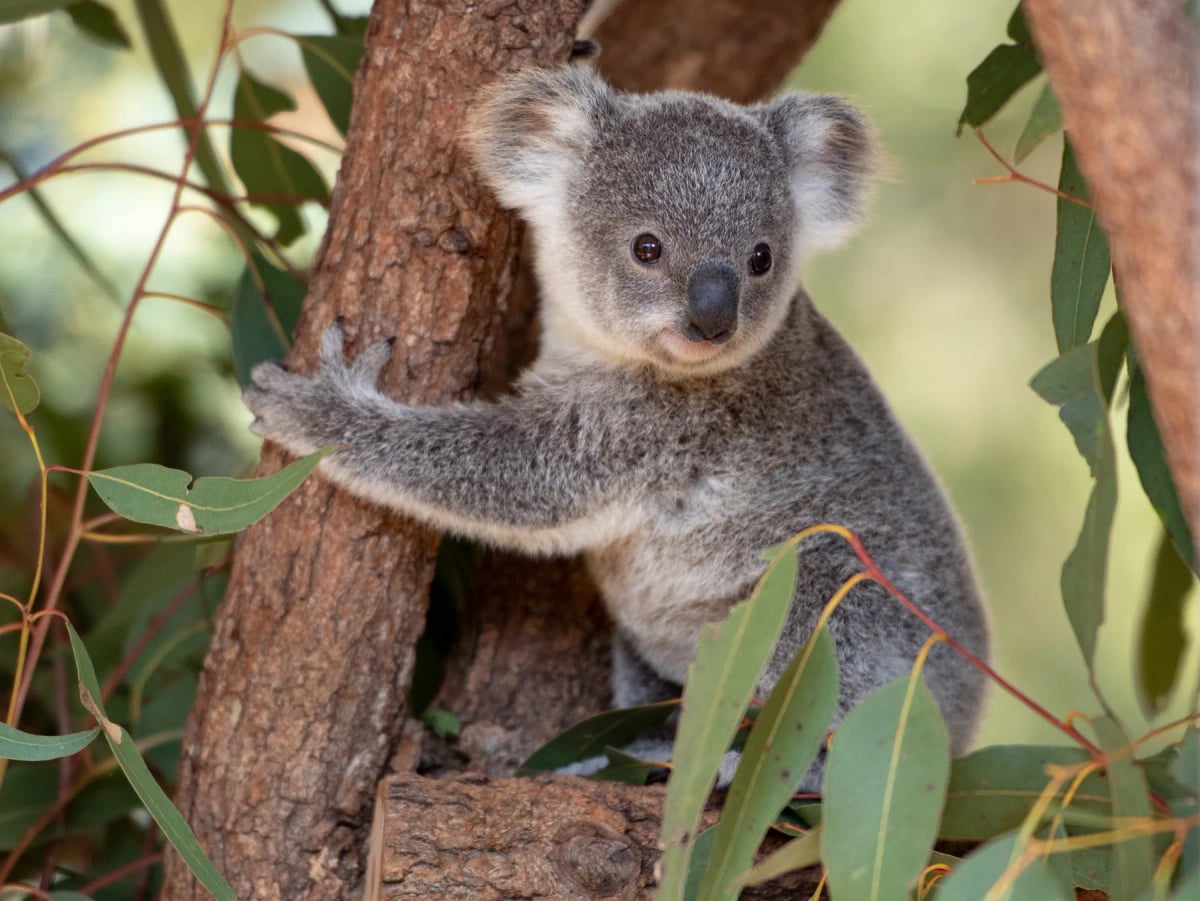
Pressure on koala populations comes from several directions at once. Land clearing for agriculture and urban development has removed vast areas of eucalyptus woodland over the past two centuries, leaving many populations isolated in small patches of forest. Bushfires have always been part of the Australian landscape, but their increasing intensity and frequency are destroying habitat faster than it can recover. Climate change is also altering the nutritional content of eucalyptus leaves, making them less suitable as food. Disease is another serious concern. Chlamydia, a bacterial infection widespread in koala populations, causes blindness and infertility and can be fatal if untreated. Vehicle strikes and dog attacks add further pressure, particularly where urban areas border remaining forest. Together, these threats have driven significant population declines across much of the species' range.
Conservation
The IUCN currently lists the koala as Vulnerable, and in 2022 the Australian government upgraded its national status from Vulnerable to Endangered across Queensland, New South Wales, and the Australian Capital Territory, reflecting serious declines in those regions. Efforts to protect the species span a range of approaches. Wildlife hospitals and rehabilitation centers treat injured and sick koalas, including those suffering from chlamydia, with dedicated research programs working to develop a viable vaccine. Habitat protection remains the most critical priority, with conservation groups and government agencies working to secure corridors of connected forest that allow koalas to move safely between populations. Planting programs aim to restore degraded woodland. Public awareness campaigns have also helped reduce vehicle strikes in areas where koala crossings are common, making roads less deadly for animals on the move.
Researched and written by Juan Pablo. Sources: IUCN Red List, scientific literature and regional field guides. Last updated: .
Technical factsheet
Frequently Asked Questions
What do koalas eat?
Koalas eat almost exclusively eucalyptus leaves, which are toxic to most other animals. A very long cecum packed with specialized bacteria helps them break down those toxins safely. Because the leaves are low in energy, koalas need to eat between 200 and 500 grams every day. They also get most of their water straight from the leaves, though they will drink during hot weather or when they are unwell.
How many hours a day do koalas sleep?
Koalas sleep or rest for up to 20 hours a day. This is not laziness. Eucalyptus leaves provide very little energy, so resting is simply how koalas balance their energy budget. They are most active at night, when they move between trees to feed or search for a mate. During the day, you will almost always find them wedged into the fork of a tree, completely still.
Are koalas bears?
No, koalas are not bears at all. They are marsupials, which means females carry their young in a pouch. They are more closely related to wombats than to any bear species. The nickname "koala bear" caught on in the early days of European settlement in Australia and has stuck ever since, but it is scientifically incorrect. Koalas belong to a completely separate branch of the mammal family tree.
Where do koalas live?
Koalas are found only in Australia, along the eastern and southeastern parts of the continent. Their range covers Queensland, New South Wales, Victoria, and South Australia. They live in eucalyptus forests and woodlands and are very selective about which tree species they use, since leaf chemistry varies by region. Populations are healthiest where large areas of connected forest remain intact, allowing animals to move freely between trees.
Are koalas endangered?
The IUCN lists the koala as Vulnerable globally. However, in 2022 the Australian government raised the national status to Endangered in Queensland, New South Wales, and the Australian Capital Territory, where declines have been most severe. Habitat loss, bushfires, disease, vehicle strikes, and the effects of climate change are all contributing to falling numbers. The situation is serious, though active conservation work is underway across the country.
How do koalas raise their young?
A female koala gives birth to a single joey, which is tiny at birth and crawls into its mother's pouch to continue developing. It stays in the pouch for around six months. After that, the young koala rides on its mother's back for several more months, gradually learning which trees and leaves to eat. Koalas typically give birth to one joey per year at most.
Do koalas have fingerprints?
Yes, koalas are one of the very few non-human animals with fingerprints that closely resemble those of humans. Even under a microscope, koala fingerprints and human fingerprints are remarkably similar, with loops and whorls that look nearly identical. Scientists believe these prints help koalas grip branches more securely. This is a case of convergent evolution, where two unrelated species independently developed the same feature.