Cuban Hutia
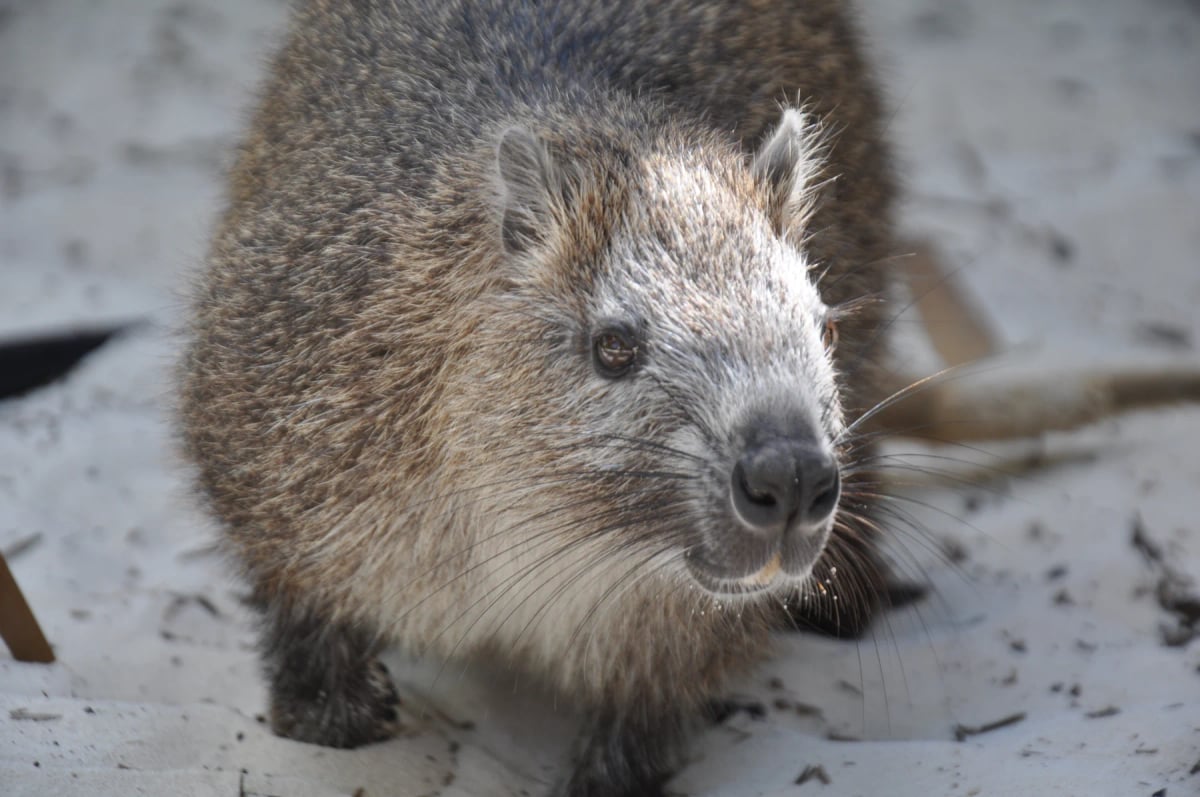
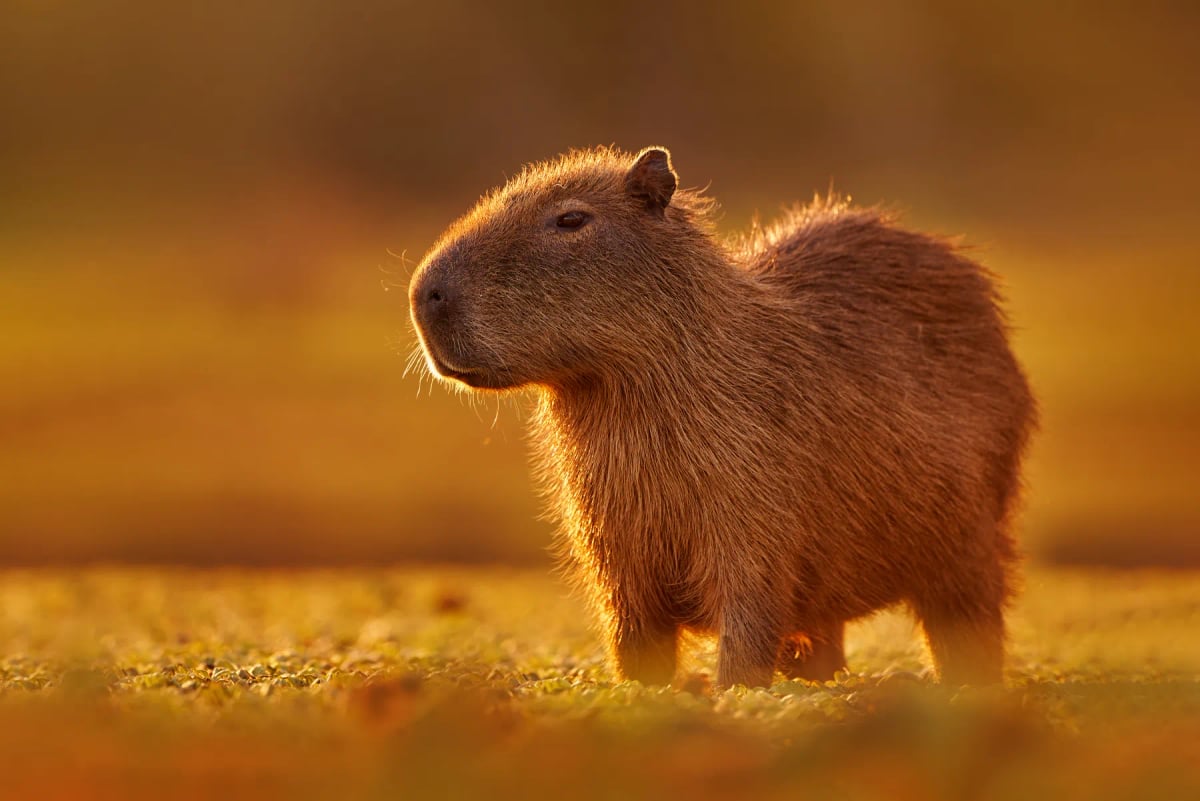
The Cuban hutia (Capromys pilorides), also known as Desmarest's hutia, is a stocky rodent found only in Cuba and its surrounding keys. It has coarse, brownish fur, a blunt muzzle, and a long scaly tail that gives it a passing resemblance to a large rat with a beaver's build. This species occupies a wide range of habitats, from coastal scrub and mangroves to dry forests and rocky slopes. It feeds mainly on leaves, bark, fruits, and young shoots, and gets much of its water from plant matter. Activity peaks from late afternoon through the night, and individuals are capable climbers despite spending plenty of time on the ground. Cuban hutias typically live in pairs or small family groups and shelter in rock crevices, burrows, or tree cavities. The IUCN lists the species as Least Concern, though habitat loss and hunting have caused local population declines.
Habitat and distribution
The Cuban hutia is found nowhere else on Earth outside of Cuba, making it a true island endemic. Its range includes Isla de la Juventud and a scatter of offshore keys along the Cuban coastline. Across this territory it thrives in a surprisingly wide variety of environments: coastal scrub, mangrove forests, dry deciduous forests, and rocky hillsides all suit it well. This flexibility is one reason the species has held on across centuries of habitat change. For shelter, hutias rely on natural rock crevices, hollow tree trunks, root tangles, and burrows in the soil. They tend to favor areas where dense vegetation or broken rocky terrain gives them quick cover from predators. Elevation is not a limiting factor, and populations can be found from sea level well into the interior of the island.
Diet
Food for the Cuban hutia comes almost entirely from plants. Leaves make up a large part of its daily intake, alongside bark stripped from branches, ripe and unripe fruits, seeds, and the tender new shoots of shrubs and trees. When food is scarce it will gnaw through tougher woody stems to reach the softer tissue underneath. Because much of what it eats contains a fair amount of water, the hutia can go long stretches without drinking directly. This dependence on vegetation means its feeding activity follows the availability of seasonal plants. Hutias have also been observed eating small lizards or invertebrates on occasion, though these animal sources appear to be opportunistic rather than a regular part of the diet. Their strong, ever-growing incisors make short work of even quite hard plant material.
Behavior
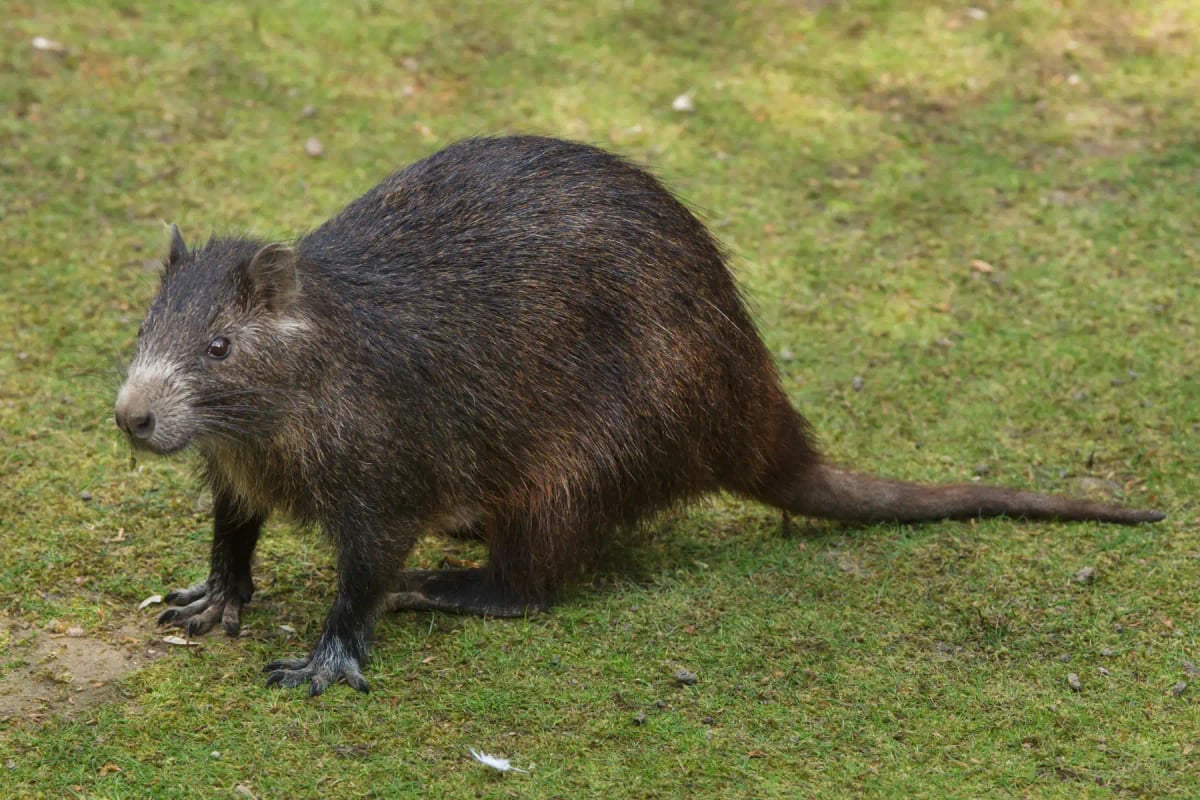
Activity in the Cuban hutia picks up sharply in the late afternoon and continues through much of the night, giving it a pattern somewhere between crepuscular and nocturnal. During the hottest parts of the day it rests in its shelter. Though it spends a good deal of time on the ground, it is a capable climber and will move through tree canopies in search of leaves and fruit. Hutias generally live as bonded pairs or in small family groups rather than large colonies. Communication relies on a range of sounds, including squeaks, grunts, and whistles. Home ranges are relatively modest in size, and individuals tend to stay faithful to a core area they know well. When threatened, a hutia will freeze first before retreating quickly to the nearest cover rather than attempting to fight.
Reproduction
Cuban hutias can breed at almost any time of year, though births appear to cluster during the wetter months when plant food is most abundant. Gestation lasts roughly four months, which is quite long for a rodent of this size. Litters are small, usually consisting of one or two young, but the newborns arrive in an advanced state of development: they are born fully furred, with their eyes open, and capable of moving around within hours. This is quite different from many rodents whose young are born helpless. Females nurse their pups for several weeks, and the family group often stays together for some time after weaning. The combination of few offspring per litter and attentive parental care is thought to improve survival rates for the young during their most vulnerable period.
Relation with humans
People and hutias have shared the Cuban landscape for thousands of years. Archaeological evidence confirms that indigenous Taíno communities hunted them as a food source, and that tradition carried on in rural areas well into modern times. In parts of the Cuban countryside the hutia is still hunted for its meat, which is considered a local delicacy. Where forests border farmland, hutias occasionally venture into gardens or fields to feed on crops, which brings them into conflict with smallholders. Basic measures such as fencing or clearing brush near planting areas tend to reduce these encounters. In captivity, Cuban hutias have been kept in zoos and research facilities, where they adapt reasonably well and have contributed to studies of Caribbean mammal biology. Their tolerance of humans in low-disturbance settings is fairly high compared to many wild rodents.
Conservation
Across most of its range, the Cuban hutia remains relatively widespread and its overall population is considered stable. The IUCN rates it as Least Concern, reflecting the fact that the species as a whole is not facing immediate risk of extinction. That said, the picture at the local level is more complicated. Deforestation for agriculture and urban expansion has fragmented suitable habitat in several regions of Cuba. Introduced predators, particularly cats and rats, add pressure in areas where native forest cover has been lost. Hunting for food, though generally small in scale, continues in some rural communities. The species benefits from its presence within protected areas such as national parks and biosphere reserves on the island. Maintaining those protected zones and managing introduced species will be important for keeping hutia populations healthy over the long term.
Researched and written by Juan Pablo. Sources: IUCN Red List, scientific literature and regional field guides. Last updated: .
Technical factsheet

Frequently Asked Questions
What does the Cuban hutia eat?
Cuban hutias are mostly plant eaters. Their diet includes leaves, bark, fruits, seeds, and young shoots. When food is scarce, they gnaw through woody stems to reach softer tissue inside. Because so much of what they eat contains water, they rarely need to drink directly. On occasion they will snack on a small lizard or insect, but plant material makes up the overwhelming bulk of their meals.
Where does the Cuban hutia live?
The Cuban hutia is found only in Cuba and some of its surrounding keys, including Isla de la Juventud. It adapts well to many different environments, from mangrove forests and coastal scrub to dry forests and rocky hillsides. For shelter it uses rock crevices, hollow trees, and burrows. This flexibility in both habitat choice and hiding spots helps it survive across a wide stretch of the island.
Is the Cuban hutia endangered?
The Cuban hutia is listed as Least Concern by the IUCN, meaning the species as a whole is not at immediate risk of extinction. However, things are harder at the local level. Deforestation, introduced predators like cats and rats, and hunting in rural areas have caused population drops in some regions. Protected areas across Cuba play a key role in keeping the overall population stable.
Is the Cuban hutia nocturnal?
The Cuban hutia is most active from late afternoon through the night, so it sits somewhere between crepuscular and nocturnal behavior. During the hottest hours of the day it rests inside its shelter. Despite spending a good amount of time on the ground, it is also a skilled climber and will move through tree canopies to reach leaves and fruit once the temperature drops.
How does the Cuban hutia reproduce?
Cuban hutias can breed throughout the year, though births tend to cluster during wetter months when food is plentiful. Pregnancy lasts around four months, which is unusually long for a rodent. Litters are small, typically one or two young, but the newborns are already fully furred with their eyes open and can move around within hours of birth. This advanced development gives them a much better chance of survival from the start.
Do people eat Cuban hutias?
Yes, hutias have been eaten in Cuba for thousands of years. Archaeological findings show that indigenous Taíno communities hunted them long before European arrival, and that tradition has continued in rural parts of the island. The meat is considered a local delicacy in some areas. On a larger scale, hutias occasionally feed on crops near farmland, which can bring them into conflict with people who grow food.
What are the main predators of the Cuban hutia?
In Cuba, hutias face threats from both native and introduced predators. Introduced cats and rats put particular pressure on populations in areas where forest cover has been reduced. Native birds of prey also hunt them. When a hutia senses danger, it tends to freeze first and then dash toward the nearest rock crevice or thick vegetation rather than trying to defend itself directly.