Wombat
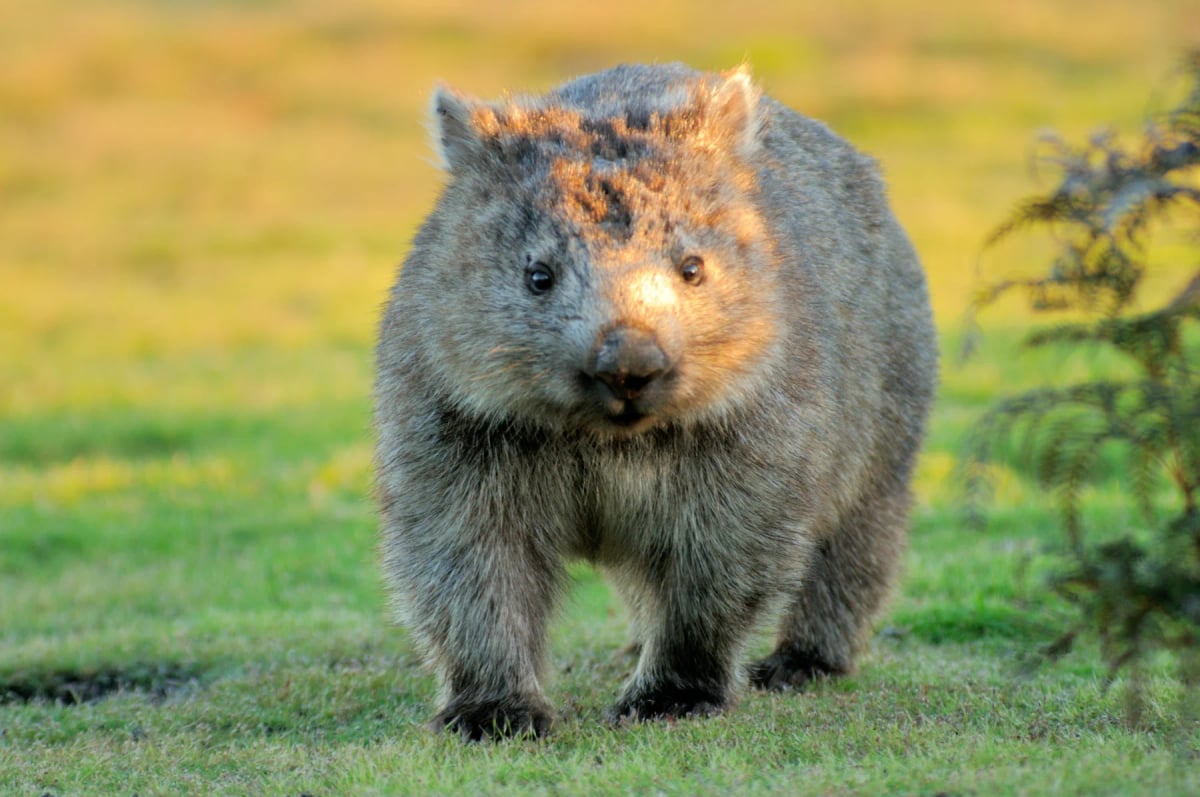
Wombats are stocky marsupials found only in Australia, built for a life spent mostly underground. Their short, powerful legs and broad claws let them carve out extensive tunnel systems that reach several metres in length, offering shelter from heat, cold, and predators alike. They graze at night on grasses, roots, sedges, and bark, fuelled by one of the slowest digestive systems of any mammal. It can take a wombat up to two weeks to fully digest a meal, which helps it extract the most from vegetation that is poor in nutrients. Their pouch opens toward the rear, keeping joeys free of dirt while the mother digs. Perhaps the most remarkable thing about wombats is that they produce cube-shaped droppings, the only mammals known to do so. A hardened, cartilage-reinforced rump doubles as a shield when a predator enters a burrow.
Habitat and distribution
Common wombats are found across southeastern Australia, including New South Wales, Victoria, South Australia, and the whole of Tasmania. They occupy a wide variety of environments, from coastal scrubland and open eucalyptus forest to subalpine grasslands at considerable elevation. What these habitats share is soil firm enough for digging. Wombats are highly dependent on their burrow systems, which can stretch up to 30 metres in length and branch into several chambers. These tunnels stay cool in summer and relatively warm in winter, acting as a natural refuge from temperature extremes and from predators such as dingoes, foxes, and Tasmanian devils. Areas with a reliable supply of native grasses and access to water nearby tend to support the healthiest populations.
Diet
Grazing is the foundation of a wombat's diet. They feed mostly on native grasses, sedges, roots, and occasionally the inner bark of shrubs, seeking out whatever is most nutritious in their patch of land. Their teeth grow continuously throughout their lives, much like those of rodents, which helps them cope with tough, abrasive vegetation. The digestive process is extraordinarily slow: a wombat can take up to two weeks to fully process a single meal, one of the longest digestion times recorded in any mammal. This slow passage through the gut allows the body to extract as much energy and moisture as possible from food that is poor in nutrients. As a result, wombats can survive in areas where vegetation is sparse and water is scarce.
Behavior
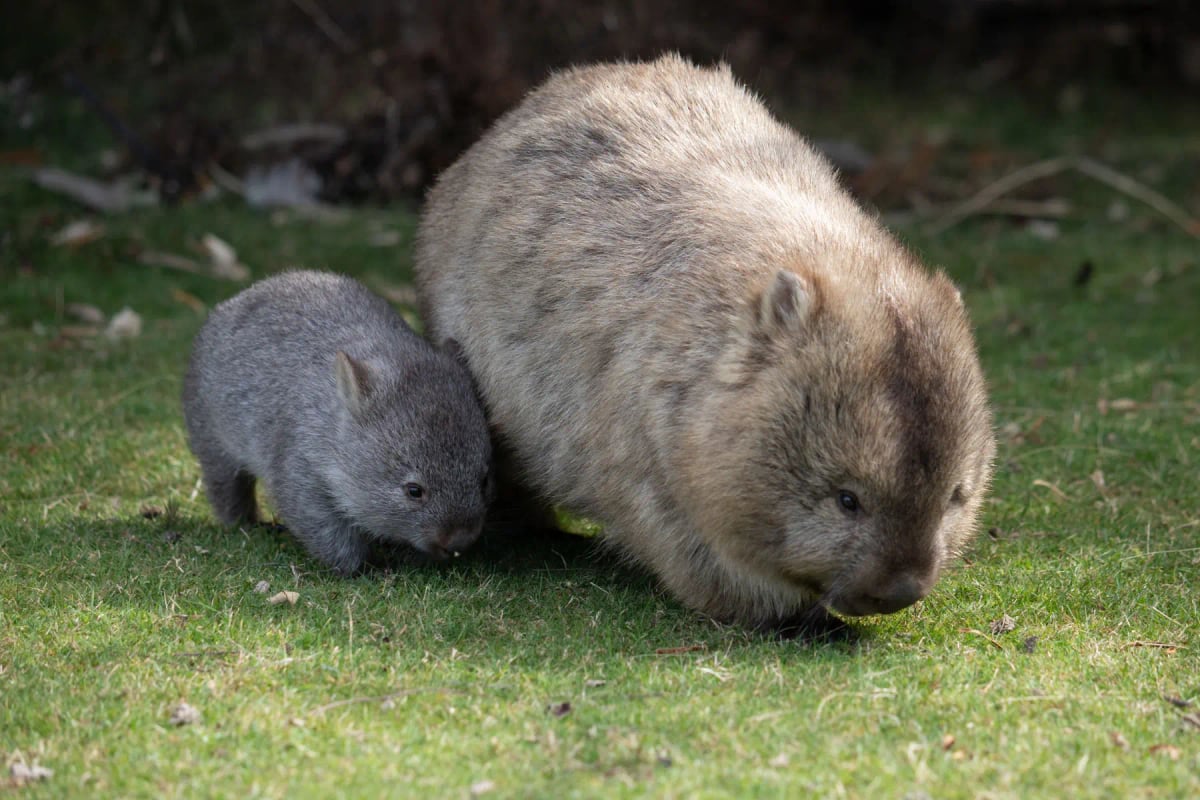
For most of the day, wombats rest underground, avoiding the heat and conserving energy. After dark they emerge to graze, sometimes covering a kilometre or more in a single night. Although they are generally solitary animals, individual wombats may share a loose network of overlapping home ranges and occasionally tolerate each other near feeding areas. They communicate through scent, leaving droppings at prominent points along their paths to signal their presence to others. A wombat's most famous calling card is its droppings, which are uniquely cube shaped. Researchers have found that this shape results from the way the walls of the intestine contract unevenly during digestion, rather than from any external squeezing. These cube shaped pellets stack on rocks and logs without rolling off, making them more effective as scent markers.
Special adaptations
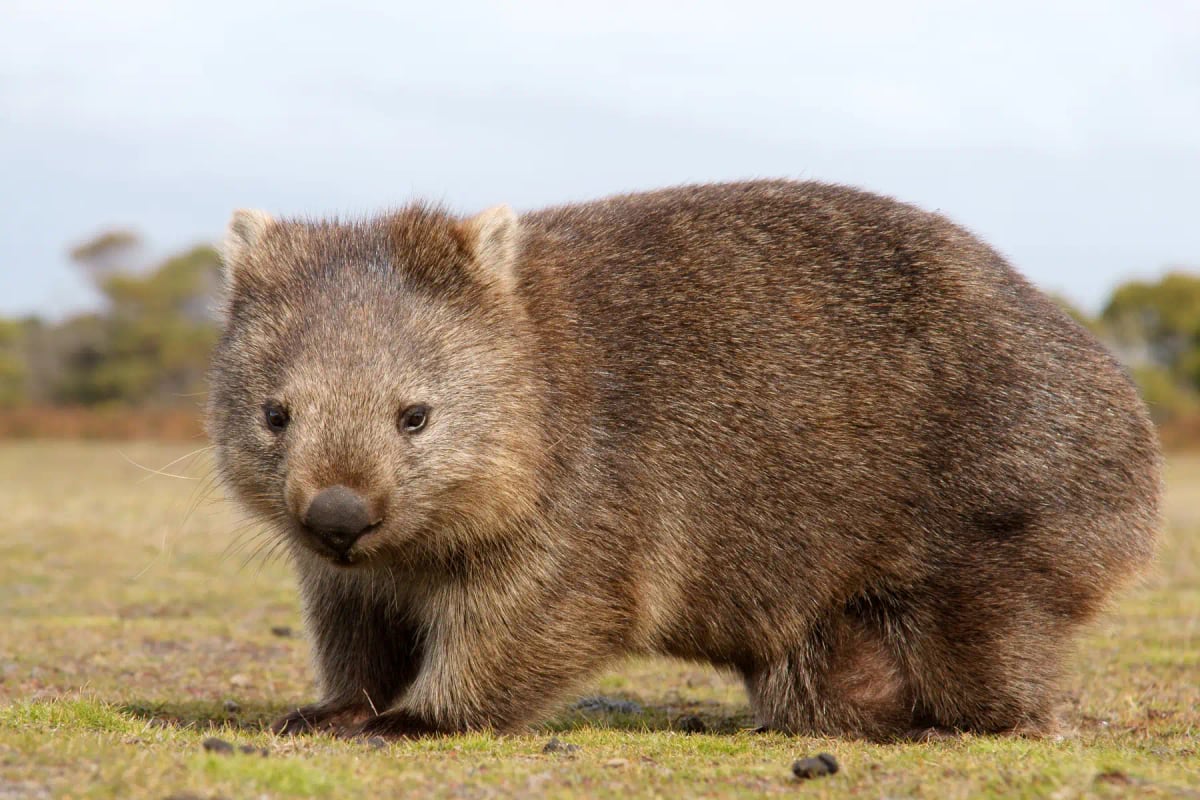
Few animals are as well built for underground life as the wombat. Its short, muscular legs and broad, flat claws make it a powerful digger, capable of moving large amounts of soil quickly. The pouch opens toward the rear rather than the front, which keeps dirt and debris away from the joey as the mother works. When it comes to defence, the wombat relies on a rump reinforced with cartilage and tough skin, which acts as a living shield. If a predator follows it into a burrow, the wombat uses this hardened backside to block the tunnel entrance, and can crush an intruder against the burrow wall with considerable force. A wombat can also sprint at up to 40 kilometres per hour over short distances, surprising for an animal of its build.
Conservation
The common wombat holds a status of Least Concern on the IUCN Red List, though pressures from habitat loss, vehicle collisions, and mange caused by the introduced mite Sarcoptes scabiei remain ongoing concerns. The picture is far more serious for Australia's other wombat species. The northern hairy nosed wombat is one of the rarest mammals on Earth, listed as Critically Endangered, with a single wild population surviving inside a fenced sanctuary at Epping Forest National Park in Queensland. The southern hairy nosed wombat is listed as Least Concern but faces stress from drought and competition with livestock. Conservation efforts for the most vulnerable species focus on protecting existing populations, managing disease, and carefully moving individuals to establish new colonies.
Researched and written by Juan Pablo. Sources: IUCN Red List, scientific literature and regional field guides. Last updated: .
Technical factsheet


Frequently Asked Questions
What do wombats eat?
Wombats are grazers that feed mainly on native grasses, sedges, and roots. Occasionally they chew on the bark of shrubs. Their teeth never stop growing, which helps them handle tough, fibrous plants. Digestion takes up to two weeks, one of the slowest rates of any mammal. This allows them to squeeze every bit of energy and moisture from vegetation that is poor in nutrients.
Why do wombats produce cube-shaped droppings?
Wombats are the only mammals known to produce cube-shaped droppings. This unusual shape comes from the way the walls of the intestine contract unevenly as waste moves through, not from any squeezing at the end. The cubic pellets are less likely to roll off rocks or logs, making them much more effective as scent markers for communicating with other wombats.
Where do wombats live?
Common wombats are found across southeastern Australia, including New South Wales, Victoria, South Australia, and Tasmania. They live in a wide range of environments, from coastal scrubland and eucalyptus forest to grasslands at high elevation. The key requirement is soil firm enough to dig in, since wombats depend on their burrow systems for shelter from heat, cold, and predators.
How do wombats defend themselves?
A wombat's main defence is its tough, cartilage-reinforced rump, which acts like a living shield. If a predator follows it into a burrow, the wombat blocks the entrance with its backside and can crush the intruder against the tunnel wall with considerable force. They can also sprint at up to 40 kilometres per hour over short distances, which is remarkably fast for an animal of their size and build.
Are wombats endangered?
The common wombat is listed as Least Concern by the IUCN, but it still faces threats from habitat loss, road collisions, and mange caused by an introduced mite. The situation is much more serious for other wombat species. The northern hairy nosed wombat is Critically Endangered and one of the rarest mammals on Earth, with its entire wild population living inside a single fenced sanctuary in Queensland.
Are wombats nocturnal?
Yes, wombats are mostly nocturnal. They spend the daylight hours resting in their burrows, which stay cool in summer and relatively warm in winter. Once night falls, they come out to graze, sometimes travelling more than a kilometre in search of food. This lifestyle helps them avoid the hottest part of the day and reduces their exposure to predators that hunt by sight.
How long are wombat burrows?
Wombat burrows can reach up to 30 metres in length and branch into several separate chambers. Digging these tunnels is possible thanks to the wombat's short, powerful legs and broad, flat claws. The burrows keep a stable temperature year round, offering protection from extreme heat and cold as well as from predators like dingoes and foxes. Some burrows are used by multiple wombats over many years.