Reef Shark
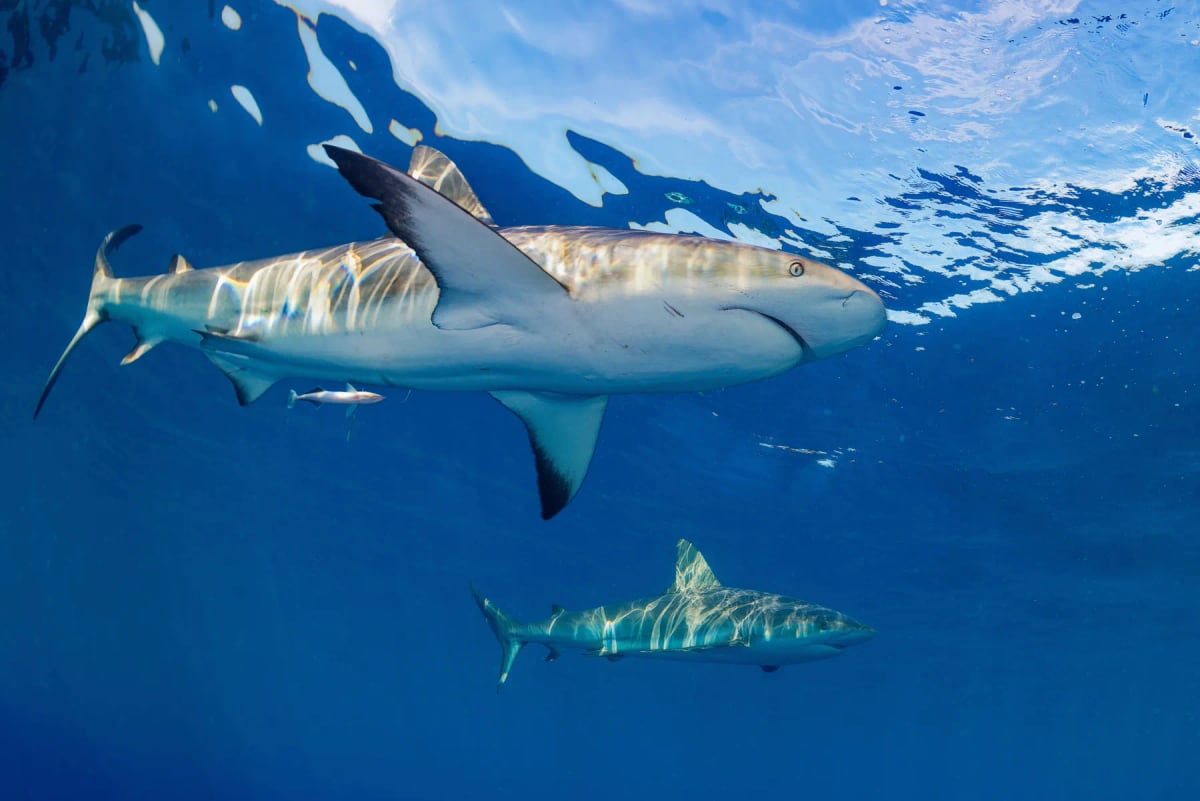
Reef sharks are medium-sized predators that patrol warm, shallow waters around coral reefs and sandy lagoons across the Indo-Pacific and Atlantic. The name covers several species within the genus Carcharhinus, most notably the whitetip reef shark, the blacktip reef shark, and the Caribbean reef shark. Adults typically measure between 1.5 and 2.5 metres and weigh up to 70 kilograms, depending on species. They feed on reef fish, squid, octopus, and crustaceans, and are most active during the night, though they can be seen patrolling reef edges throughout the day. Their role as predators at the middle of the food chain helps keep reef fish populations in balance. Overfishing and the trade in shark fins have put pressure on populations, and the blacktip reef shark is currently listed as Vulnerable on the IUCN Red List.
Appearance
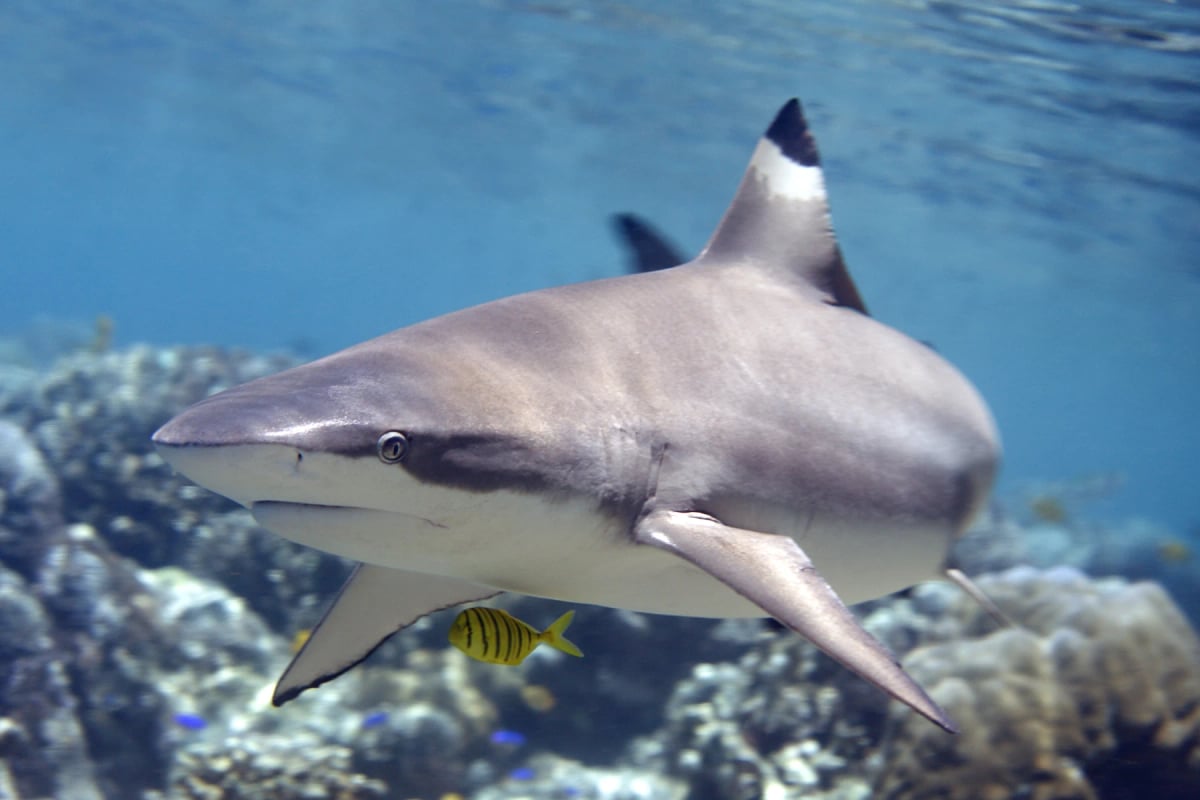
Most reef sharks share a similar build: a sleek, torpedo-shaped body covered in grey or brownish skin, with a pale or white underside. This two-tone coloring, known as countershading, makes them harder to spot from above and below in the water. The different species can often be told apart by their fins. Blacktip reef sharks have bold black markings on the tips of most fins, while whitetip reef sharks carry white tips on the dorsal and tail fins. Caribbean reef sharks are plainer, with only faint markings. Adults across all three species typically reach between 1.5 and 2.5 metres in length. Their pectoral fins are broad and their snouts are rounded, giving them a sturdy, confident look as they glide through the water.
Behavior
Reef sharks are creatures of habit. They tend to patrol the same stretches of reef day after day, following familiar routes along the edges of drop-offs and through shallow lagoons. Although they are most active after dark, when prey is easier to corner among the coral, they can be seen moving steadily through the water at any hour. Blacktip reef sharks are often spotted alone or in small, loose groups near the surface, while whitetip reef sharks spend daylight hours resting in caves or on the seabed, sometimes lying in piles with several others. When threatened or excited, reef sharks perform a distinctive arching display, raising the snout and curving the body. Divers who witness this posture are advised to keep their distance.
Diet
Hunting is largely a nighttime affair for reef sharks. Once the sun goes down, they move into shallower water and target reef fish such as wrasses, parrotfish, and surgeonfish, along with squid, octopus, and crustaceans. Their speed and agility let them chase fish into tight spaces among coral heads where larger predators cannot follow. Sitting in the middle of the food chain, reef sharks play a genuine role in keeping reef ecosystems healthy. By picking off weaker or slower fish, they prevent any single prey species from growing too numerous and upsetting the balance of life on the reef. Without that kind of pressure from predators, algae-eating fish can decline, which leads to algae overgrowing and smothering coral.
Interaction with humans
For many divers and snorkelers, a reef shark gliding past is one of the highlights of a dive. These sharks are generally calm around people and rarely show aggression unless cornered, provoked, or attracted by speared fish. Blacktip reef sharks in particular are known for being curious without being bold, often circling at a distance before moving on. Unprovoked attacks on humans are very rare, and the species involved are not considered among the most dangerous sharks in the ocean. In many coastal communities, especially across the Pacific and Caribbean, reef shark encounters have become a valued part of dive tourism. Research shows that a single reef shark can generate far more income for a local economy through tourism over its lifetime than it would as a catch.
Threats
Pressure on reef shark populations comes from several directions at once. The fin trade remains one of the most damaging forces, with sharks caught, finned, and discarded at sea to supply demand for shark fin soup across parts of Asia. Overfishing affects them both directly, through targeted catches, and indirectly, by depleting the prey fish they depend on. Coral reef degradation caused by rising ocean temperatures, pollution, and destructive fishing practices removes the very habitat reef sharks need to feed and reproduce. Adding to these pressures is the fact that reef sharks reproduce slowly. Females typically give birth to between two and six pups per litter after a gestation period that can exceed a year, meaning populations take a long time to recover from sharp declines.
Conservation
Efforts to protect reef sharks are growing, though the work is far from complete. Marine protected areas, where fishing is restricted or banned, have proven effective at keeping shark numbers stable in places like the Great Barrier Reef and various Pacific island nations. Several countries, including the Bahamas and the Maldives, have declared their waters sanctuaries where all shark fishing is prohibited. International trade in several reef shark species is now regulated under CITES, the global agreement that controls the trade in wildlife. Ecotourism has also become a practical argument for conservation, since healthy shark populations attract divers and bring income to local communities. On the science side, tagging studies continue to reveal how far these sharks travel, which helps governments design protected areas that actually match the sharks' real movements.
Where it is found
The Reef Shark can be found in places such as:
Researched and written by Juan Pablo. Sources: IUCN Red List, scientific literature and regional field guides. Last updated: .
Technical factsheet















Frequently Asked Questions
Are reef sharks dangerous to humans?
Reef sharks are generally calm around people and unprovoked attacks are very rare. They tend to keep their distance and show curiosity rather than aggression. The main exception is when they are cornered, provoked, or attracted by the smell of speared fish. Divers across the Indo-Pacific and Caribbean encounter them regularly without incident. Watching for the arching body display is the clearest warning sign that a shark feels uncomfortable.
What do reef sharks eat?
Reef sharks feed mainly on reef fish like wrasses, parrotfish, and surgeonfish, as well as squid, octopus, and crustaceans. Most of their active hunting happens at night, when prey is easier to corner in the coral. Their speed and agility allow them to chase fish into tight gaps where larger predators simply cannot go. By targeting weaker individuals, they help keep the overall fish population on the reef in good health.
Where in the world do reef sharks live?
Reef sharks are found in warm, shallow coastal waters throughout the Indo-Pacific and the Atlantic. Their range stretches from Australia, Indonesia, and the Philippines across to the Red Sea, and from the Bahamas and Cuba down through the Caribbean to the reefs of Belize and Mexico. They favor coral reef edges, sandy lagoons, and drop-offs in water that is generally no deeper than about 30 metres, though some species dive considerably deeper.
Why are reef sharks important to coral reef ecosystems?
Reef sharks sit in the middle of the food chain and act as a natural check on fish populations. By keeping the numbers of prey fish under control, they prevent any one species from becoming too dominant. This matters because many reef fish graze on algae, and without enough of them, algae can overgrow and smother coral. In that way, reef sharks indirectly help keep the coral itself alive and healthy.
How many pups do reef sharks have?
Reef sharks give birth to live pups, typically between two and six per litter depending on the species. The pregnancy can last longer than a year, and females do not reproduce every single year. This slow reproductive rate is one of the reasons their populations are so vulnerable to overfishing. When numbers drop sharply, it takes many years for a population to rebuild, which makes sustainable fishing practices and protected areas especially important.
What is the biggest threat to reef sharks?
The fin trade is one of the most serious threats reef sharks face. Sharks are caught, their fins are removed, and the bodies are often thrown back into the sea to supply demand for shark fin soup. Overfishing also depletes the prey fish they rely on. On top of that, coral reef degradation caused by rising ocean temperatures and pollution strips away the habitat these sharks need to feed and raise their young.
Can you swim with reef sharks safely?
Yes, and it is a common experience on coral reef dives around the world. Reef sharks are not considered especially dangerous, and encounters with calm, relaxed sharks are the norm in places like the Bahamas, the Great Barrier Reef, and the reefs of Southeast Asia. The key is to avoid provoking them, never corner them, and stay away from anyone spearing fish nearby. Research on dive tourism shows that these sharks are worth far more alive than caught.