Ocelot
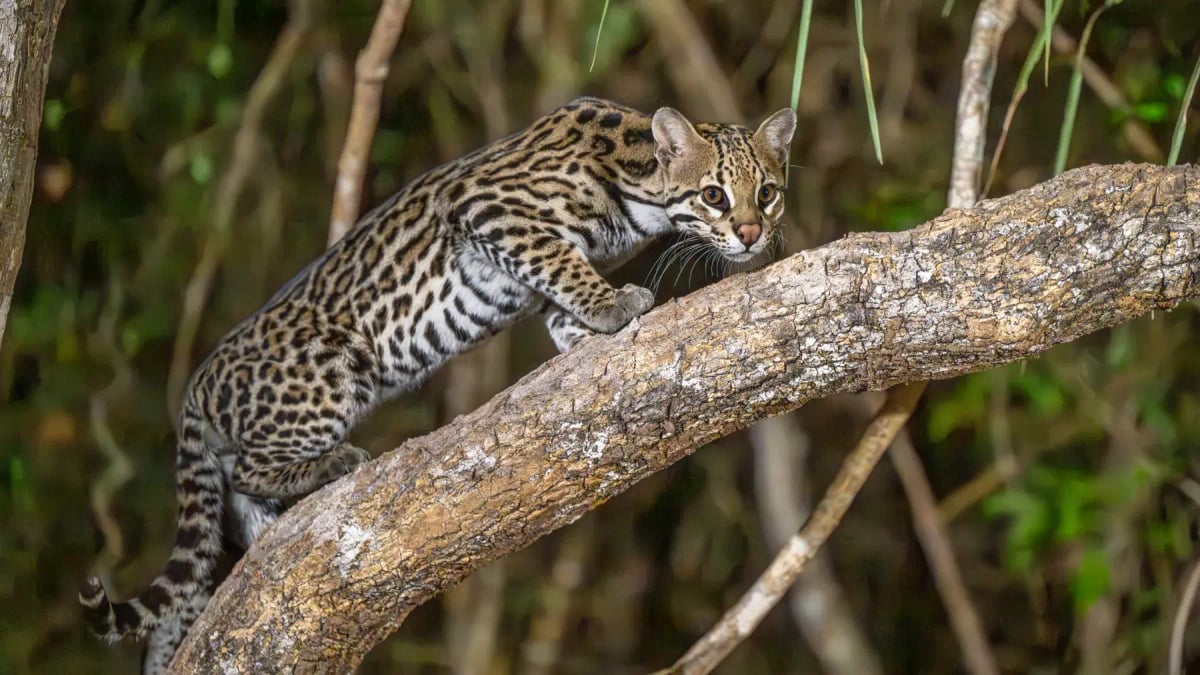
The ocelot (Leopardus pardalis) is a wild cat roughly twice the size of a domestic cat, known for its striking golden coat covered in dark rosettes, spots, and streaks. It ranges from the brush of southern Texas down through Mexico, Central America, and most of South America as far south as northern Argentina. Ocelots are highly adaptable and occupy a wide variety of habitats, including tropical rainforests, dry forests, thorny scrublands, and mangrove swamps. They are almost entirely nocturnal, spending the day resting in dense cover and emerging after dark to hunt. Prey includes small rodents, rabbits, iguanas, frogs, fish, and birds. Ocelots are strong swimmers and skilled climbers. They are solitary animals, with each individual holding a territory it marks with scent. Though listed as Least Concern globally, local populations face pressure from deforestation, road traffic, and illegal hunting.
Habitat and distribution
Ocelots occupy one of the broadest ranges of any wild cat in the Americas. Their territory stretches from the brushlands of southern Texas and the forests of Mexico southward through every country in Central America, continuing across most of South America all the way to northern Argentina. Within this vast range, ocelots prove remarkably adaptable. They thrive in tropical rainforests, dry deciduous forests, thorny scrublands, mangrove swamps, and coastal marshes. Dense ground cover is the one feature all of these habitats share: ocelots depend on it for daytime shelter and as a base for hunting at night. They also cope well with secondary forests, those recovering from disturbance, though pristine habitat generally supports larger and more stable populations.
Diet
Hunting is what ocelots do best, and their menu is impressively varied. Small rodents make up the bulk of their diet, but ocelots will also take rabbits, opossums, iguanas, smaller lizards, frogs, crabs, fish, and birds. They are strictly meat eaters, relying on a combination of sharp eyesight, acute hearing, and patient stalking to close the distance on prey before striking. Ocelots hunt almost entirely on the ground, yet they are capable climbers and will pursue prey into trees when the opportunity arises. They are also strong swimmers and show no reluctance around water. Because they are opportunistic, the exact prey taken in any given area depends largely on what is locally abundant, making ocelots effective hunters across a wide variety of environments.
Behavior
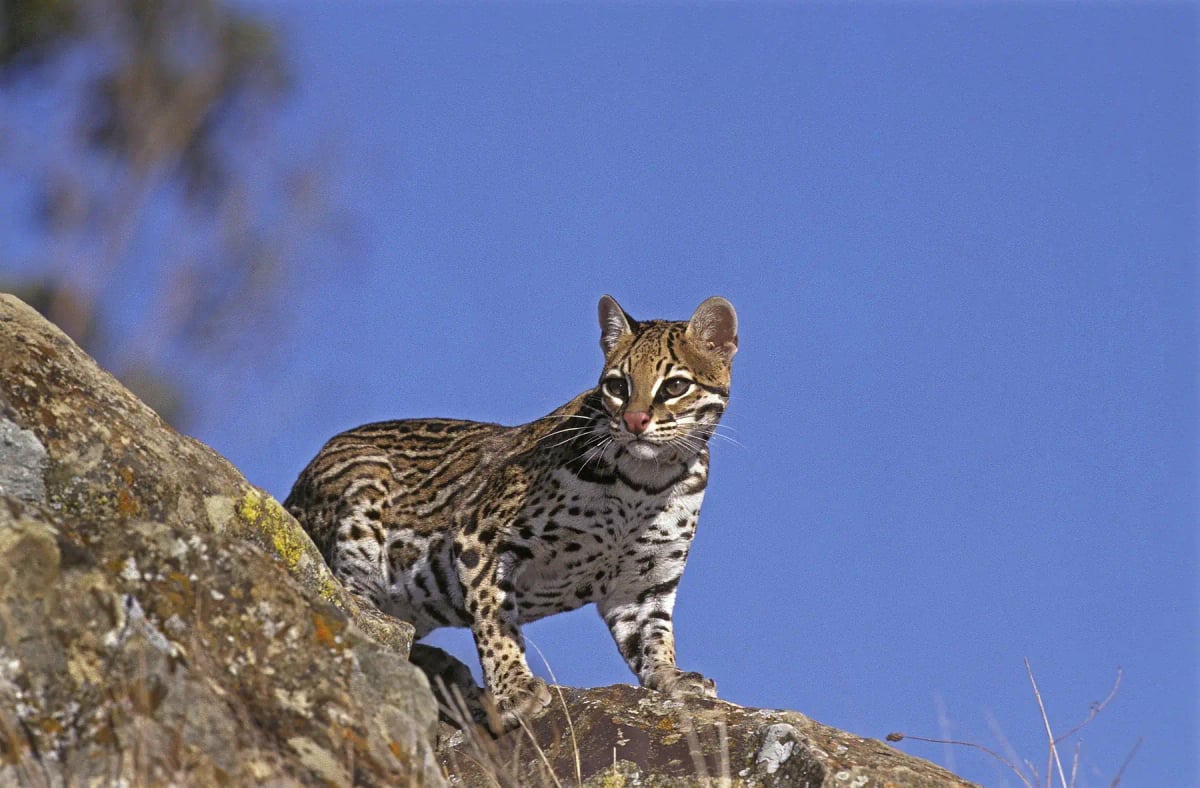
Life for an ocelot follows a rhythm defined by darkness. These cats spend the daylight hours resting in dense thickets, hollow logs, or the branches of trees, becoming active shortly after sunset and remaining so through much of the night. Each individual claims a territory it defends through scent marking, using urine and scratch marks on trees to signal its presence to rivals. Male territories tend to be larger than those of females and may overlap with the ranges of one or two females, though ocelots generally lead solitary lives. Encounters between adults outside of the breeding season are uncommon and can turn aggressive. Communication also involves a range of vocalizations, from growls and hisses to a distinctive yowling call used during the mating season.
Appearance
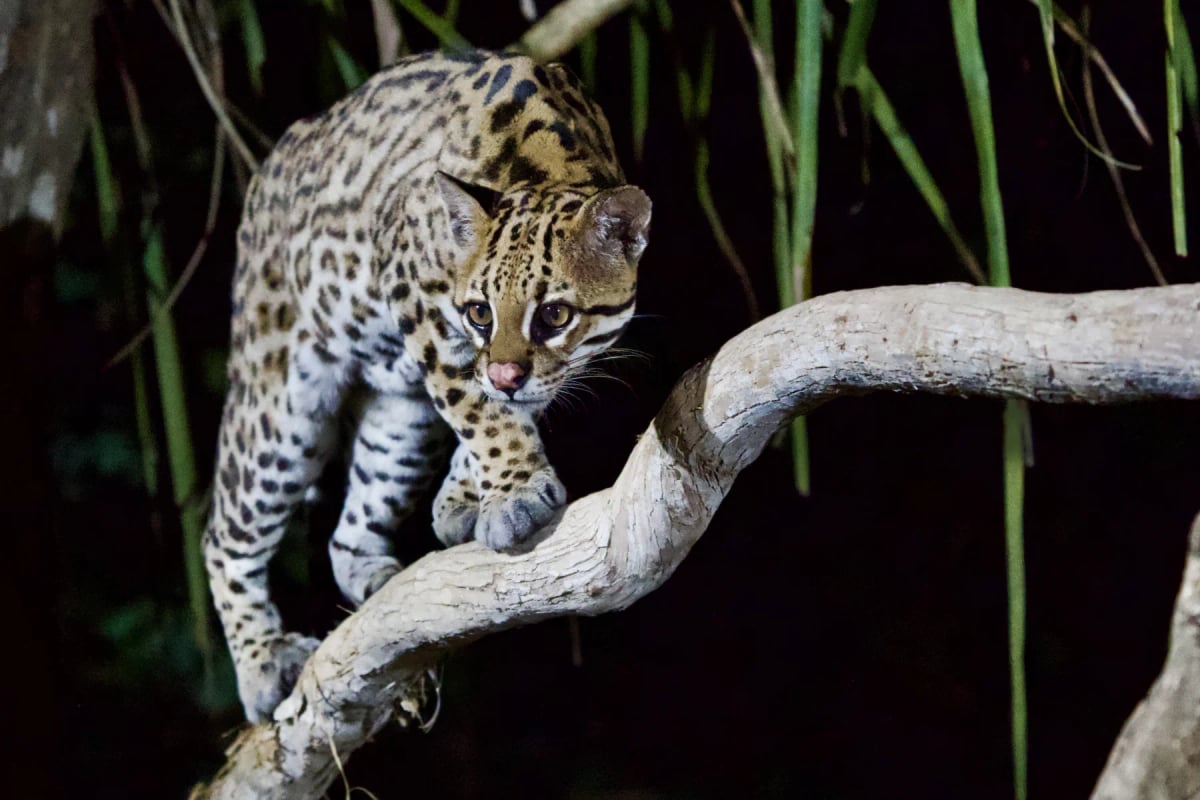
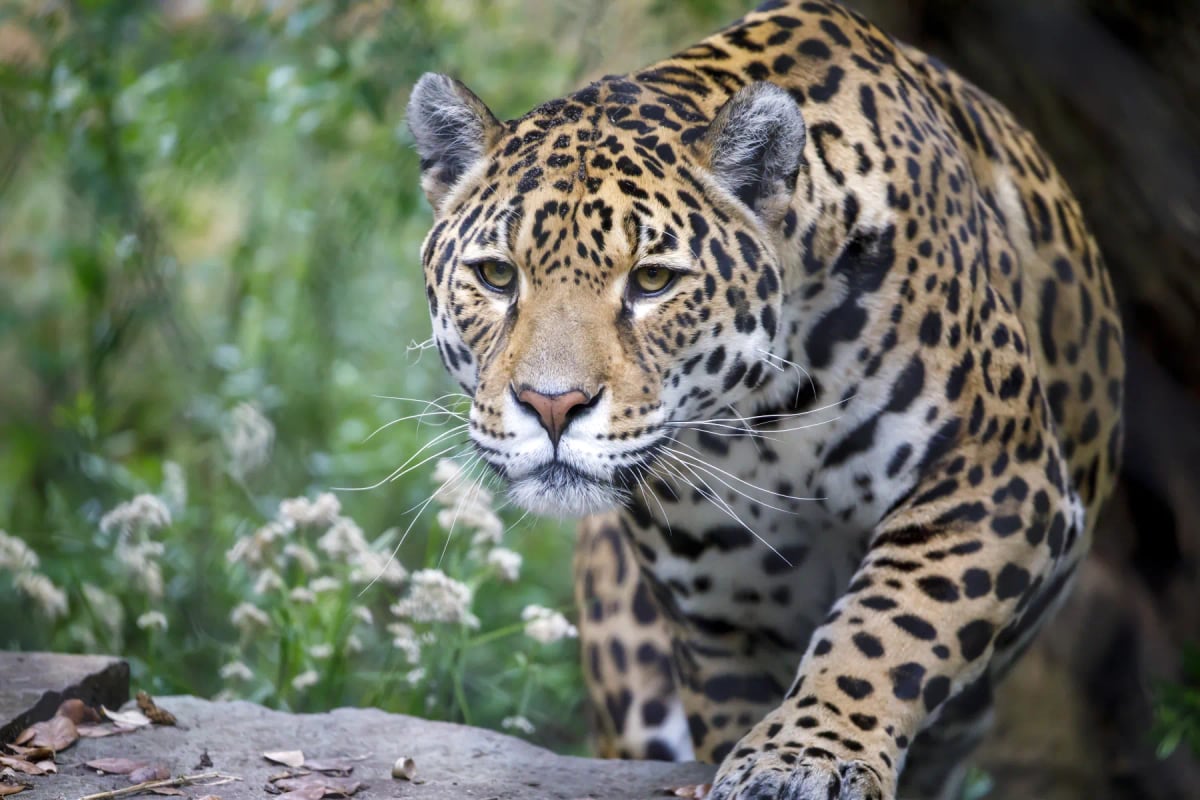
Few wild cats are as visually striking as the ocelot. Its coat ranges from pale cream to tawny golden yellow, covered across the back and flanks with dark brown rosettes outlined in black, along with solid spots and elongated streaks toward the head and neck. The belly is white or pale, and the tail carries dark bands along its length. Two bold black lines run along each cheek, and the backs of the ears are marked with a central pale spot on a dark background, a pattern shared by several other spotted cats. Adults typically weigh between 8 and 16 kilograms and measure around 70 to 90 centimeters in body length, making them roughly twice the size of a domestic cat. Males are noticeably larger than females.
Conservation
Globally, the ocelot carries a status of Least Concern on the IUCN Red List, a reflection of its wide range and adaptability across many habitat types. Even so, the picture varies considerably from one region to another. In the United States, the ocelot is listed as Endangered under national law, with only a tiny population surviving in southern Texas. Across Latin America, the main pressures are the loss and fragmentation of forest habitat, collisions with vehicles on roads cutting through wildlife areas, and illegal hunting. The ocelot's fur was heavily sought after during the twentieth century, and although the international trade in spotted cat skins is now banned, some poaching continues. Conservation efforts focus on protecting habitat corridors that allow populations to connect and exchange individuals over the long term.
Where it is found
The Ocelot can be found in places such as:
Researched and written by Juan Pablo. Sources: IUCN Red List, scientific literature and regional field guides. Last updated: .
Technical factsheet














Frequently Asked Questions
What do ocelots eat?
Ocelots are meat eaters with a varied diet. Small rodents are their main prey, but they also hunt rabbits, iguanas, frogs, crabs, fish, and birds. They rely on sharp eyesight, keen hearing, and slow, patient stalking to catch a meal. Because they are opportunistic hunters, what they eat depends largely on what animals are most common in the area where they live.
Where do ocelots live?
Ocelots are found across a huge stretch of the Americas, from southern Texas through Mexico and Central America, and all the way down to northern Argentina. They adapt well to many environments, including tropical rainforests, dry forests, thorny scrublands, and mangrove swamps. The one thing all their habitats have in common is dense ground cover, which they need for resting during the day and for hunting at night.
Are ocelots dangerous to humans?
Ocelots are wild cats and will defend themselves if cornered or threatened, but attacks on people are extremely rare. They are naturally shy and tend to avoid human contact altogether. In the wild, an ocelot will almost always retreat before a person gets close. The real danger runs the other way: humans pose a far greater risk to ocelots through habitat loss, road traffic, and poaching than ocelots ever pose to people.
Are ocelots endangered?
Worldwide, ocelots are listed as Least Concern by the IUCN, meaning the species as a whole is not at immediate risk of extinction. However, the situation varies by region. In the United States, ocelots are listed as Endangered under national law, with only a small population left in southern Texas. Across Latin America, threats including deforestation, road accidents, and illegal hunting continue to put pressure on local populations.
Are ocelots nocturnal?
Yes, ocelots are almost entirely nocturnal. They spend the daylight hours resting out of sight in dense vegetation, hollow logs, or tree branches. Once the sun goes down, they become active and spend much of the night hunting and patrolling their territory. Their large eyes are well suited to low light conditions, giving them a clear advantage when tracking prey after dark.
How big is an ocelot compared to a domestic cat?
An ocelot is roughly twice the size of a typical domestic cat. Adults usually weigh between 8 and 16 kilograms and measure around 70 to 90 centimeters in body length, not counting the tail. Males are noticeably bigger than females. While they may look like oversized house cats at first glance, ocelots are powerful wild predators built for hunting in some of the most demanding environments in the Americas.
Can ocelots swim and climb trees?
Yes, ocelots are capable both in water and up in the trees. They are strong swimmers and show no fear of crossing rivers or moving through wetland areas. They are also skilled climbers, able to scale trees when chasing prey or simply looking for a safe place to rest. This physical versatility is part of what makes ocelots such effective hunters across such a wide range of habitats.