Gelada Baboon
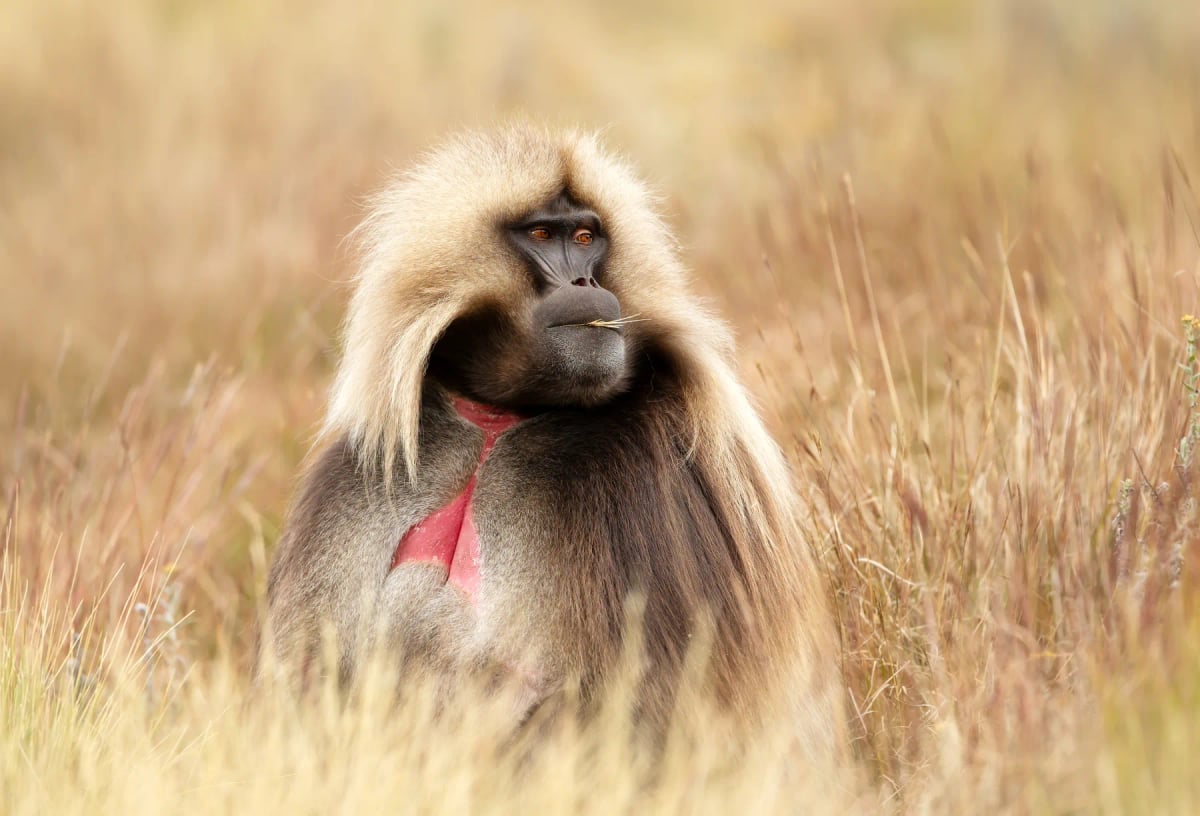
The gelada is a primate found nowhere else on Earth but the Ethiopian Highlands, where it roams alpine grasslands and cliff faces at elevations above 1,800 meters. Often called the bleeding heart monkey, it carries a striking bare red patch on its chest that serves as a social signal. It holds the distinction of being the only primate that relies almost entirely on grass for its diet, using nimble fingers to pluck individual blades with remarkable precision. Geladas organize themselves into one of the most layered social systems seen in any primate. Small units of one male and several females slot into larger bands, which in turn gather into herds that can number several hundred individuals. Habitat loss from expanding farmland and livestock grazing puts growing pressure on their mountain stronghold, and local populations are shrinking in some parts of their range.
Habitat and range
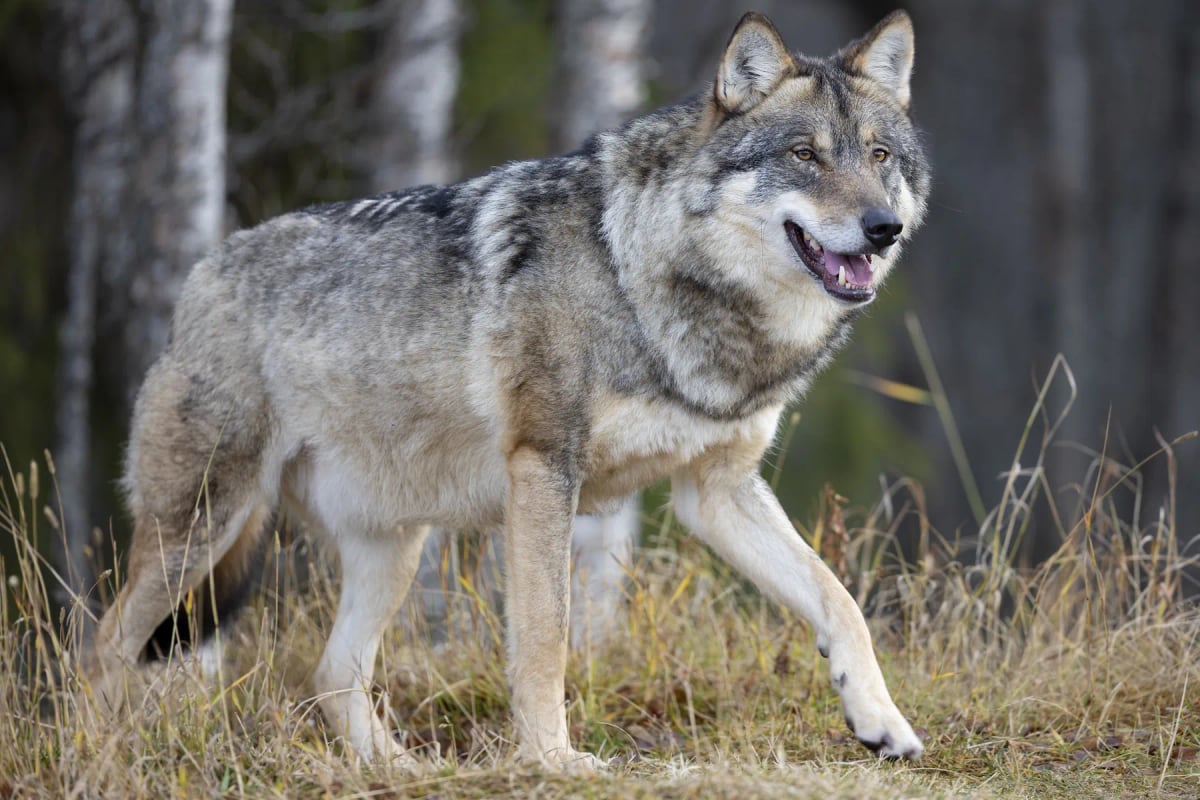
Geladas are found nowhere outside the Ethiopian Highlands, making them one of the most geographically restricted primates on the planet. They occupy alpine grasslands, rocky plateaus, and sheer cliff edges at elevations typically ranging from 1,800 to over 4,400 meters above sea level. The Simien Mountains and the Guassa Plateau are among their most important strongholds. During the day, groups move across open grassland to graze, covering considerable ground in search of fresh growth. As evening approaches, they retreat to the vertical faces of gorges and escarpments, where the steep rock provides safety from predators such as Ethiopian wolves and leopards. This daily rhythm between open plateau and cliff edge is one of the most distinctive features of gelada life.
Diet
Among all primates, the gelada stands alone as a dedicated grazer. Grass makes up roughly 90 percent of its diet throughout the year, and it feeds with remarkable efficiency, using its short, nimble fingers to pinch individual blades close to the root. This technique strips a great deal of nutrition from each small mouthful. The preferred grasses belong to genera such as Festuca and Poa, which grow abundantly across highland meadows. When the dry season reduces available green growth, geladas broaden their diet to include roots, rhizomes, seeds, and flowering plants. They occasionally eat insects too, though in small amounts. Because they rely on low quality food eaten in enormous quantities, geladas spend more hours feeding each day than almost any other primate.
Social structure
Few animals on Earth organize their social lives with as many layers as the gelada. The basic unit is a reproductive unit, made up of one dominant male, several females, and their young. Related females form the stable core of these units and often remain together for life. Several reproductive units, along with bachelor males, join together to form a band. Bands in turn come together into herds that can contain several hundred to over a thousand individuals. Despite these large gatherings, each reproductive unit keeps its own internal hierarchy and identity. Females largely control their own social bonds, and a dominant male can be ousted by a coalition of females if he loses their support. This gives gelada society a structure that is unusual among primates.
Behavior
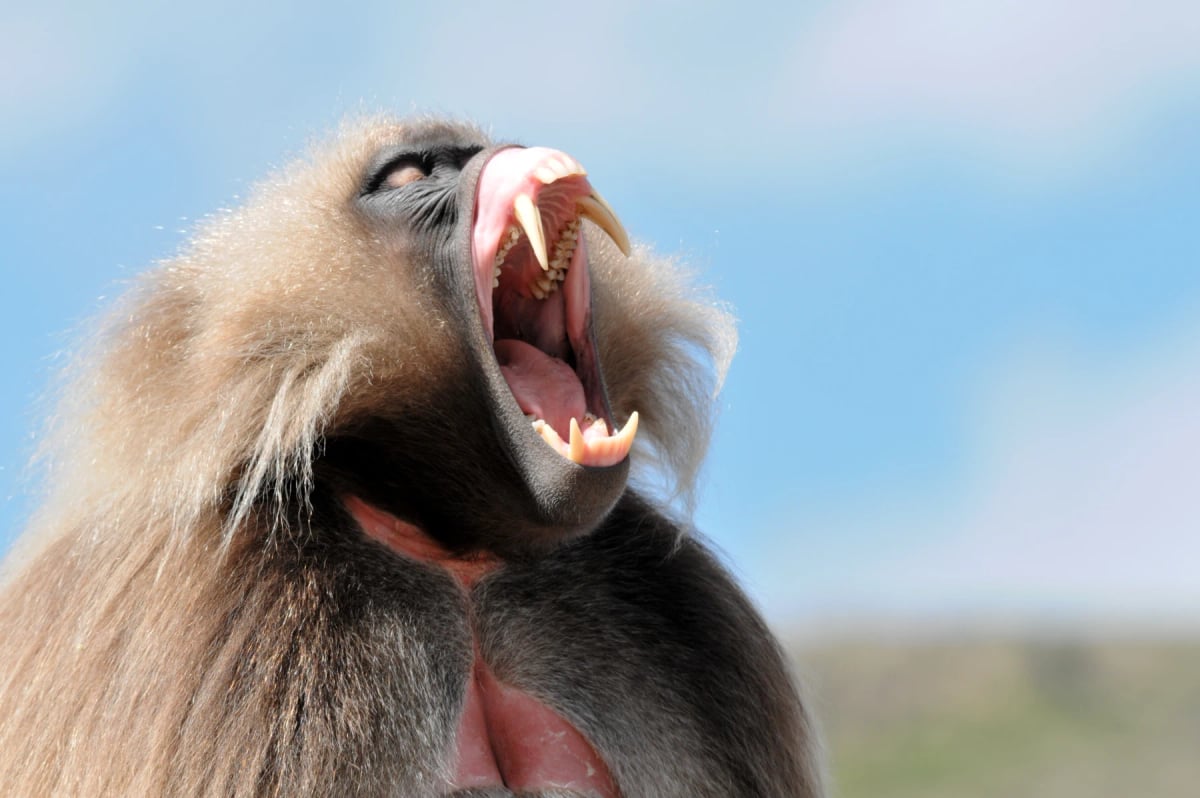
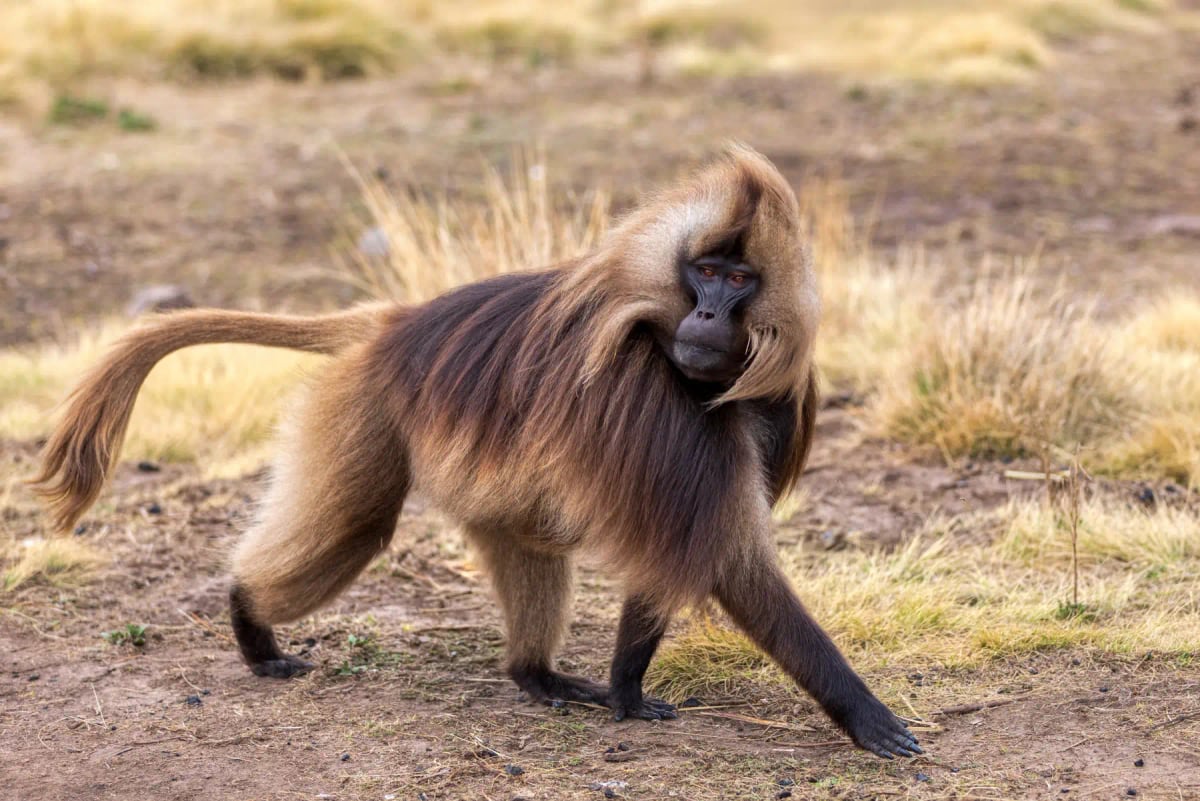
Communication sits at the heart of gelada daily life. Both males and females produce an exceptionally varied range of vocalizations, including lip smacks, grunts, and calls that shift in tone and rhythm in ways that have drawn comparisons to human speech patterns. Researchers have noted that geladas modify their calls depending on social context, which points to a level of vocal flexibility rare among non-human primates. The bare red chest patch, present in both sexes but more vivid in males, changes in color intensity depending on hormonal state and plays a key role in signaling readiness to mate or social rank. Males also flip back their upper lip to expose their gums, a threat display unique to this species. Grooming between females reinforces bonds within reproductive units and keeps group life running smoothly.
Conservation
The IUCN currently lists the gelada as Least Concern, reflecting the fact that several large populations survive across the Ethiopian Highlands. Estimates place the total population at around 200,000 individuals, with the Simien Mountains National Park, a UNESCO World Heritage Site, serving as a key refuge. Even so, the species faces real pressure. The expansion of farmland and the grazing of livestock on highland meadows reduce the quality and extent of gelada habitat. In some areas, farmers view geladas as crop pests and drive them away from field edges. Ongoing conservation efforts focus on working with local communities to reduce conflict and protect the grassland areas that geladas depend on. Maintaining healthy highland ecosystems is essential for the survival of this species over the long term.
Researched and written by Juan Pablo. Sources: IUCN Red List, scientific literature and regional field guides. Last updated: .
Technical factsheet



Frequently Asked Questions
What do gelada baboons eat?
Geladas are the only primates that live almost entirely on grass. They spend most of their waking hours grazing across highland meadows, pinching individual blades with their short fingers. Grass makes up roughly 90 percent of their diet year round. When the dry season limits green growth, they also eat roots, seeds, and flowering plants. They occasionally snack on insects, but grass is always the foundation of every meal.
Where do gelada baboons live?
Geladas live exclusively in the Ethiopian Highlands, making them one of the most geographically restricted primates in the world. They prefer open alpine grasslands and rocky cliff edges at elevations between 1,800 and 4,400 meters. The Simien Mountains and the Guassa Plateau are their most important strongholds. They graze on open plateaus during the day and sleep on steep cliff faces at night for protection from predators.
Are gelada baboons actually baboons?
Despite the nickname, geladas are not true baboons. They belong to their own genus, Theropithecus, and are the sole surviving member of a lineage that was once far more widespread. True baboons belong to the genus Papio. The two groups are related but have followed separate evolutionary paths for millions of years. The "baboon" label stuck partly because of their similar size and ground-dwelling lifestyle, but geladas are a distinct species in their own right.
Why do geladas have a red patch on their chest?
The bare red patch on a gelada's chest is a social signal used to communicate status and reproductive condition. In males, the patch becomes more vivid when testosterone levels are high, advertising dominance or readiness to mate. Females also carry the patch, and it swells and reddens around the time of ovulation. Because geladas spend so much time sitting while grazing, the chest is far more visible than the rear, which is why this signal evolved there rather than elsewhere.
How do geladas communicate?
Geladas are among the most vocal primates on Earth. They produce a rich variety of sounds including grunts, lip smacks, and calls that shift in tone and rhythm depending on the situation. Researchers have compared their vocal patterns to certain features of human speech, noting that geladas adjust their calls based on social context. They also communicate through facial expressions, such as the lip flip that males use as a threat display, and through the color of their chest patch.
Are gelada baboons endangered?
The IUCN currently lists the gelada as Least Concern, and estimates put the total population at around 200,000 individuals. However, that does not mean the species faces no pressure. Expanding farmland and livestock grazing are shrinking and degrading their highland habitat. In some areas, farmers treat geladas as pests when they wander near crop fields. Conservation efforts focus on reducing this conflict and protecting the grassland ecosystems that geladas need to survive.
How big are gelada baboons?
Geladas are solidly built primates with a noticeable size difference between the sexes. Adult males typically weigh between 18 and 21 kilograms and have a thick mane of fur around the shoulders and chest. Females are considerably smaller, usually weighing between 11 and 14 kilograms. Both sexes have short muzzles and relatively small hands adapted for precision gripping. Males also carry long canine teeth used mainly for display and in disputes with rival males.