Lion
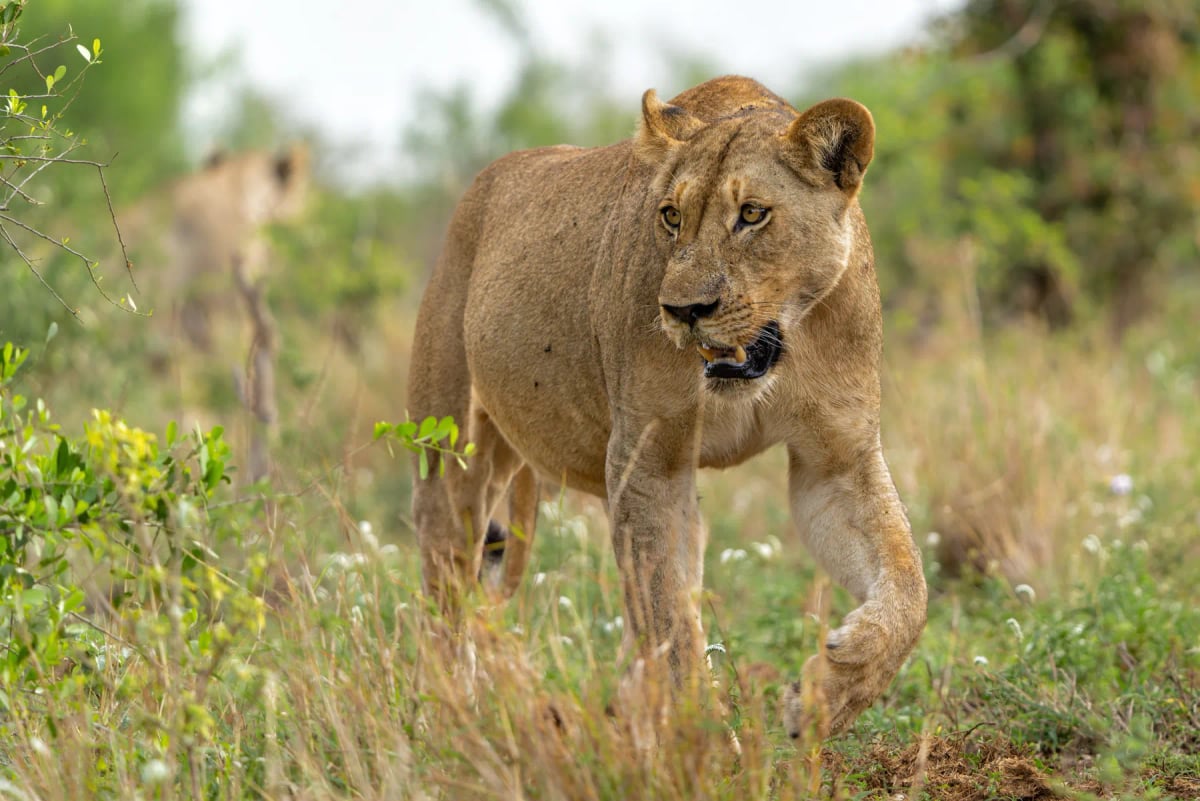
The lion (Panthera leo) is the only social big cat, living in structured groups called prides across sub-Saharan Africa and in India's Gir Forest. Prides are built around related females who do most of the hunting, coordinating to bring down prey like zebra, buffalo and wildebeest that would be impossible to take alone. Males defend territory and cubs, deterring rivals with a roar that carries up to eight kilometers. Once numbering around 200,000 a century ago, fewer than 25,000 lions remain today, making them Vulnerable on the IUCN Red List.
Habitat and distribution
Lions once ranged across Africa, southern Europe and much of Asia. Today they are confined to fragmented areas of sub-Saharan Africa, with one isolated population of around 350 Asiatic lions surviving in the Gir Forest of Gujarat, India. The largest and most stable populations are in Tanzania, Botswana, Kenya and Zimbabwe. Lions thrive in open savanna, dry woodland and grassland, environments that provide enough cover for stalking prey and enough open ground to support large herds of herbivores. Dense forests and true desert are generally outside their range.
Diet
Lions prey mainly on large ungulates: zebra, wildebeest, buffalo, impala and warthog, with prey selection varying by region. Lionesses do most of the hunting, typically at dusk or during the night when temperatures drop and visibility works in their favor. A solitary lioness succeeds in roughly one in five or six attempts; working in coordinated groups raises that rate to around one in three. Males, while capable hunters, more often wait for the kill and eat first, before the females and then the cubs take their turn.
Social structure
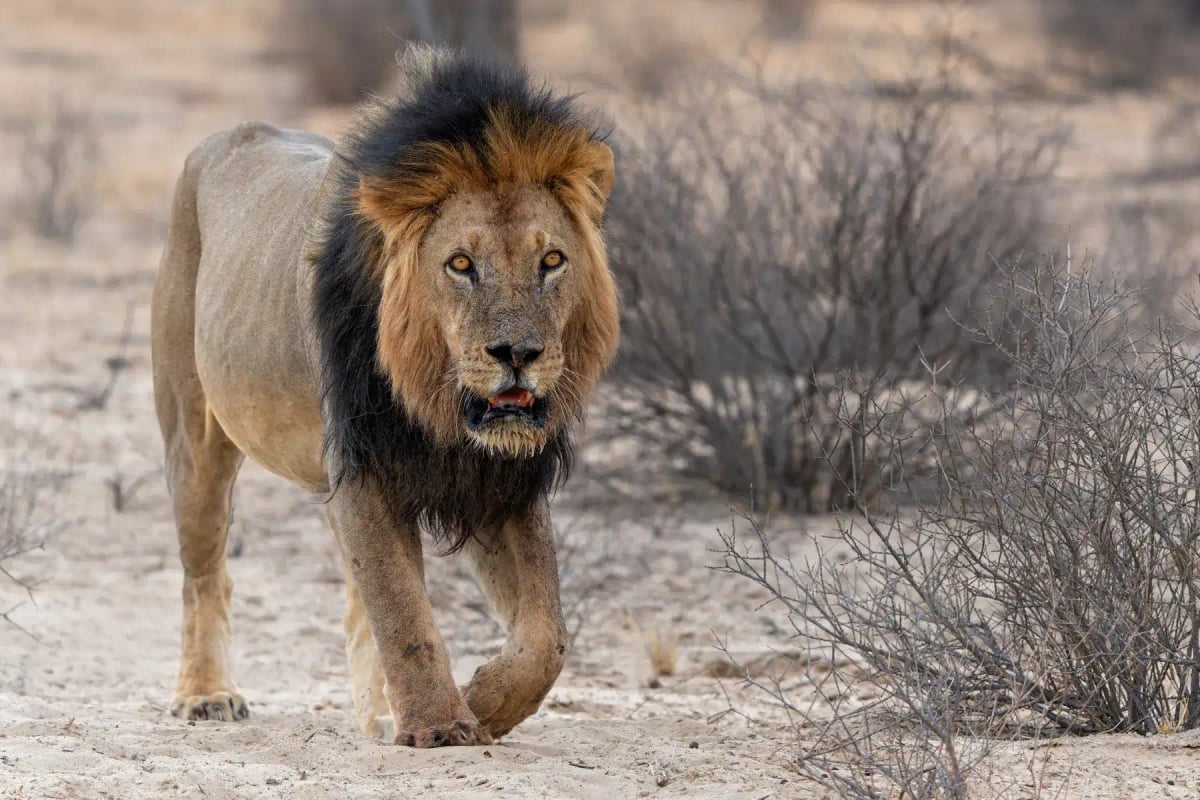
A pride typically consists of several related females, their cubs and a coalition of two to four males who defend access to the group. Females form the permanent core of the pride and remain together for life; males are transient, holding their position for two to four years before being displaced by stronger rivals. Females cooperate in raising cubs communally and often synchronize births so that cubs of different mothers share milk. When new males take over a pride, they commonly kill existing cubs to bring females back into breeding condition.
Appearance
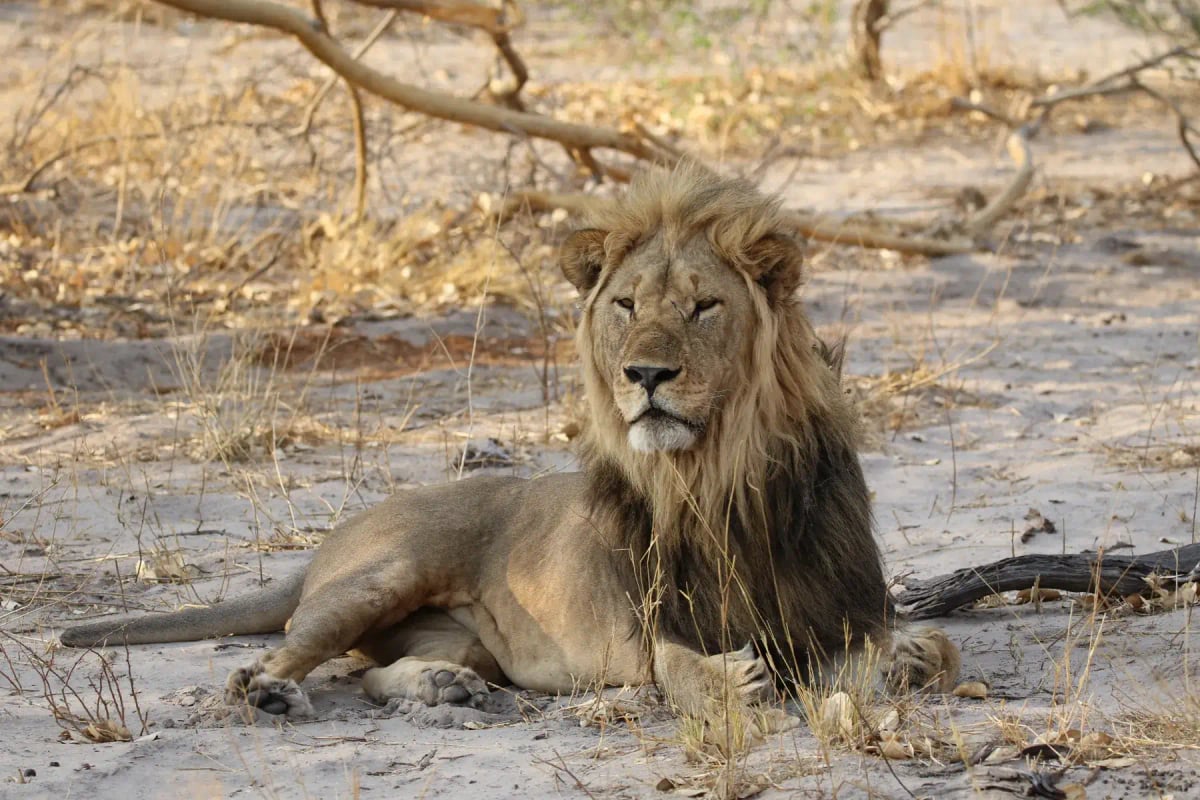
The lion's most distinctive feature is the male's mane, which ranges from sparse and pale in younger animals to dense and dark in mature adults. Research shows that females prefer males with darker, fuller manes, which also intimidate rivals and offer some protection to the neck and throat in fights. Females lack a mane entirely, which makes them faster and better suited to the demands of hunting. Both sexes have a tawny coat that blends with dry grass and a dark tuft at the tip of the tail, one of the few visible features shared equally between males and females.
Behavior with humans
In most wild settings lions avoid humans and move away from inhabited areas when given the choice. Conflict arises mainly at the edges of protected areas, where lions stray onto farmland at night and kill livestock. Retaliatory poisoning and spearing are among the leading causes of lion death outside reserves. Attacks on people are rare but documented, most often involving injured or old individuals that can no longer hunt healthy prey, or occurring in areas where human activity has severely depleted natural prey and lions have no other options.
Conservation
The lion has lost around 95 percent of its historical range over the past century. Today fewer than 25,000 remain in the wild, down from an estimated 200,000 in 1900. The IUCN lists the species as Vulnerable overall, with the West and Central African subspecies classified as Endangered. Tanzania alone holds roughly a third of all wild lions. Key threats include habitat loss as savanna is converted to farmland, prey depletion from bushmeat hunting, and retaliatory killing by herders whose livestock are attacked. Community conservation programs and stronger protection of remaining habitat are considered the most critical tools for stabilizing populations.
5 Curiosities
Here are five quick lion facts: • A lion's roar can be heard from several kilometers away and helps communicate and defend territory. • Lionesses do most of the hunting, while males often focus on defending the pride and its range. • Lions are the only big cats that live in stable social groups called prides. • A lion's mane varies in size and color and can signal age, health and condition. • Lions can sprint fast over short distances, but they rely on teamwork and ambush rather than long chases.
Where it is found
The Lion can be found in places such as:
Researched and written by Juan Pablo. Sources: IUCN Red List, scientific literature and regional field guides. Last updated: .
Technical factsheet




Frequently Asked Questions
Why do lions live in groups while other big cats don't?
Lions live in prides because cooperative hunting allows them to take down large prey like buffalo and zebra that a solitary cat could not handle alone. Group living also helps defend territory and cubs from rival males and other predators. Other big cats like tigers and leopards hunt smaller or more solitary prey, so they don't need the same social structure to survive.
Do female lions really do most of the hunting?
Yes, lionesses carry out the majority of hunts in a pride, often working together at dusk or at night to ambush large prey. Their smaller size and lack of a mane make them faster and better suited to chasing and coordinating attacks. Males are capable hunters too, but they more commonly defend territory and cubs while females provide most of the food for the group.
How far can a lion's roar be heard?
A lion's roar can carry up to eight kilometers under the right conditions, making it one of the loudest calls of any land animal. Roaring helps lions communicate their location to pride members, warn off rival males, and announce control over a territory. Each lion's roar has a slightly distinct pattern, which other lions can use to recognize individuals from a distance.
Why are lions endangered?
Lions are classified as Vulnerable mainly because of massive habitat loss, with the species occupying only about five percent of its historical range. Conversion of savanna into farmland has fragmented populations, while hunting of prey species for bushmeat has reduced available food. Retaliatory killing by herders protecting livestock adds further pressure, and some regional subspecies in West and Central Africa are classified as Endangered.
Where do lions still exist outside Africa?
India is the only country outside Africa with a wild lion population, home to the Asiatic lion subspecies found exclusively in the Gir Forest of Gujarat. This population was reduced to a small handful of individuals in the early twentieth century but has since recovered through dedicated conservation efforts. All other historical lion ranges in Europe and the Middle East disappeared centuries ago.
Are male lions actually lazy hunters?
Male lions are not lazy, but their role in the pride differs from that of females, focusing more on defending territory and cubs against rivals and other predators. Their larger size and mane make them less efficient at stalking prey unnoticed, so they often let lionesses lead hunts. Males do hunt on their own, especially when nomadic or pursuing larger, more dangerous prey like buffalo.
How long do lions live in the wild?
Wild lions typically live between ten and fourteen years, with females usually surviving longer than males since they face fewer fights over territory and pride dominance. Male lions often suffer injuries during confrontations with rivals, which can shorten their lifespan considerably. In captivity, where there is no competition or risk of starvation, lions can live well into their twenties.