Marten

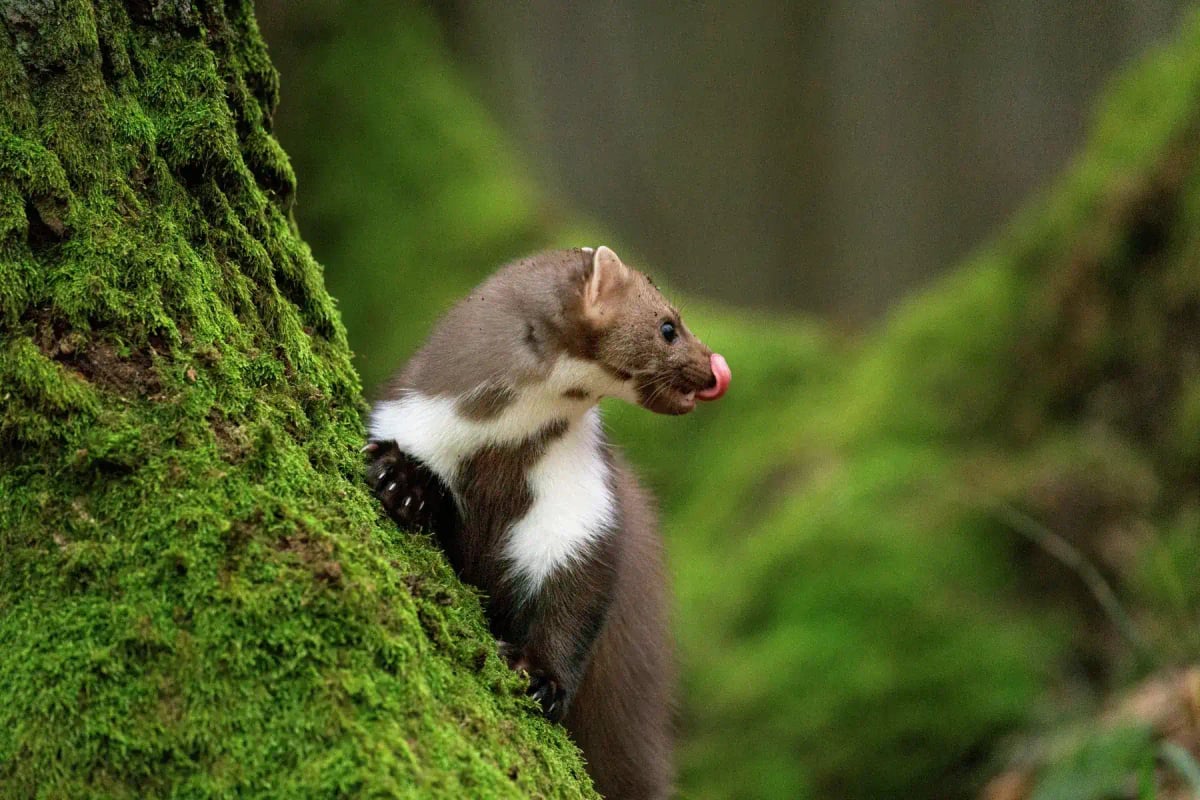
Martens are slender, quick carnivores belonging to the weasel family, and two species share the European stage: the pine marten (Martes martes) and the stone marten (Martes foina). Both are built for agility, with lithe bodies, sharp retractile claws, and the kind of balance that makes climbing a vertical tree look effortless. Pine martens favor dense, mature woodland, while stone martens tolerate open farmland and even city outskirts. The pale throat patch, cream in pine martens and white in stone martens, is the easiest way to tell them apart in the field. They hunt mainly at night, taking rodents, birds, eggs, and insects, but they also eat berries and fruit when the season allows. By controlling rodent numbers and scattering seeds, they quietly support the health of the ecosystems they move through. Both species are listed as Least Concern by the IUCN.
Habitat and distribution
Pine martens and stone martens share a broad range across Europe and into western and central Asia, but they carve out noticeably different niches within it. Pine martens are strongly tied to mature, continuous woodland, particularly forests of oak, beech, and conifer, where dense canopy and fallen logs provide shelter and hunting ground. Stone martens are far more flexible: they thrive in rocky hillsides, scrubland, farmland, and the edges of towns and cities, sometimes denning inside roof spaces or farm buildings. Both species need access to sufficient prey and some form of cover, but the stone marten's tolerance of disturbed landscapes gives it a wider reach. Together, the two species cover much of the continent, from the British Isles and Scandinavia in the north to the Mediterranean coast in the south.
Diet
Few mammals in Europe eat as wide a variety of food as martens do. Small rodents such as voles and mice form the backbone of their diet throughout the year, but martens also take birds, eggs, rabbits, and squirrels when the opportunity arises. Insects and earthworms add to the menu in warmer months, and during autumn both pine martens and stone martens consume large quantities of berries, wild cherries, rowan, and other fruits. This seasonal shift toward plant matter is not just opportunistic: the sugars in ripe fruit help martens build up fat reserves before winter. As a side effect of eating fruit, they pass seeds through their digestive system and deposit them away from the parent plant, making them useful seed dispersers in the woodlands and hedgerows they travel through.

Behavior
Mostly active after dark, martens spend the daylight hours resting in tree hollows, old bird nests, rock crevices, or, in the case of stone martens, inside attics and wall cavities. They are remarkably agile climbers, using their strong claws and long bushy tails for balance as they move through the canopy or scramble over rooftops. Each individual holds a home range that it marks regularly using scent secreted from anal glands, chin glands, and the soles of the feet. These scent marks communicate identity, sex, and reproductive condition to any marten that passes through. Although solitary for most of the year, males and females come together briefly during the mating season. Pine martens have a particularly unusual reproductive trait: implantation of the fertilized egg is delayed for several months, so births happen in spring regardless of when mating occurred.
Relation with humans
Living alongside humans has brought martens both protection and conflict over the centuries. Stone martens in particular are well known for moving into roof spaces and chewing through rubber hoses, wiring, and insulation in parked cars, causing costly damage in central Europe. Poultry keepers occasionally lose birds to both species. At the same time, martens provide a genuine benefit by keeping rodent populations in check around farms and grain stores. Historically, both species were heavily trapped for their fur, and marten pelts were once a valuable trading commodity across medieval Europe. Today, they are legally protected across most of their range, and public attitudes have shifted considerably. Pine martens have even become a conservation symbol in Ireland and parts of Britain, where reintroduction efforts and legal protection have allowed numbers to recover after severe historical decline.
Conservation
Both the pine marten and the stone marten carry a status of Least Concern on the IUCN Red List, reflecting populations that remain widespread and broadly stable. That said, the picture is uneven across their range. Pine martens disappeared from large parts of western Europe during the nineteenth and twentieth centuries due to intensive trapping, deforestation, and persecution by gamekeepers. In countries such as England and Wales, numbers dropped to very low levels before legal protection took effect. Road collisions are now one of the main sources of mortality across Europe, particularly for young animals dispersing to new territories. Habitat fragmentation also isolates populations and reduces genetic exchange. Conservation efforts focus on protecting old growth forest, creating wildlife corridors, and reducing traffic mortality through targeted road measures. Reintroduction programmes in Ireland and Scotland have shown encouraging results.
Where it is found
The Marten can be found in places such as:
Researched and written by Juan Pablo. Sources: IUCN Red List, scientific literature and regional field guides. Last updated: .
Technical factsheet














Frequently Asked Questions
What do martens eat?
Martens eat a wide variety of food depending on the season. Voles and mice make up the core of their diet, but they also hunt birds, raid nests for eggs, and catch rabbits or squirrels when they can. In autumn, both species switch heavily to berries and wild fruit to build up fat before winter. This mix of meat and plant matter makes them some of the most adaptable hunters in Europe.
Where do martens live?
Pine martens prefer mature, dense forests with plenty of old trees for shelter, while stone martens are far more flexible and can be found in rocky hillsides, farmland, and even the outskirts of cities. Together, the two species cover much of Europe and stretch into western and central Asia. Stone martens in particular often den inside roof spaces or farm buildings, which is why people in central Europe sometimes find them living overhead.
How can you tell a pine marten from a stone marten?
The easiest clue is the throat patch. Pine martens have a cream or yellowish patch on their chest and throat, while stone martens have a white one that often forks into two lobes toward the legs. Stone martens also tend to have a slightly coarser coat and are more likely to turn up in towns or open countryside. Pine martens stick mainly to woodland and are the shyer of the two.
Are martens dangerous to humans?
Martens pose no real threat to people. They are shy animals that avoid direct contact and will not approach humans unless cornered. The trouble they cause tends to be property related: stone martens are well known for getting into car engines and chewing through cables and rubber hoses, which can be expensive to repair. Poultry keepers may also lose birds to them, but for most people a marten is far more likely to be seen than heard from.
Are martens nocturnal?
Yes, martens are mostly active at night. During the day they rest in tree hollows, old bird nests, rock crevices, or inside attics and wall cavities in the case of stone martens. They become most active after sunset, when they hunt, patrol their territory, and leave scent marks to communicate with other martens. It is possible to spot them during daylight hours, especially in summer, but nighttime is when they do most of their moving around.
Why do pine martens disappear from an area and then come back?
Pine martens were wiped out across much of western Europe during the 1800s and 1900s through a combination of trapping for their fur, loss of forest, and persecution by gamekeepers. Once legal protection came into force, populations slowly began to recover in some areas. In Ireland and Scotland, active reintroduction programmes have helped numbers climb again. The species needs old forest and freedom from persecution to thrive, and where those conditions are met, martens tend to return.
Do martens help the environment in any way?
They do, in two important ways. By hunting rodents such as voles and mice, martens help keep those populations from growing out of control, which benefits farmers and woodland ecosystems alike. They also act as seed dispersers: when martens eat berries and wild fruit, they pass the seeds through their digestive system and deposit them in new locations, helping plants spread across the landscape. These quiet contributions make them a genuinely useful part of the ecosystems they live in.