Guanaco
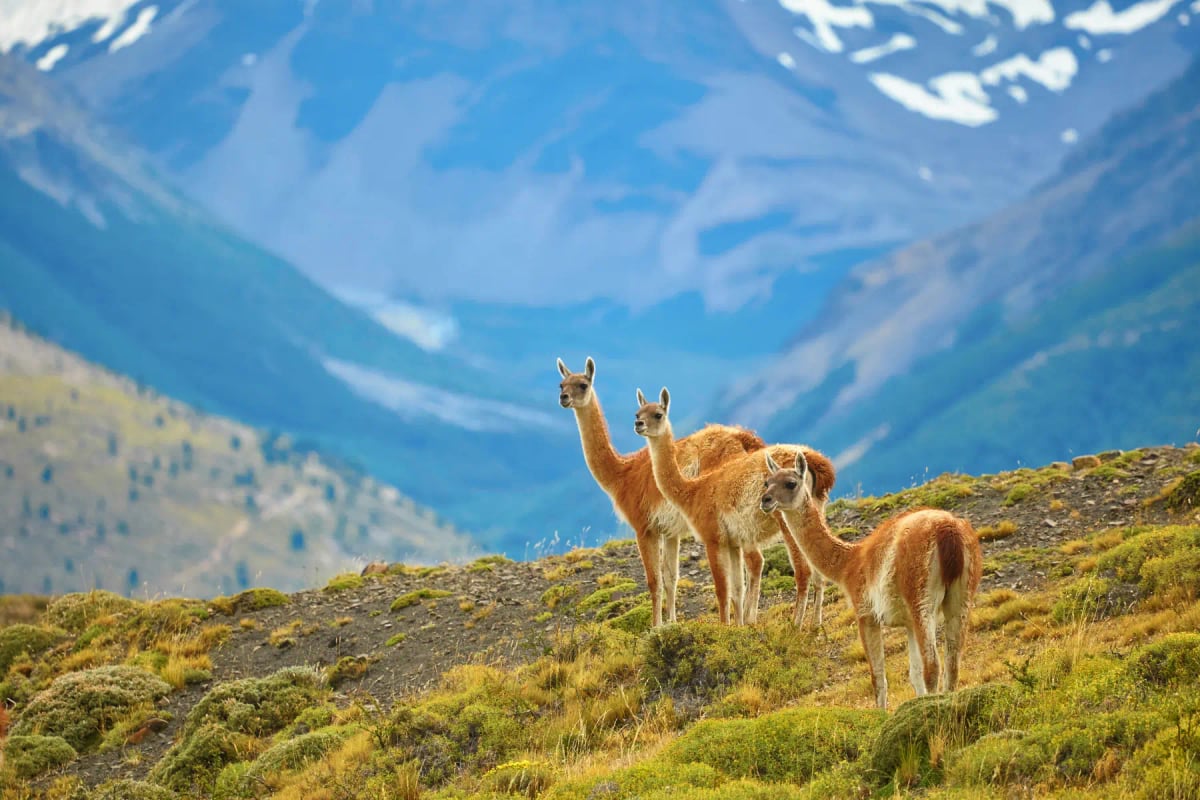
The guanaco (Lama guanicoe) is a wild South American camelid and the closest living relative of the domestic llama. It thrives across a remarkable range of landscapes, from the cold steppes of Patagonia and the bone-dry valleys of the Atacama to high Andean plateaus above 4,000 meters. Its thick, tawny coat insulates it against bitter winds, while specialized red blood cells allow it to handle low oxygen levels at altitude. Guanacos live in family groups led by a dominant male, who actively defends his territory and mates. Young males, known as chulengos in their first year, gather in separate bachelor herds. The puma is their main predator, and guanacos are highly alert animals that warn the herd with sharp, nasal calls. Hunting, competition with livestock, and the fragmentation of open habitat remain the main pressures on local populations.
Habitat and distribution
Guanacos are among the most adaptable large mammals in South America. They occupy an extraordinary range of environments, from the wind-scoured steppes of Patagonia and the cold grasslands of Tierra del Fuego to the bone-dry valleys of the Atacama Desert and high Andean plateaus reaching above 4,000 meters. In southern Chile, populations live at sea level near coastal shrublands, while in Peru and Bolivia they push into the puna grasslands of the high Andes. Their range stretches across Argentina, Chile, Peru, and Bolivia, with Argentina holding the largest share of the global population. They tend to favor open terrain with good visibility, which helps them spot predators early and move freely across the landscape.
Diet
Browsing and grazing both play a role in the guanaco's daily feeding routine. Grasses make up the bulk of their diet, but they also eat shrubs, herbs, lichens, and even cacti when other food is scarce. This dietary flexibility is key to surviving in places like the Atacama or high Andean plateaus, where vegetation is sparse and patchy. Unlike many large herbivores, guanacos do not need to drink water every day. They can extract enough moisture from the plants they eat, which allows them to persist in some of the driest terrain on the continent. They are selective feeders, moving steadily through an area rather than stripping one spot bare, which reflects a grazing strategy shaped by centuries of living in unpredictable environments.
Behavior
Social structure shapes nearly everything about how guanacos live. Family groups typically consist of one adult male, several females, and their young. The dominant male is territorial and will chase rival males away with biting and kicking. Young males that have left their family group form separate bachelor herds, where they spar and practice the skills they will need as adults. Guanacos are active during the day and rest in sheltered spots at night. When a predator is spotted, usually a puma, one animal lets out a sharp, nasal alarm call that sends the whole group running. They are fast and sure-footed over rocky ground, capable of reaching speeds of around 56 kilometers per hour. Dung is deposited in communal piles, which may help mark territory.
Threats
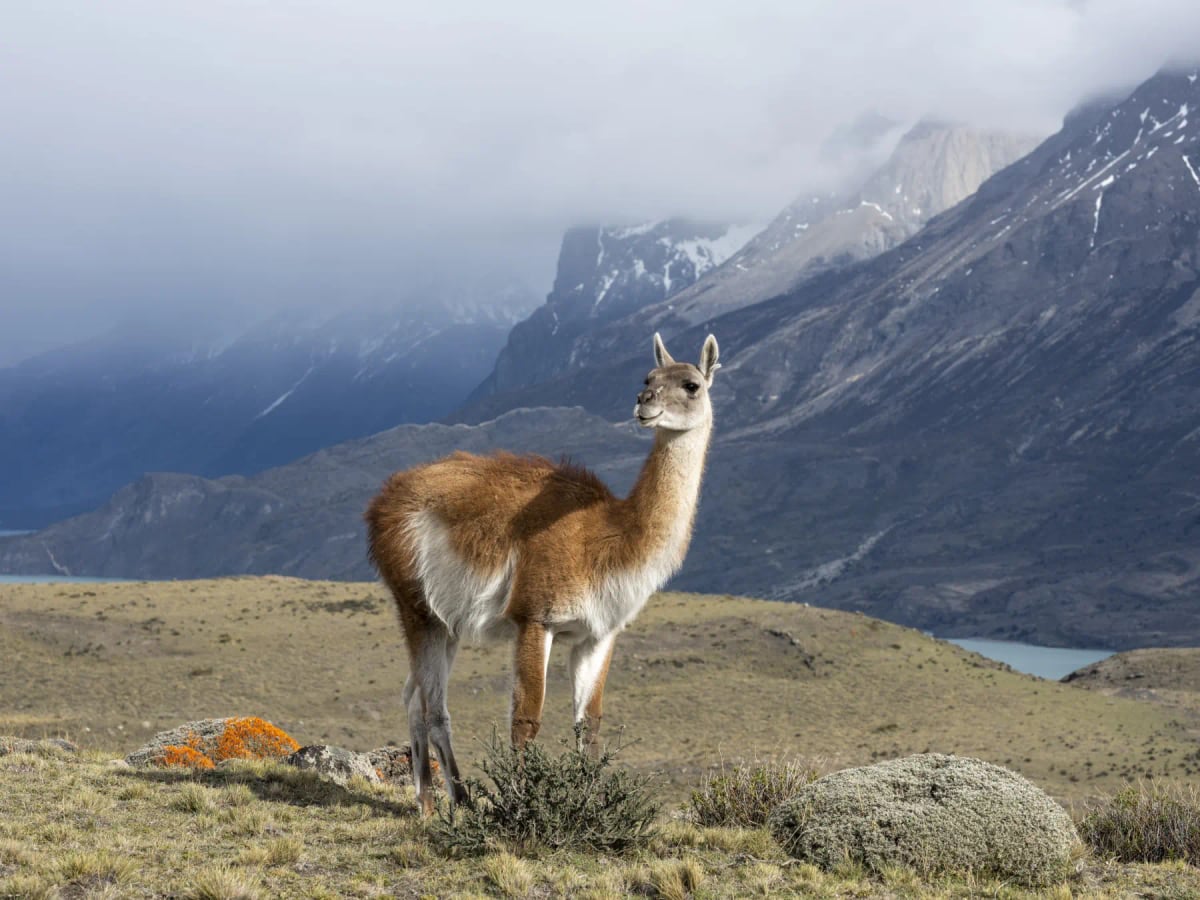
Pressure on guanaco populations comes from several directions at once. Hunting for meat and fiber, particularly the fine wool of newborns known as chulengos, has reduced numbers in parts of their range. Livestock ranching presents another serious problem. Sheep and cattle compete directly with guanacos for grass, and ranchers have historically fenced large areas of Patagonian steppe, blocking the seasonal movement corridors that guanacos rely on. Roads and infrastructure projects add to that fragmentation. In some areas, guanacos are still killed to protect pasture for domestic animals. Climate shifts that alter the timing and availability of vegetation add another layer of uncertainty. The combination of these pressures has caused steep regional declines even though the species as a whole remains widespread.
Conservation
The IUCN currently lists the guanaco as Preocupación menor, reflecting its wide range and large overall numbers. Even so, the total population has declined sharply compared to historical levels, with estimates suggesting a reduction of over 90 percent since the arrival of European livestock. Protected areas across Patagonia, including Torres del Paine in Chile and Los Glaciares in Argentina, provide refuges where guanacos can move and breed without direct persecution. Conservation efforts have increasingly focused on reducing fencing in key movement corridors and promoting sustainable management of rangelands. In some communities, the live shearing of wild guanacos, known as chaku, offers an economic alternative to hunting. International cooperation between Argentina and Chile has also helped coordinate monitoring of shared populations.
Researched and written by Juan Pablo. Sources: IUCN Red List, scientific literature and regional field guides. Last updated: .
Technical factsheet
Frequently Asked Questions
What do guanacos eat?
Guanacos eat mostly grasses, but they also browse on shrubs, herbs, lichens, and even cacti when food is scarce. One of their most impressive traits is that they rarely need to drink water directly. They get most of the moisture they need from the plants they eat, which makes them well suited to some of the driest places in South America, like the Atacama Desert.
Where do guanacos live?
Guanacos are found in Argentina, Chile, Peru, and Bolivia. They live in a wide variety of environments, including the Patagonian steppe, the Atacama Desert, coastal shrublands in southern Chile, and grasslands high in the Andes at elevations above 4,000 meters. Argentina holds the largest share of the global population. They generally prefer open terrain where they can spot predators from a distance.
Are guanacos related to llamas?
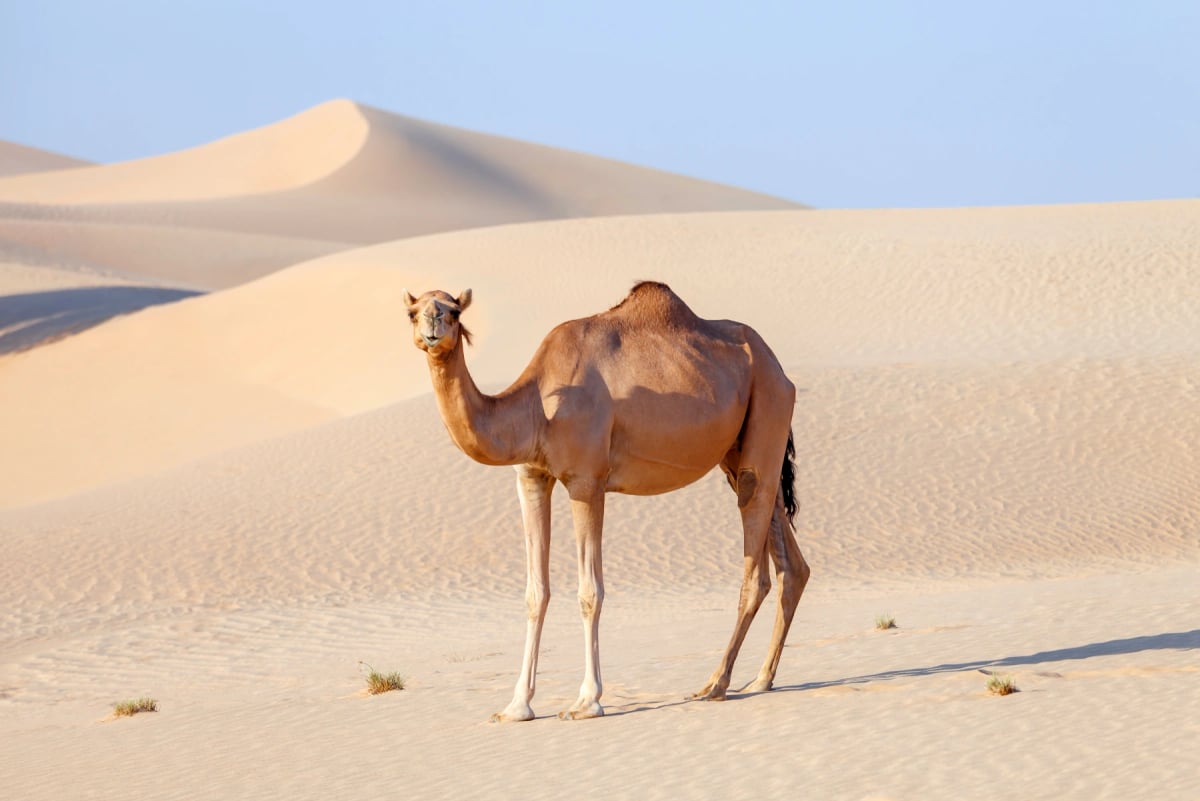
Yes, the guanaco is actually the wild ancestor of the domestic llama. Both belong to the camelid family, which also includes alpacas, vicuñas, and the camels of Asia and Africa. Llamas were domesticated from guanacos thousands of years ago by Andean peoples. If you put a guanaco and a llama side by side, the resemblance is striking, though guanacos are generally leaner and more alert in appearance.
How fast can a guanaco run?
Guanacos can reach speeds of around 56 kilometers per hour, which makes them surprisingly quick for an animal their size. They are also sure-footed on rocky and uneven ground, a real advantage in the rugged landscapes they call home. This speed is their main defense against pumas, their chief predator. When danger is spotted, one guanaco lets out a sharp alarm call and the whole group flees together.
Are guanacos endangered?
The IUCN lists the guanaco as Least Concern, meaning the species is not currently at risk of extinction. However, that does not tell the whole story. Populations have dropped by over 90 percent since European livestock arrived in South America. Hunting, competition with sheep and cattle, and the fragmentation of habitat through fencing have all taken a toll. Some regional populations are in serious decline despite the stable global status.
How do guanacos survive at high altitudes?
Guanacos have a remarkable biological adaptation for life at altitude. Their blood contains an unusually high concentration of red blood cells, which lets them absorb oxygen much more efficiently in the thin air above 4,000 meters. Their thick, tawny coat also helps them cope with the freezing temperatures common on Andean plateaus. This combination of traits makes them one of the few large mammals comfortable at both sea level and high mountain elevations.
What is a chulengo?
A chulengo is a guanaco in its first year of life. The word is widely used in South America and refers specifically to the young of the guanaco. Chulengos are born with soft, fine wool that has historically been prized and, unfortunately, hunted for. Conservation programs in some Andean communities have promoted the live shearing of wild guanacos, known as chaku, as a way to obtain fiber without killing the animals.