Red Fox
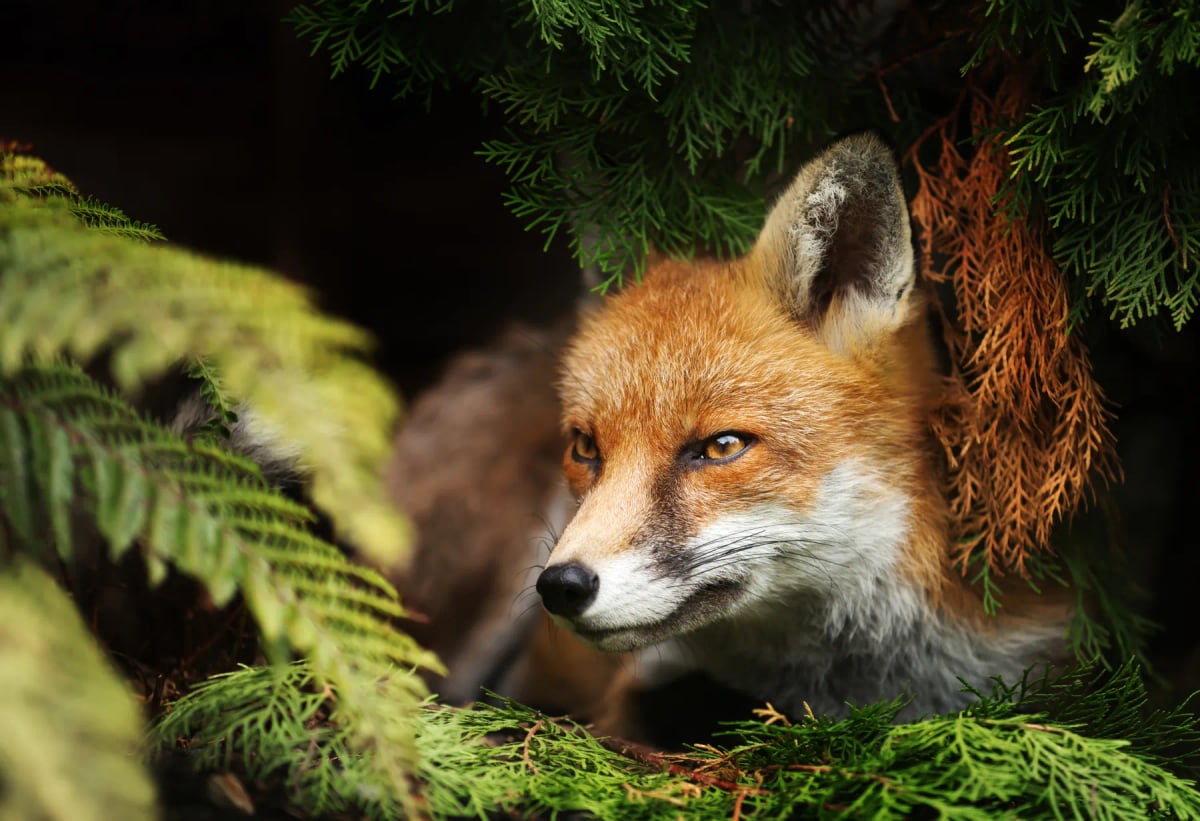
The red fox (Vulpes vulpes) is the most widespread wild carnivore on Earth, native to the entire Northern Hemisphere and introduced to Australia in the 1850s. Recognizable by its reddish coat and white tipped bushy tail, it thrives across an extraordinary range of environments from Arctic tundra to city streets. Rodents are the foundation of its diet, and it uses a distinctive hunting technique called "mousing": standing still and listening for prey under snow or grass before leaping and landing on it with both forepaws. Highly vocal and territorial, it appears in the folklore of cultures across its entire range.
Habitat and distribution
No land carnivore on Earth occupies a wider natural range than the red fox. It is native across the entire Northern Hemisphere, from the Arctic tundra of Canada and Russia down through boreal forests, open grasslands, mountain ranges, coastal dunes, and into the deserts of North Africa and the Middle East. Few animals handle such a spread of climates with equal ease. It was deliberately introduced to Australia in the 1850s to support fox hunting, and it has since spread across most of the continent. There it is now considered one of the most damaging invasive species in the country. In recent centuries it has also moved into towns and cities, making it one of the few large wild carnivores that is equally comfortable in a forest and on a busy urban street.
Diet
Opportunistic and adaptable, the red fox eats almost anything it can find. Small rodents such as voles and mice are the backbone of its diet across most habitats, and it hunts them using a technique known as mousing. The fox stands perfectly still, tilting its head to locate sounds of movement beneath snow or thick grass, then launches itself into the air and comes down hard with both forepaws to pin the prey. Beyond rodents it also takes rabbits, birds, insects, earthworms, berries, and carrion depending on the season. When food is plentiful it buries the surplus in small caches spread across its territory, returning to those stores during leaner periods. This habit of saving food for later is one reason the species handles winter so well across such a wide range of environments.
Behavior
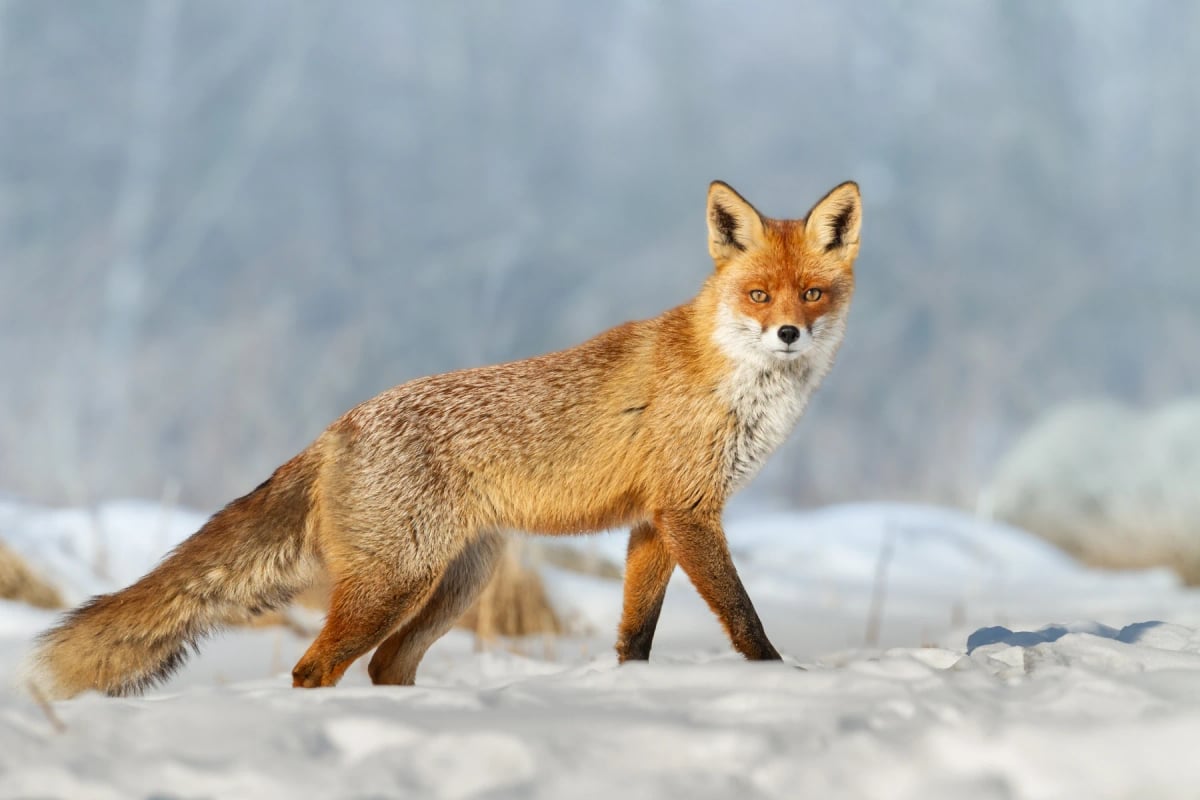
For most of the year the red fox lives alone, moving through its territory at night or around the hours of dawn and dusk. It is one of the most vocal wild members of the dog family, capable of producing around 28 distinct sounds. The most striking of these is a sharp, drawn out scream made by females during the winter breeding season, which is startling enough to be mistaken for a person in distress. Foxes mark the edges of their territories using urine and secretions from scent glands near the base of the tail. Breeding takes place once a year. After a gestation of roughly 52 days, a litter of cubs is born in spring, usually underground in a den. Both the male and female take part in feeding and guarding the young until they are ready to leave.
Relation with humans
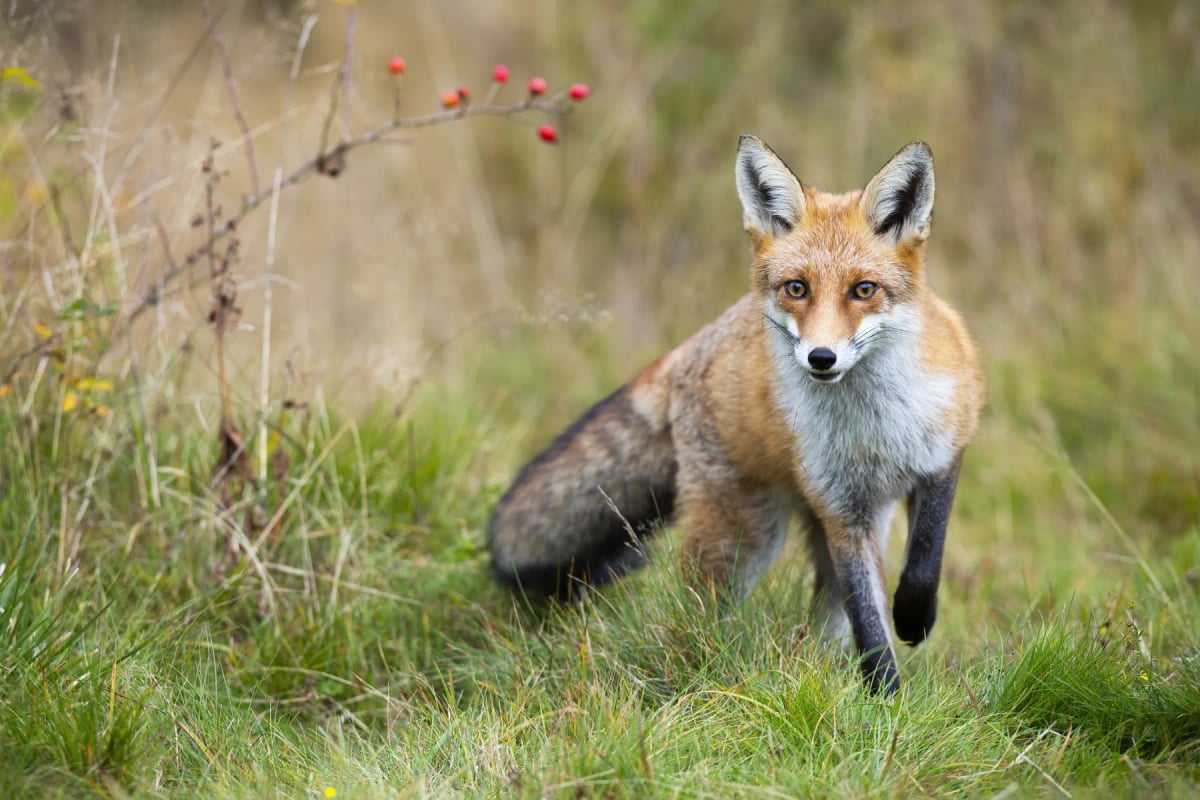
Across thousands of years of shared history, the red fox has earned a firm place in human culture. It appears in the folk traditions of peoples from Japan to the British Isles and across the Americas, almost always as a figure associated with cleverness and cunning. On a practical level it is among the most successful urban wild animals alive today, with established populations in cities such as London, Paris, Tokyo, and New York. Urban foxes generally scavenge and cause little trouble, though in rural areas they occasionally raid chicken coops. In Australia, where it was introduced in the nineteenth century, it is treated as a pest species and managed through active culling and poison baiting programs aimed at protecting native wildlife that never evolved alongside such a predator.
Conservation
The IUCN lists the red fox as Preocupación menor, with populations that are stable across its native range. One of the most remarkable conservation stories connected to this species is the oral rabies vaccination campaign carried out across 24 European countries from the 1970s onward. Wildlife managers distributed vaccine baits by air and on the ground over vast areas, and the program succeeded in eliminating fox rabies from Western and Central Europe, a result widely regarded as one of the greatest achievements in wildlife disease management. In Australia the picture is very different. There the fox remains a serious conservation threat to native mammals and ground nesting birds, and baiting programs continue across large areas. Elsewhere it is hunted for fur or controlled as livestock predator, but the global population remains large and secure.
Technical factsheet
Where it is found
The Red Fox can be found in places such as:
Frequently Asked Questions
What do red foxes eat?
Red foxes are not picky eaters. Small rodents like voles and mice make up the core of their diet, but they also eat rabbits, birds, insects, earthworms, berries, and carrion. When food is easy to find, they bury the extra in hidden caches around their territory and return to those spots when meals are harder to come by. This flexibility is a big part of why they thrive almost everywhere.
Where do red foxes live?
The red fox has the widest natural range of any land carnivore on Earth. It is native across the entire Northern Hemisphere, from Arctic tundra and boreal forests to open grasslands, mountain ranges, deserts, and coastal dunes. It was introduced to Australia in the 1850s and has since spread across most of the continent. It also lives comfortably in towns and cities, making it one of the few large wild carnivores at home in urban environments.
How do red foxes hunt?
The red fox uses a hunting technique called mousing. It stands completely still and tilts its head to pick up sounds of small animals moving under snow or dense grass. Once it has pinpointed the prey, it leaps into the air and comes down hard with both front paws to pin it. The whole sequence happens in a matter of seconds. This method is remarkably accurate, especially when hunting under deep snow in winter.
Are red foxes dangerous to humans?
Healthy red foxes pose very little risk to people. They tend to avoid direct contact and generally cause no trouble in urban areas beyond the occasional knocked over bin. The main concern historically was rabies, since foxes can carry and spread the disease. A large vaccination campaign carried out across Europe over several decades successfully eliminated fox rabies from Western and Central Europe. Bites are rare and almost always happen only when an animal feels cornered.
What sounds do red foxes make?
Red foxes are among the most vocal members of the dog family, capable of producing around 28 distinct sounds. They bark, whine, and chatter, but the call that surprises people most is a sharp, drawn out scream made by females during the winter breeding season. It is loud enough and unsettling enough to be mistaken for a person in distress. If you have ever heard a strange shriek in the night near a park or garden, a fox was probably responsible.
How long do red foxes live?
In the wild, most red foxes live between two and four years. Survival in their first year is the hardest part, as young foxes face predators, disease, traffic, and the challenge of finding their own territory. In captivity, where those pressures are removed, foxes can live up to 14 years. Their relatively short lifespan in the wild does not hurt the species overall, since females can produce a litter of cubs every year once they reach maturity.
Is the red fox endangered?
No. The IUCN classifies the red fox as Least Concern, and its global population is considered stable. It is one of the most abundant wild carnivores on the planet. In most of its range it is doing well, and in many places its numbers have actually grown as it has adapted to urban environments. The one place where it is viewed as a serious problem is Australia, where it was introduced and now threatens native wildlife that never evolved alongside such a predator.