Markhor
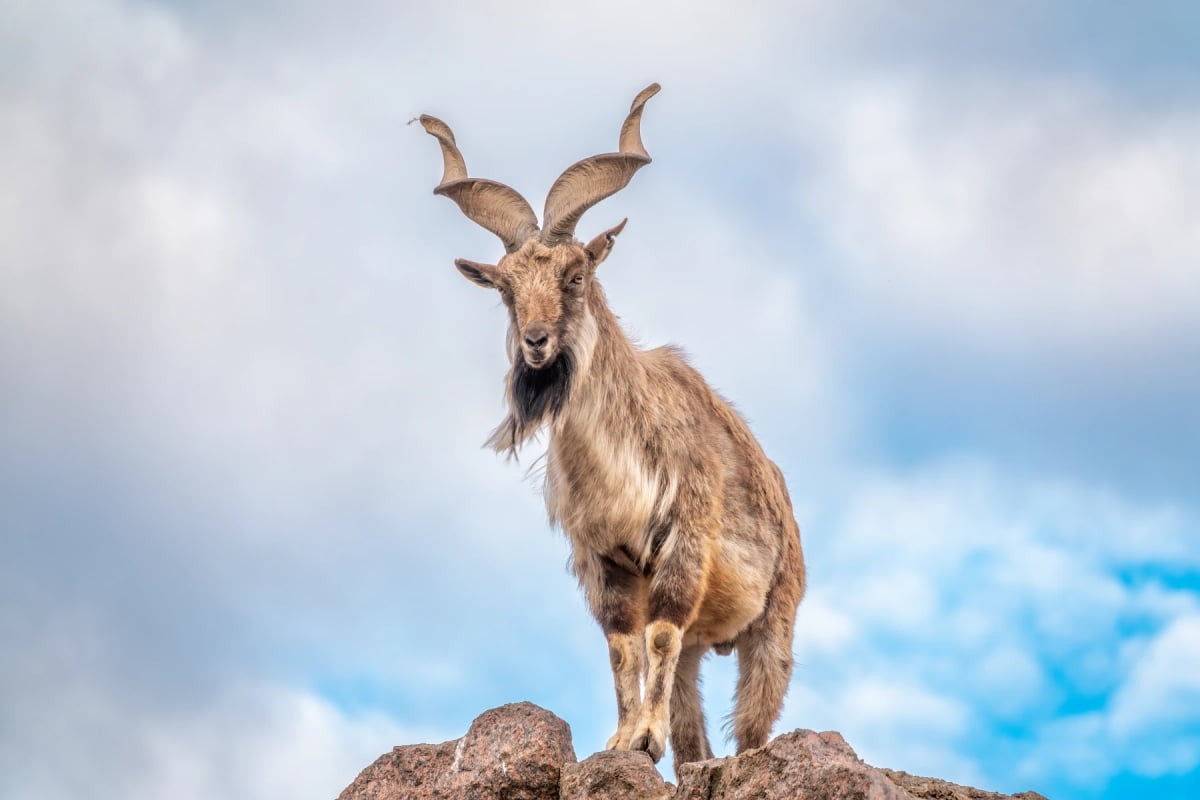
The markhor is a large wild goat native to the mountains of Central and South Asia. Both males and females grow the species' most striking feature: long horns that twist in a corkscrew pattern and can exceed one meter in length on older males. Males also carry a shaggy mane across the chest and neck that thickens in winter. This species lives on cliffs and rocky slopes at elevations between roughly 600 and 3,600 meters, grazing on grasses and browsing on shrubs and tree foliage. Markhors were once hunted heavily for trophies and meat, pushing numbers to critical lows. Community conservation programs and regulated trophy hunting schemes in Pakistan have since helped reverse that decline. The IUCN reclassified the species from Endangered to Near Threatened in 2015, and the global population continues to grow slowly. The markhor is also the national animal of Pakistan.
Habitat and distribution
Markhors are found across a scattered range that stretches from Pakistan and Afghanistan through northern India and into the Central Asian republics of Tajikistan, Turkmenistan, and Uzbekistan. Within that range, they stick almost exclusively to rugged mountain terrain: steep cliffs, rocky outcrops, and broken slopes where few other large mammals can follow. Elevations between roughly 600 and 3,600 meters suit them best, though they shift up or down with the seasons to track food and avoid deep snow. Each subspecies occupies a distinct section of this range, separated by valleys and lower ground that the animals tend to avoid. Forest edges and shrubby hillsides near cliffs also provide important browsing habitat, particularly during the colder months when grasses disappear under snow.
Diet
Food choices shift with the seasons for the markhor. During spring and summer, fresh grasses and flowering herbs make up the bulk of the diet, and the animals graze on whatever open slopes and meadows have to offer at their current elevation. As autumn arrives, they switch more heavily toward browsing, pulling leaves, twigs, and soft bark from shrubs and trees. In winter, when snow buries the lower vegetation, woody browse becomes the main food source. Markhors are also known to rear up on their hind legs to reach higher branches, a behavior shared with some other wild goats. This flexibility in diet is one reason the species can persist across such a wide range of elevations and vegetation types throughout Central and South Asia.
Appearance
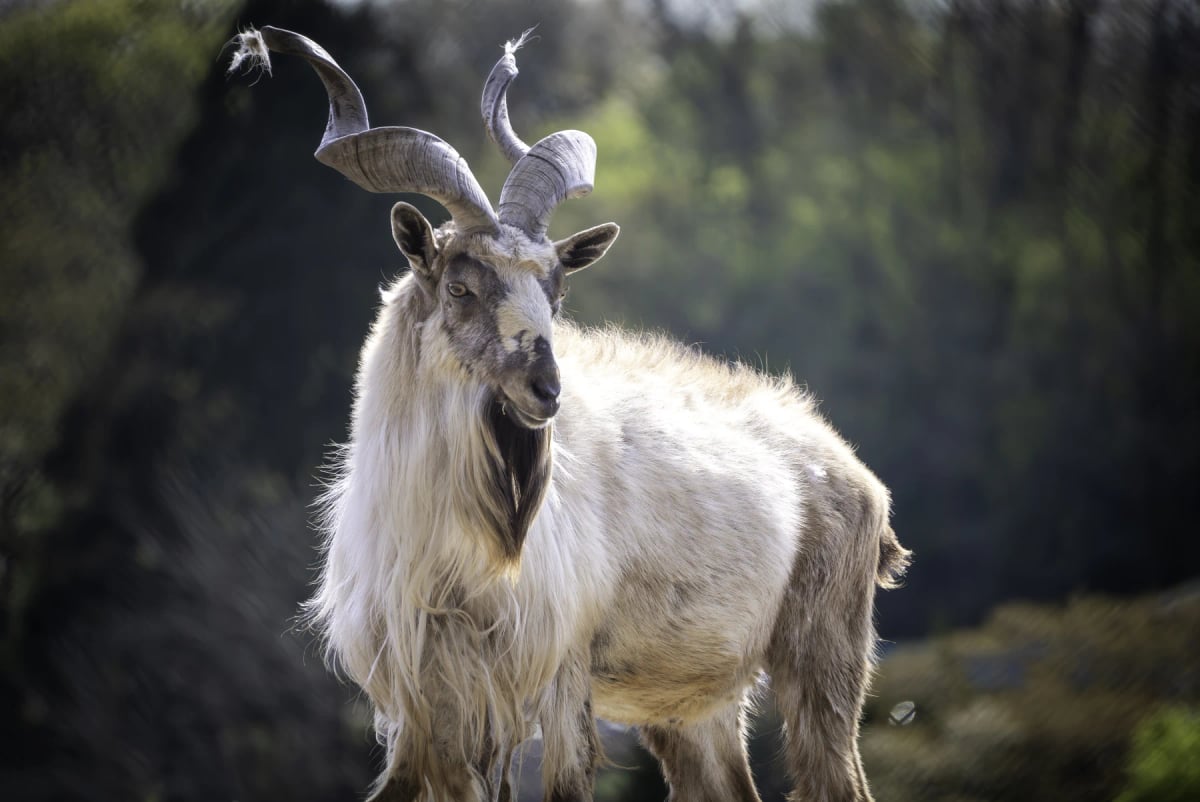
Few wild animals carry horns as distinctive as those of the markhor. Both males and females grow them, but on an adult male the tight corkscrew spirals can exceed one meter in length, making them among the longest horns of any wild goat on Earth. Females grow shorter, more slender horns with less pronounced twisting. The coat is reddish brown in summer and turns longer and grayer through winter. Males develop a thick mane of shaggy fur along the throat, chest, and shoulders that becomes particularly full during the cold months. Leg markings and facial coloring vary somewhat between the recognized subspecies. Overall, the markhor is a powerfully built animal, with adult males weighing up to around 110 kilograms and standing close to one meter at the shoulder.
Behavior
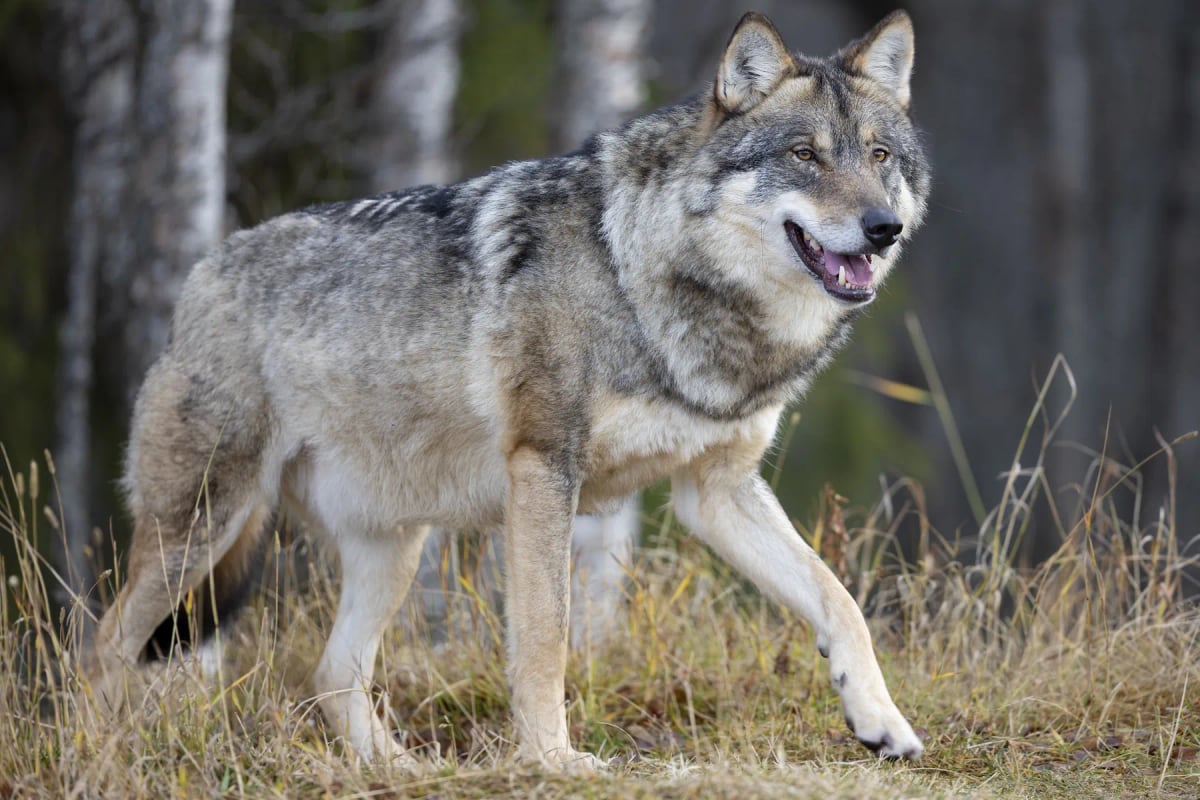
Outside the breeding season, markhors tend to live in separate groups by sex. Females and their young form small herds, while adult males either roam alone or gather in loose bachelor groups. The rut takes place in winter, roughly between November and January depending on location, and it transforms the males. Rivals size each other up before engaging in head-on clashes, locking horns and pushing hard to establish dominance. These contests can last several minutes and occasionally result in injury. Markhors are most active in the early morning and late afternoon, resting through the hottest part of the day. Their sure-footedness on near-vertical rock faces is remarkable, and they rely on that ability to escape wolves, snow leopards, and other predators that share their mountain habitat.
Conservation
The markhor's recovery is one of the more encouraging wildlife stories to come out of Asia in recent decades. By the late twentieth century, heavy hunting for trophies and meat, combined with competition from livestock, had pushed the global population to critically low numbers. The turnaround began largely in Pakistan, where community-based conservation programs gave local villages a direct stake in protecting the animals. Regulated trophy hunting schemes, in which a portion of the fees goes back to the communities, proved especially effective at reducing poaching. The IUCN upgraded the species from Endangered to Near Threatened in 2015, reflecting a slow but steady rise in numbers. Threats have not disappeared entirely: illegal hunting, habitat pressure from grazing livestock, and civil instability in parts of the range all continue to pose risks to the population's survival over the long term.
Where it is found
The Markhor can be found in places such as:
Researched and written by Juan Pablo. Sources: IUCN Red List, scientific literature and regional field guides. Last updated: .
Technical factsheet



Frequently Asked Questions
What do markhors eat?
Markhors eat grasses and flowering herbs during spring and summer, then shift to shrubs, leaves, and twigs as winter approaches. When snow covers the ground, woody browse becomes their main food source. They are skilled at rearing up on their hind legs to reach higher branches. This flexibility lets them find food across a wide range of elevations throughout the year.
Where do markhors live?
Markhors live in the rugged mountains of Central and South Asia, across Pakistan, Afghanistan, northern India, Tajikistan, Turkmenistan, and Uzbekistan. They favor steep cliffs, rocky slopes, and broken terrain at elevations between about 600 and 3,600 meters. They move up or down the mountain with the seasons to follow food sources and avoid deep snow.
Why are markhor horns so unusual?
The markhor's horns grow in a tight corkscrew spiral, unlike the curved or swept-back horns of most wild goats. On an adult male, they can exceed one meter in length, ranking among the longest of any wild goat on Earth. Both males and females grow them, though females have shorter, less twisted versions. The exact function is not fully understood, but they clearly play a role in competition between males.
Is the markhor endangered?
The markhor is currently listed as Near Threatened by the IUCN. It was once classified as Endangered, but conservation programs in Pakistan, including community-led protection efforts and regulated trophy hunting, helped the population grow steadily. The IUCN upgraded its status in 2015. Threats such as illegal hunting, pressure from livestock, and instability in parts of its range still pose risks to its survival over the long term.
How do male markhors compete for mates?
During the rut, which runs roughly from November to January, males put on an intense display to win females. Rivals first size each other up, then clash head-on, locking their corkscrew horns and pushing with considerable force. These fights can last several minutes and sometimes cause injuries. Outside of the breeding season, males tend to live apart from females, either alone or in small groups.
What is the markhor's connection to Pakistan?
The markhor is the national animal of Pakistan, a status that reflects both its cultural importance and its strong presence in the country's mountainous north. Pakistan has also been at the center of the markhor's conservation recovery, with community programs that give local villages a financial stake in protecting the animals. These efforts are widely credited with reversing the steep population decline the species suffered through the twentieth century.
How does the markhor avoid predators?
The markhor's best defense is the terrain it calls home. On near-vertical cliff faces and broken rocky slopes, it moves with remarkable confidence, putting distance between itself and predators like snow leopards and wolves that cannot follow as easily. Markhors also stay most active during the early morning and late afternoon, resting in sheltered spots through the middle of the day when visibility and heat can work against them.