European Adder
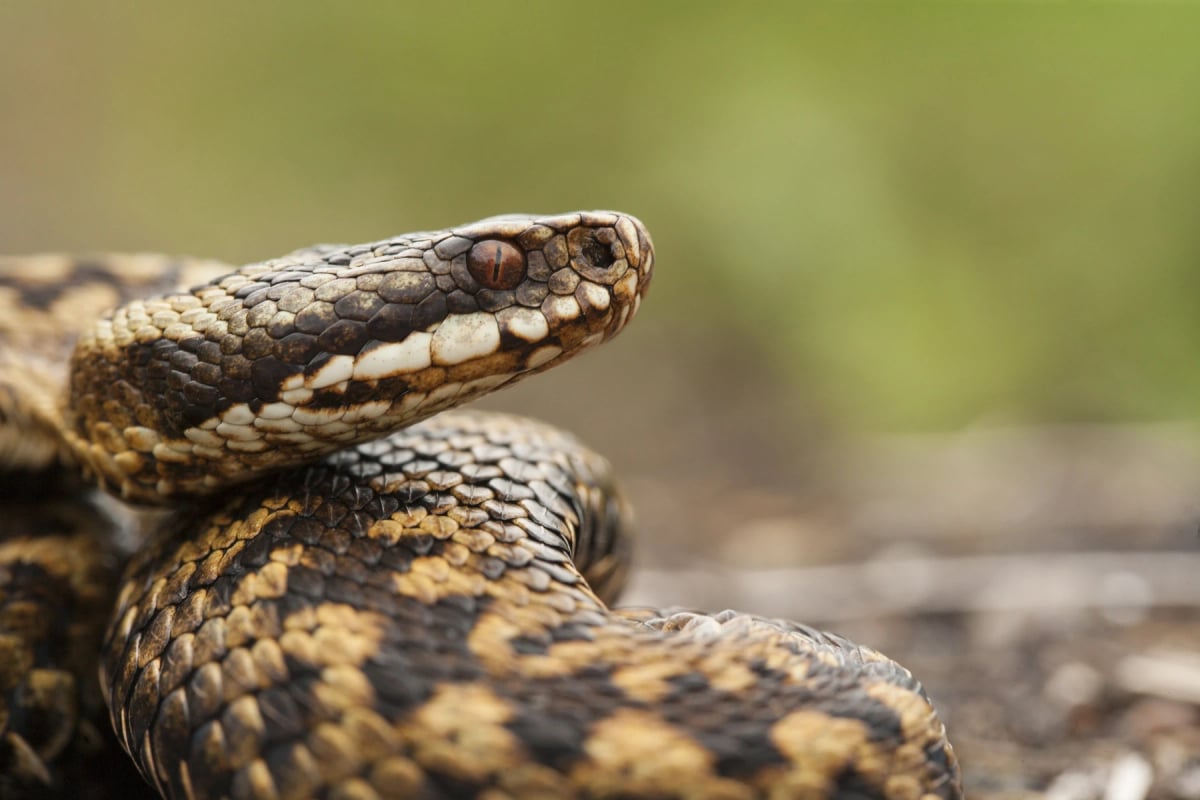
The European adder (Vipera berus) is the most widely distributed venomous snake in the world, stretching from the United Kingdom all the way to the Pacific coast of Russia. It is a stocky, relatively small viper most easily recognized by the bold zigzag stripe running down its back, though fully black individuals are common across many populations. Adults typically measure between 55 and 65 cm, with females generally larger than males. This species favors woodland edges, heathlands, moorlands, and mountain meadows, where it spends much of its time basking on rocks or sheltering under vegetation. It preys mainly on small mammals and lizards, subduing them with venom before swallowing them whole. Although it is venomous, it is a shy animal that bites only in self-defense. Its venom causes pain and swelling and warrants medical attention, but deaths in healthy adults are extremely rare.
Habitat and distribution
No other venomous snake covers as much ground as the European adder. Its range begins in the United Kingdom and sweeps continuously eastward through most of Europe, across Russia, and into Mongolia and North Korea, reaching the Pacific coast. This extraordinary spread makes it the most widely distributed venomous snake on Earth. Across this vast territory it occupies a remarkable variety of habitats: woodland edges, heathlands, moorlands, mountain meadows, and rocky hillsides. It tends to favor places where patches of open ground for basking sit close to dense cover for shelter. In Scandinavia it climbs well above the tree line, and in parts of Russia it tolerates extremely cold winters by entering communal hibernation sites, sometimes shared with other snake species.
Appearance
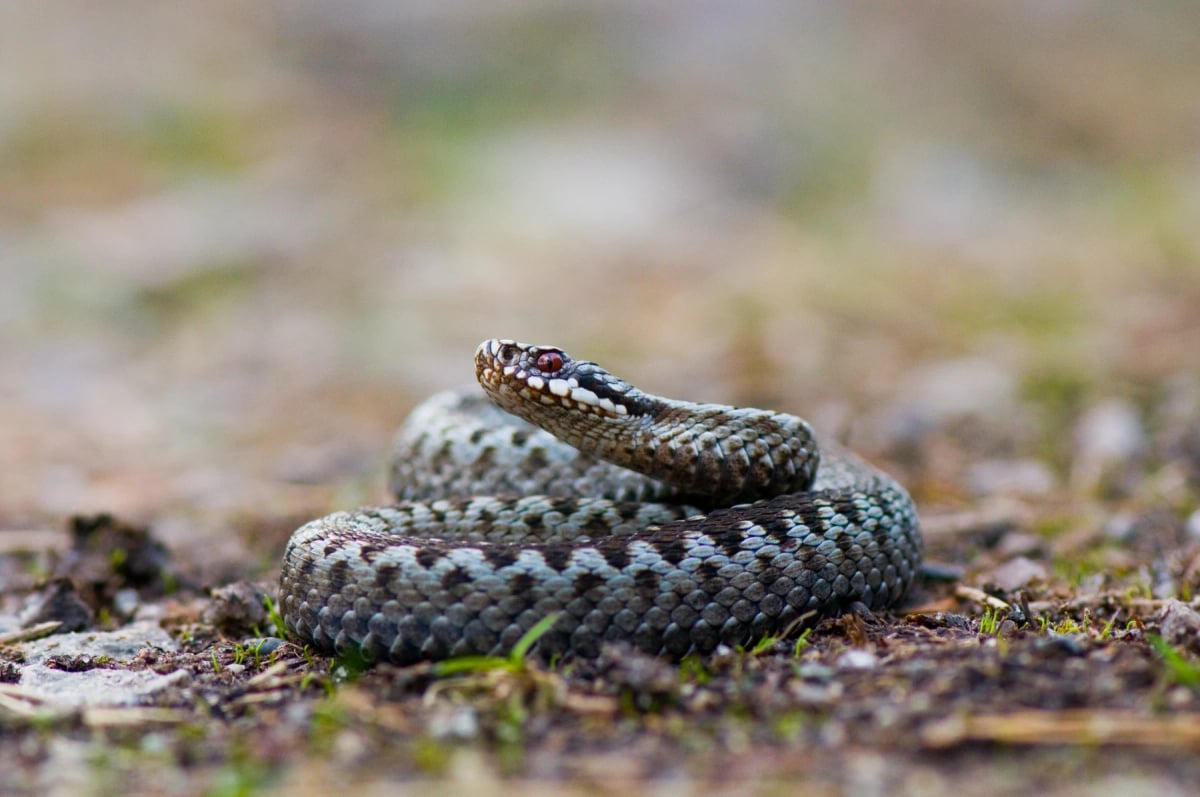
The European adder is a stocky, relatively short snake with a broad, distinct head and vertical pupils that give it an immediately striking look. Most individuals are grey or brown, marked along the entire length of the back by a bold zigzag stripe in black or dark brown. The belly is usually dark, often mottled with lighter spots. Adults typically measure between 55 and 65 cm, though some individuals, particularly females, can reach around 90 cm. Females tend to be larger and browner, while males are often paler grey with sharper contrast in the zigzag pattern. Fully black, or melanistic, individuals are common in many populations and can make the zigzag pattern very difficult to see. The red or orange eye is a useful detail for identification in the field.
Diet
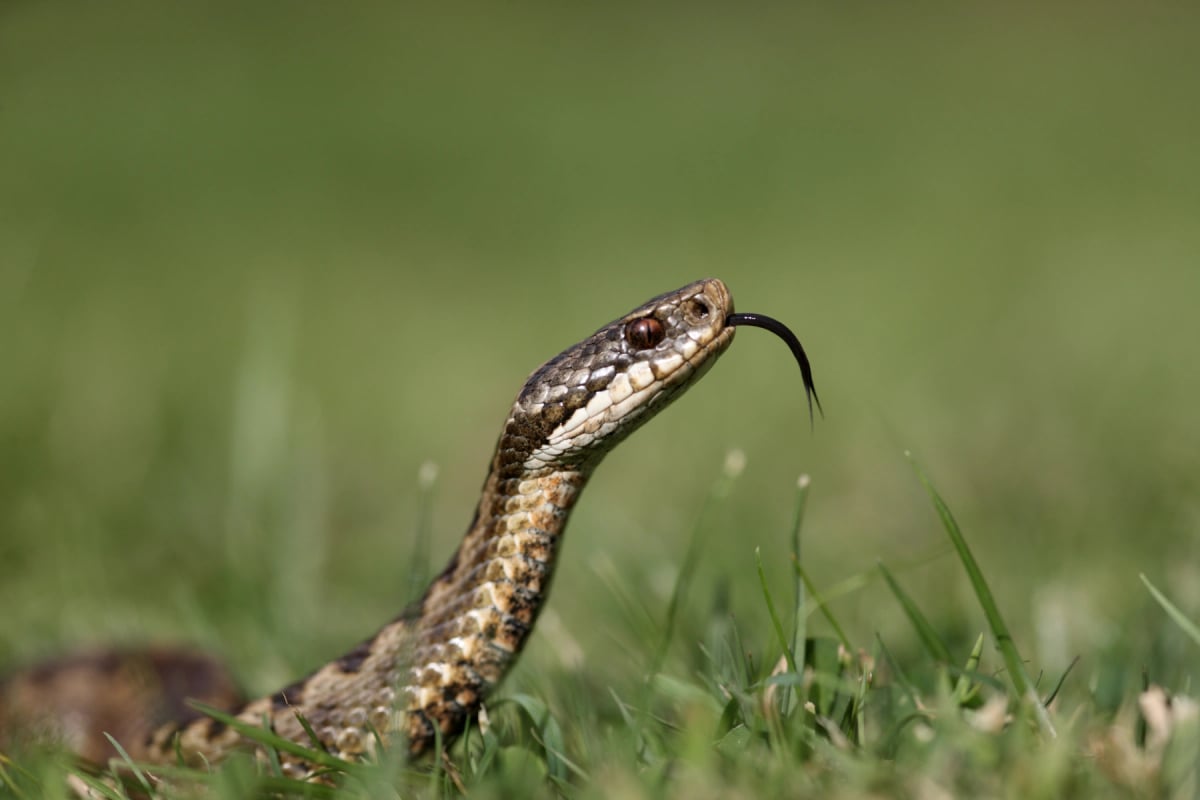
Hunting is at the core of the adder's daily life for the warmer months of the year. Adults prey mainly on small mammals such as voles and mice, as well as lizards and, less often, frogs and newts. The snake strikes quickly, injects venom, and then releases the prey, tracking it by scent once it has succumbed. Young adders have a somewhat different diet, focusing heavily on lizards and small amphibians as they are not yet large enough to tackle most mammals. Prey is always swallowed whole, head first. Because adders rely on external warmth to power their digestion, a single substantial meal can sustain them for days or even weeks. During hibernation, which can last from October through to March in northern parts of their range, they do not feed at all.
Venom and bite
Despite its venomous nature, the European adder is a shy animal and bites only when it feels cornered or is accidentally stepped on or grabbed. The venom is a mix of proteins that causes pain, swelling, and sometimes bruising around the bite site, often spreading up the affected limb within hours. Nausea, dizziness, and a drop in blood pressure can follow in more serious cases. Deaths in otherwise healthy adults are extremely rare across the snake's entire range, though children and people with underlying health conditions face greater risk. Anyone bitten should keep calm, keep the affected limb still and at a low level, and seek medical attention promptly. Antivenom is available in most countries where the species occurs and is reserved for cases with severe symptoms.
Conservation
Globally, the European adder is assessed as Least Concern on the IUCN Red List, reflecting its wide range and large overall population. That broad picture, however, masks some real and growing problems at the local level. Across much of western Europe, populations have been shrinking for decades. The main culprits are the loss of heathland and open grassland to agriculture and development, the fragmentation of suitable habitat into small isolated patches, and deliberate killing by people who fear or dislike snakes. Small isolated populations are particularly vulnerable because inbreeding reduces their ability to survive disease and environmental change. Conservation efforts in several countries focus on managing heathlands through controlled grazing and scrub clearance to keep the open, sunny patches the adder depends on. In the United Kingdom, the species is fully protected by law.
Where it is found
The European Adder can be found in places such as:
Researched and written by Juan Pablo. Sources: IUCN Red List, scientific literature and regional field guides. Last updated: .
Technical factsheet


















Frequently Asked Questions
Is the European adder dangerous to humans?
The European adder is venomous, but it bites only when cornered or accidentally disturbed. Its venom causes pain, swelling, and sometimes nausea, but deaths in healthy adults are extremely rare. Children and people with underlying health conditions face greater risk. If bitten, keep calm, keep the limb still, and get to a hospital promptly. Antivenom is available across most of Europe.
What does the European adder eat?
Adult European adders feed mainly on small mammals like voles and mice, as well as lizards. Frogs and newts appear in their diet less often. The snake strikes, injects venom, releases the prey, and then tracks it by scent. Young adders focus more on lizards and small amphibians. A big meal can keep an adder going for days or even weeks, as digestion depends on warmth from the environment.
Where does the European adder live?
The European adder has the widest range of any venomous snake in the world, stretching from the United Kingdom through most of Europe and Russia all the way to the Pacific coast. It lives in woodland edges, heathlands, moorlands, rocky hillsides, and mountain meadows. It looks for spots where open, sunny ground for basking sits close to dense cover for shelter. In Scandinavia it can even be found above the tree line.
How can you identify a European adder?
The easiest feature to look for is the bold zigzag stripe running the full length of the back. Most adders are grey or brown, and the stripe is usually black or dark brown. The head is broad and distinct, and the eyes have vertical pupils with a reddish or orange iris. Some individuals are entirely black, which can hide the zigzag pattern. Adults are stocky and relatively short, usually between 55 and 65 cm long.
Do European adders hibernate?
Yes, European adders hibernate during the colder months. In northern parts of their range, like Scandinavia or northern Russia, they may be dormant from October all the way through to March. They often gather in communal shelters underground or under rocks, sometimes sharing these spots with other snake species. During this time they do not eat at all. In warmer southern areas, the hibernation period is noticeably shorter.
Is the European adder endangered?
Globally, the European adder is listed as Least Concern by the IUCN, thanks to its huge range and large overall population. However, in western Europe many local populations have been declining for decades. Loss of heathland, habitat fragmentation, and deliberate killing are the main threats. Small isolated groups are especially at risk because inbreeding weakens their resilience. Several countries now protect the species by law and actively manage heathlands to support it.
Why do some European adders appear completely black?
Some European adders are melanistic, meaning they produce an unusually high amount of dark pigment, which turns their entire body black. This color variation is quite common across many populations. Melanistic individuals are thought to warm up faster in the sun because darker surfaces absorb heat more efficiently. This can be a real advantage in cooler climates or at higher altitudes, where basking time is limited and every bit of warmth matters.