Opossum
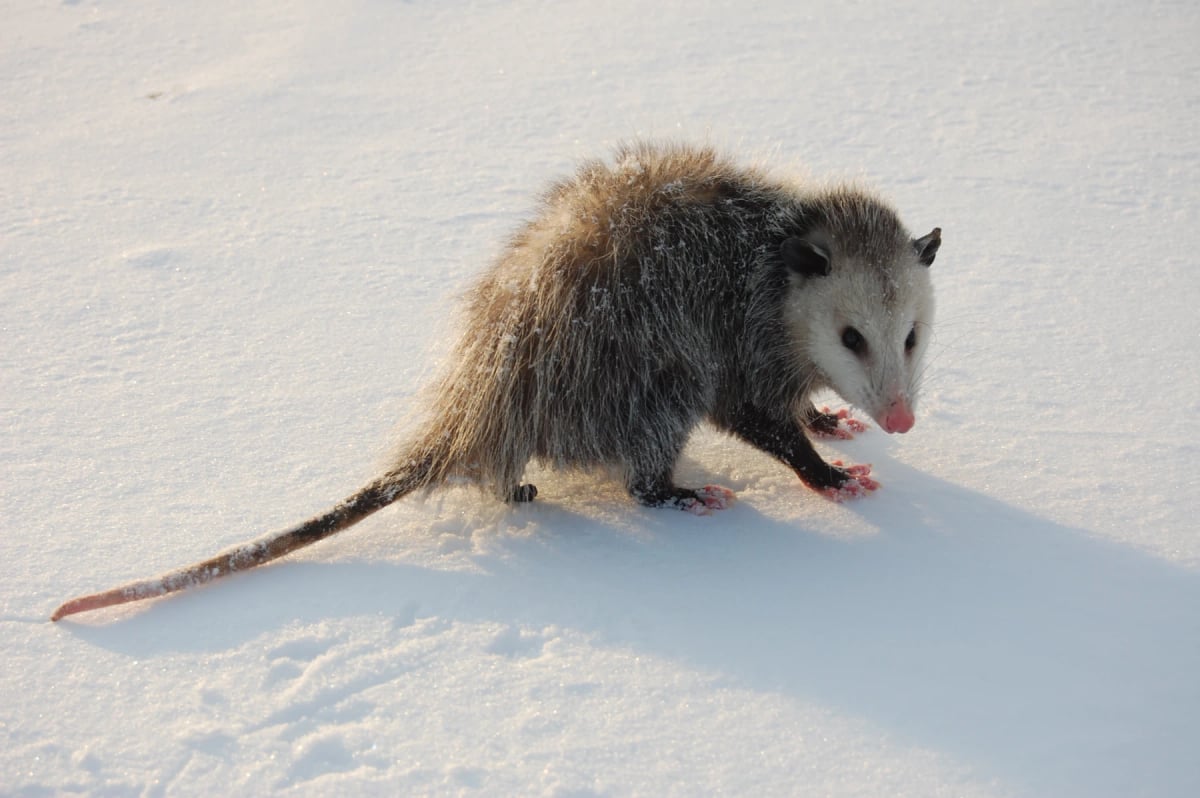
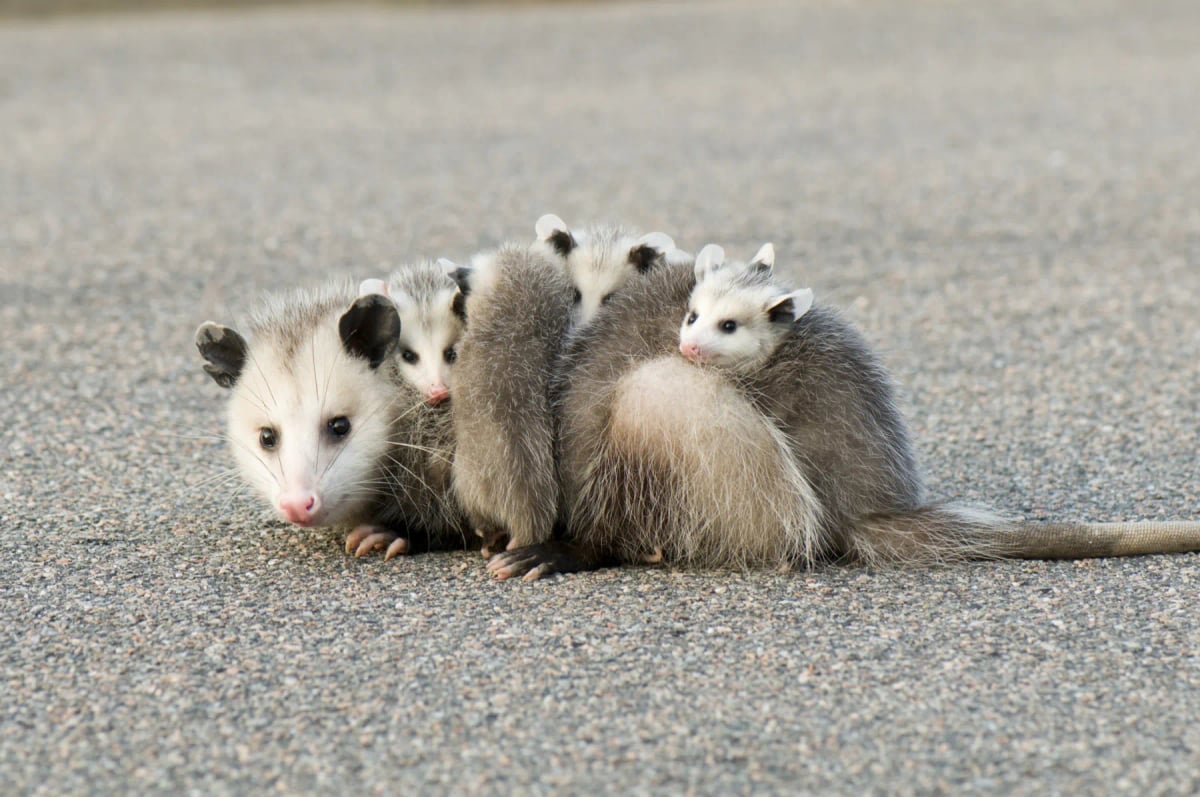
The opossum is the only marsupial native to North America, though the genus Didelphis ranges widely across Central and South America as well. Built for survival, it has a pointed snout packed with 50 teeth, a naked prehensile tail used for gripping branches, and an immune system that resists many snake venoms. It thrives in forests, farmland and city neighborhoods alike, eating almost anything it finds: fruit, insects, small vertebrates, eggs and carrion. When cornered by a predator, it may go limp and release a foul odor from its anal glands, a fully involuntary response that mimics death convincingly enough to fool most attackers. Females carry their young in a pouch, and a single litter can include a dozen or more joeys. Despite a short lifespan in the wild, opossums reproduce quickly and remain widespread across the Americas.
Habitat and distribution
Across the Americas, opossums of the genus Didelphis occupy one of the broadest ranges of any marsupial on Earth. They are found from southern Canada through the United States, Central America, and down to northern Argentina and Uruguay. Within that enormous territory, they settle into almost any environment that offers food and shelter: tropical rainforests, dry scrublands, agricultural fields, suburban gardens, and city alleys. The Virginia opossum (Didelphis virginiana) is the species most familiar to North American residents, while several other Didelphis species dominate in South America. Opossums do not hibernate, so in colder northern states they sometimes suffer frostbite on their naked ears and tail. Their ability to adapt to human altered landscapes has kept their populations stable across virtually the entire range.
Diet
Few animals eat as wide a variety of food as the opossum. Its diet shifts with the season and the setting, taking in ripe fruit, berries, nuts, insects, earthworms, snails, frogs, small rodents, bird eggs, and carrion with equal enthusiasm. In towns and cities, garbage bins and compost heaps become reliable food sources. One particularly valuable habit is eating large numbers of ticks, which can carry diseases such as Lyme disease. Opossums are thorough groomers and consume most of the ticks they pick up while moving through vegetation. Their 50 teeth, the most of any North American land mammal, allow them to process hard shells, bones, and tough plant material without difficulty. This dietary flexibility is one of the main reasons the opossum thrives in so many different environments across the Americas.
Behavior
Opossums are solitary and active mainly at night, spending their days resting in hollow logs, dense brush, rock crevices, or quiet corners of human buildings. They are capable climbers, aided by a prehensile tail that can wrap around branches for extra grip and by rear feet that have an opposable toe, much like a thumb, giving them a firm hold on uneven surfaces. Despite this agility in trees, they spend a good deal of time foraging on the ground. They do not dig their own burrows but readily move into dens left by other animals. Opossums tend to be nomadic rather than strictly territorial, shifting their home range as food supplies change. They are also largely silent animals, though mothers and joeys communicate through soft clicking and hissing sounds.
Defense strategies
When a predator closes in, the opossum has several lines of defense. Its first response is usually to growl, hiss, and display all 50 teeth in an attempt to look threatening. If that fails, it may release a greenish fluid from its anal glands, producing a smell similar to that of a rotting carcass. In some encounters, the animal enters a catatonic state, collapsing onto its side with its eyes glazed and its tongue hanging out. This reaction, known as playing possum, is entirely involuntary, triggered by extreme stress in the nervous system rather than a conscious choice. The animal may remain motionless for minutes or even hours. Many predators lose interest in what appears to be dead prey. Opossums also carry a natural resistance to the venom of several North American pit vipers, including rattlesnakes, adding another layer of protection.
Relation with humans
Opossums have lived alongside people for centuries and, more often than not, the relationship works in both directions. They are unfairly regarded as pests in many communities, but the ecological services they provide are genuinely useful. By consuming large numbers of ticks, they help reduce the spread of tick carried illnesses in areas where Lyme disease is a concern. They also clean up carrion and control populations of insects and small rodents. Conflicts arise mainly when opossums enter attics, raid gardens, or knock over bins. These problems are usually solved by securing food sources rather than by removing the animals. Historically, opossums have been hunted for food across parts of the southern United States and throughout Latin America. In research, the study of their venom resistance has inspired scientists exploring treatments for snakebite.
Where it is found
The Opossum can be found in places such as:
Researched and written by Juan Pablo. Sources: IUCN Red List, scientific literature and regional field guides. Last updated: .
Technical factsheet






Frequently Asked Questions
Do opossums really play dead?
Yes, and they have no say in it. When extreme stress overwhelms an opossum's nervous system, the animal collapses, goes limp, and releases a foul odor that mimics a rotting carcass. This state can last anywhere from a few minutes to several hours. Because most predators prefer live prey, the trick works surprisingly well. The phrase "playing possum" comes from this behavior, even though the animal is not making a conscious choice.
Are opossums immune to snake venom?
Opossums have a natural resistance to the venom of several North American pit vipers, including rattlesnakes. A peptide found in their blood can neutralize venom proteins, which has made them a subject of scientific interest for researchers looking at treatments for snakebite. They are not immune to every venom on Earth, but this level of protection is remarkable for a mammal of their size and sets them apart from most other animals in their range.
What do opossums eat?
Opossums will eat almost anything they come across. Their diet includes fruit, insects, earthworms, snails, bird eggs, small rodents, carrion, and even garbage when they live near people. One of their most useful habits is consuming large numbers of ticks as they groom themselves, which helps reduce the spread of diseases like Lyme disease. Their 50 teeth, more than any other North American land mammal, help them handle tough food with ease.
Where do opossums live?
Opossums of the genus Didelphis are found across a vast stretch of the Americas, from southern Canada all the way to Uruguay and northern Argentina. They adapt easily to tropical forests, dry scrublands, farmland, suburbs, and city neighborhoods. The Virginia opossum is the species most common in North America. They do not hibernate, so in colder regions they sometimes suffer frostbite on their naked ears and tail during harsh winters.
How long do opossums live?
In the wild, opossums rarely live beyond two years, which makes them one of the shorter lived mammals of their size in the Americas. Predation, harsh winters, and the dangers of living near roads all take a toll. In captivity, they can reach three to four years. To compensate for their brief lifespan, they reproduce quickly. A female can raise more than one litter per year, with each litter containing a dozen or more joeys.
Are opossums dangerous to humans or pets?
Opossums are not aggressive by nature and pose very little risk to people. When they feel threatened, their first reaction is to hiss and show their teeth, but bites are rare. They are also highly resistant to rabies, likely because their body temperature is too low for the virus to thrive. For pets, the risk is minimal as well. Conflicts usually come down to raided gardens or tipped over bins rather than any direct threat.
Is the opossum a marsupial like a kangaroo?
Yes, opossums are marsupials, which means females carry their newborns in a pouch until the joeys are developed enough to survive on their own. They are actually the only marsupials native to North America, making them a unique piece of the continent's wildlife. The group is far more closely related to South American marsupials than to kangaroos or koalas, which belong to a separate marsupial lineage that evolved in Australia.