Japanese Serow
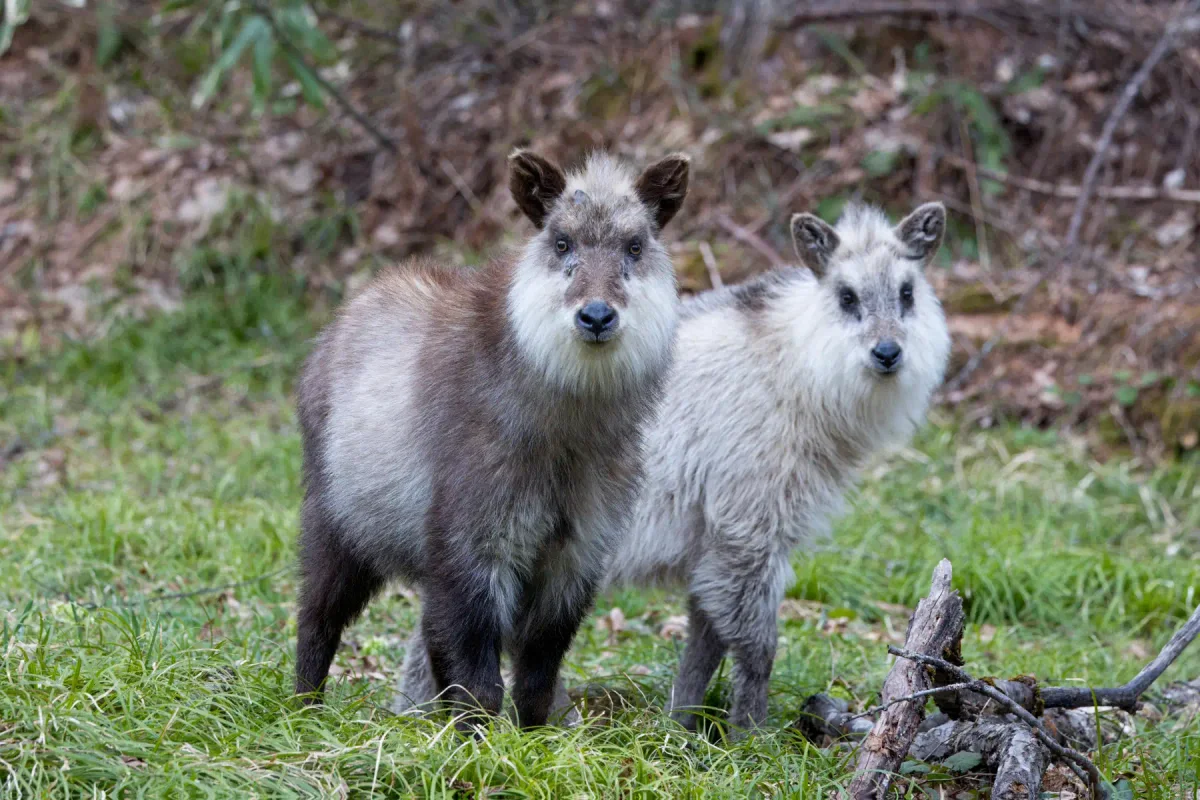
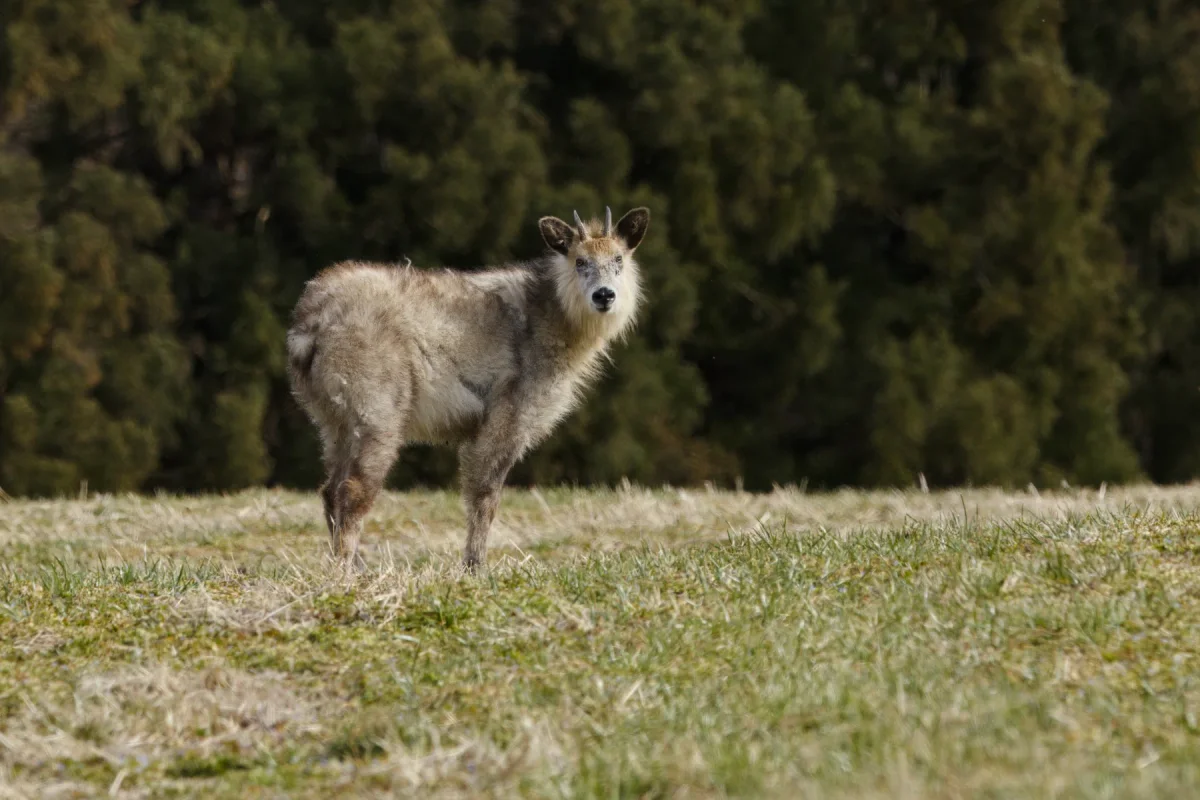
The Japanese serow (Capricornis crispus) is a goat antelope found only in Japan, living across the mountain forests of Honshu, Shikoku, and Kyushu. Its coat ranges from pale gray to almost black and is thick enough to handle heavy snowfall in winter. Both males and females carry short, slightly curved horns that rarely exceed 15 cm. A strict browser, it feeds on leaves, shoots, acorns, bark, and the stems of shrubs, picking its way through steep and rocky terrain with remarkable sure-footedness. Each individual holds a territory it marks with secretions from preorbital glands located in front of the eyes. Overhunting once brought this species close to collapse, prompting Japan to declare it a Special Natural Monument in 1955. Protection has allowed populations to stabilise across many mountain ranges. The IUCN currently lists it as Least Concern.
Habitat and distribution
Japan is the only place on Earth where the Japanese serow lives. It is found across the mountainous interior of Honshu, and populations also exist on Shikoku and Kyushu. The species favors dense broadleaf and mixed forests growing on steep slopes, particularly where rocky outcrops and cliffs provide shelter and escape routes from predators. It copes well with deep winter snow, thanks to its thick coat, and ranges from low forested valleys up into subalpine zones. Individual animals tend to stick to the same patch of terrain over many years, learning every ledge and gully in their home area. Although it is not found on Hokkaido, the serow thrives across a surprisingly wide band of elevation and forest type throughout the three main southern islands.
Diet
Browsing is at the heart of how the Japanese serow feeds. Rather than grazing on grasses, it selects leaves, young shoots, acorns, bark, and the stems of shrubs, picking out the most nutritious parts of the plants available to it. Its diet shifts with the seasons: fresh leaves and shoots dominate in spring and summer, while bark and woody stems become more important when snow covers the ground in winter. The serow moves through steep and rocky terrain with great confidence, reaching plants on ledges that most other herbivores could not access. This ability to navigate difficult ground gives it access to food sources that face little competition. It is a selective feeder, spending time inspecting plants before taking a bite.
Behavior
Solitary living defines the Japanese serow more than almost any other trait. Each animal holds a personal territory, which it marks by rubbing secretions from the preorbital glands, located just in front of the eyes, onto rocks and tree branches. These scent posts signal ownership to neighboring animals and reduce the need for direct confrontation. Territories are maintained over the long term and are defended against rivals of the same species. Mating pairs come together briefly in autumn, but otherwise adults tend to keep to themselves. The serow is active mainly during the day, spending mornings and late afternoons foraging and resting during the hottest midday hours. Its sure-footedness on steep cliffs is one of its most striking qualities, allowing it to escape predators such as the Japanese black bear.
Conservation
Hunting pressure once pushed the Japanese serow to the brink. By the early twentieth century, demand for its meat and hide had reduced populations to worrying levels across much of Japan. In 1955, the Japanese government responded by designating the species a Special Natural Monument, granting it full legal protection and making hunting illegal nationwide. The recovery that followed was gradual but real, and today the serow is present across most of its historical range. The IUCN currently lists it as Least Concern. Some tension does exist between farmers and conservationists, as growing serow populations occasionally cause damage to crops and plantations in mountain communities. Management efforts continue to balance the needs of local people with the protection of this nationally significant animal.
Cultural significance
Few wild animals are as deeply woven into Japanese identity as the serow. Known in Japanese as kamoshika, it has appeared in the country's art, literature, and regional folklore for centuries. Its image is associated with the mountain landscapes of rural Japan, and it is often used as a symbol of perseverance and connection to wild places. The serow lent its name to the Kamoshika Sports brand, a well-known Japanese outdoor equipment company, reflecting how familiar and respected the animal is in everyday culture. As a designated Special Natural Monument, it holds a status in Japan that few other mammals share. Schoolchildren learn about it as a conservation success story, and sightings in mountain villages are often celebrated rather than treated as a nuisance.
Researched and written by Juan Pablo. Sources: IUCN Red List, scientific literature and regional field guides. Last updated: .
Technical factsheet




Frequently Asked Questions
What does the Japanese serow eat?
The Japanese serow is a browser, not a grazer. It feeds on leaves, young shoots, acorns, bark, and shrub stems. In spring and summer it targets fresh growth, while in winter it relies more on bark and woody stems when snow covers the ground. It is a selective eater, often pausing to inspect a plant before taking a bite, and its agility on steep slopes gives it access to food other herbivores cannot reach.
Where does the Japanese serow live?
The Japanese serow is found only in Japan. It lives in the mountainous forests of Honshu, Shikoku, and Kyushu, favoring steep slopes with dense broadleaf or mixed woodland and rocky outcrops nearby. It is not present on Hokkaido. Animals tend to stay within the same patch of terrain for many years, and individuals can be found anywhere from low forested valleys up into subalpine zones.
Is the Japanese serow a deer or a goat?
Neither, exactly. The Japanese serow is a goat antelope, which means it belongs to a group that sits between true goats and true antelopes. It is more closely related to goats and sheep than to deer. Both males and females grow short, slightly curved horns that rarely reach 15 cm. Its stocky build and thick coat can make it look a little like a shaggy goat, especially in winter.
Why is the Japanese serow solitary?
The Japanese serow lives alone and actively defends its territory against others of its kind. It marks its patch by rubbing secretions from glands in front of its eyes onto rocks and branches, which warns rivals away without a physical fight. This lifestyle suits the steep, rocky terrain it calls home, where food and shelter are spread out rather than concentrated in one place. Pairs only come together briefly during the autumn mating season.
Is the Japanese serow endangered?
No. The IUCN currently lists the Japanese serow as Least Concern. It came very close to collapse in the early twentieth century due to heavy hunting for its meat and hide. Japan declared it a Special Natural Monument in 1955, making hunting illegal, and populations have recovered steadily since then. Today it is present across most of its historical range, though some conflict with farmers does occur where growing populations damage crops.
How does the Japanese serow handle deep snow in winter?
Its thick coat, which ranges from pale gray to almost black, is well suited to cold and heavy snowfall. The serow does not migrate to lower ground when winter arrives. Instead, it stays in its territory and shifts its diet toward bark and woody stems that remain accessible above the snow. Its strong legs and natural ability to navigate rocky, uneven ground also help it move through deep snow without getting stuck.
What is the cultural significance of the Japanese serow in Japan?
Known in Japanese as kamoshika, the serow has appeared in Japanese art, literature, and regional folklore for centuries. It is seen as a symbol of the mountain wilderness and of perseverance. The animal even lent its name to Kamoshika Sports, a well-known Japanese outdoor equipment brand. As a Special Natural Monument, it holds one of the highest levels of protection in the country, and many Japanese people regard it as a conservation success story.