Arctic Fox
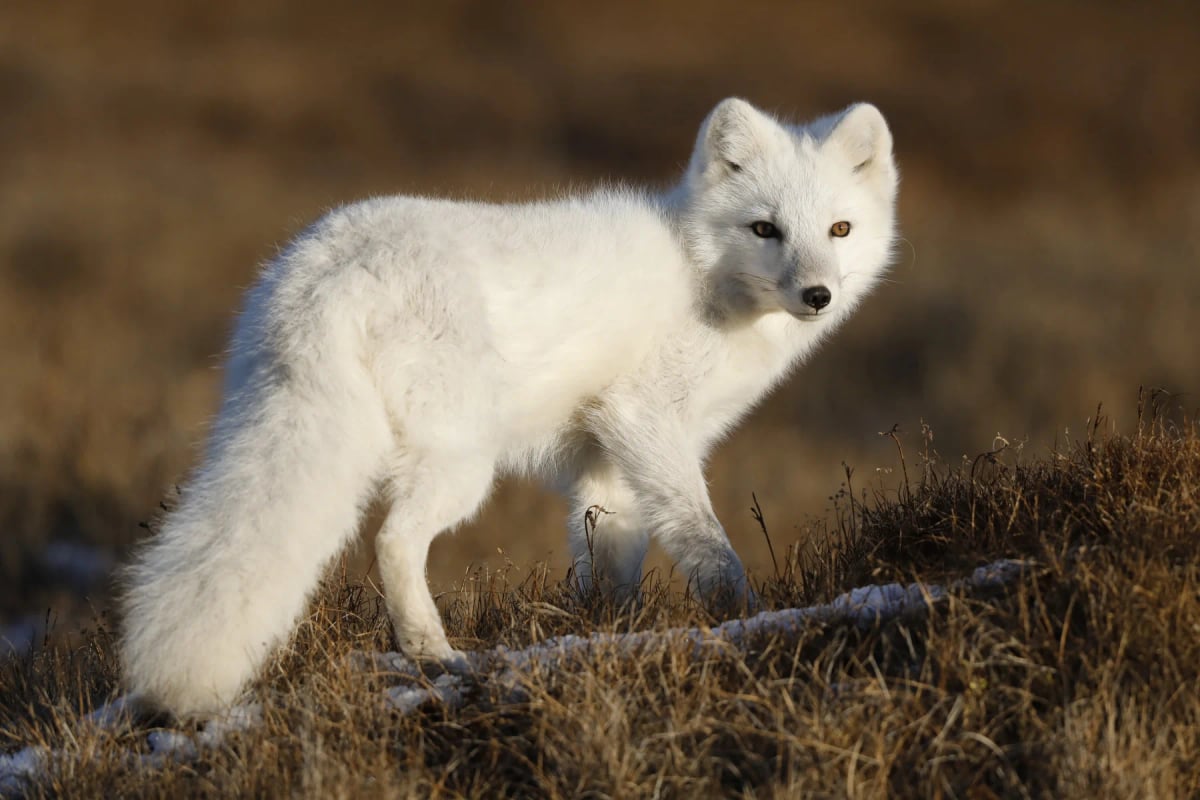
The Arctic fox is a small predator built for the extremes of tundra life. Its dense, multilayered coat insulates against temperatures as low as −50 °C, and its compact body with short, rounded ears minimizes heat loss. The coat shifts seasonally from white in winter to brown or grey in summer, providing camouflage across very different landscapes. Found across the circumpolar north from Canada and Alaska to Greenland, Iceland, Scandinavia, and Russia, it plays a key role in the tundra food web as both a hunter of small mammals and a scavenger that follows polar bears.
Habitat and distribution
The Arctic fox ranges across the entire circumpolar tundra, making it one of the most widely distributed terrestrial mammals in the far north. Its habitat includes open tundra plains, sea ice margins, coastal areas, and in some regions alpine terrain above the treeline. The range spans northern Canada, Alaska, Greenland, Iceland, the Scandinavian mountains, and the vast Russian Arctic, including numerous island territories. Individuals are known to disperse extraordinary distances across sea ice, with tracked foxes traveling more than 3,500 kilometers from their starting points. Population density varies greatly depending on lemming cycles in any given year.
Diet
The Arctic fox is an opportunistic predator and scavenger whose diet shifts dramatically with the season and location. Lemmings are its primary prey across most of its range, and their population cycles directly drive fluctuations in fox numbers and reproduction. When lemmings are scarce, the fox turns to voles, birds, eggs, fish, berries, and carrion. Coastal populations rely heavily on seabirds and their eggs during summer nesting seasons. It also follows polar bears across sea ice, feeding on the remains of seal kills, and caches surplus food in the permafrost for leaner periods.
Adaptations to cold
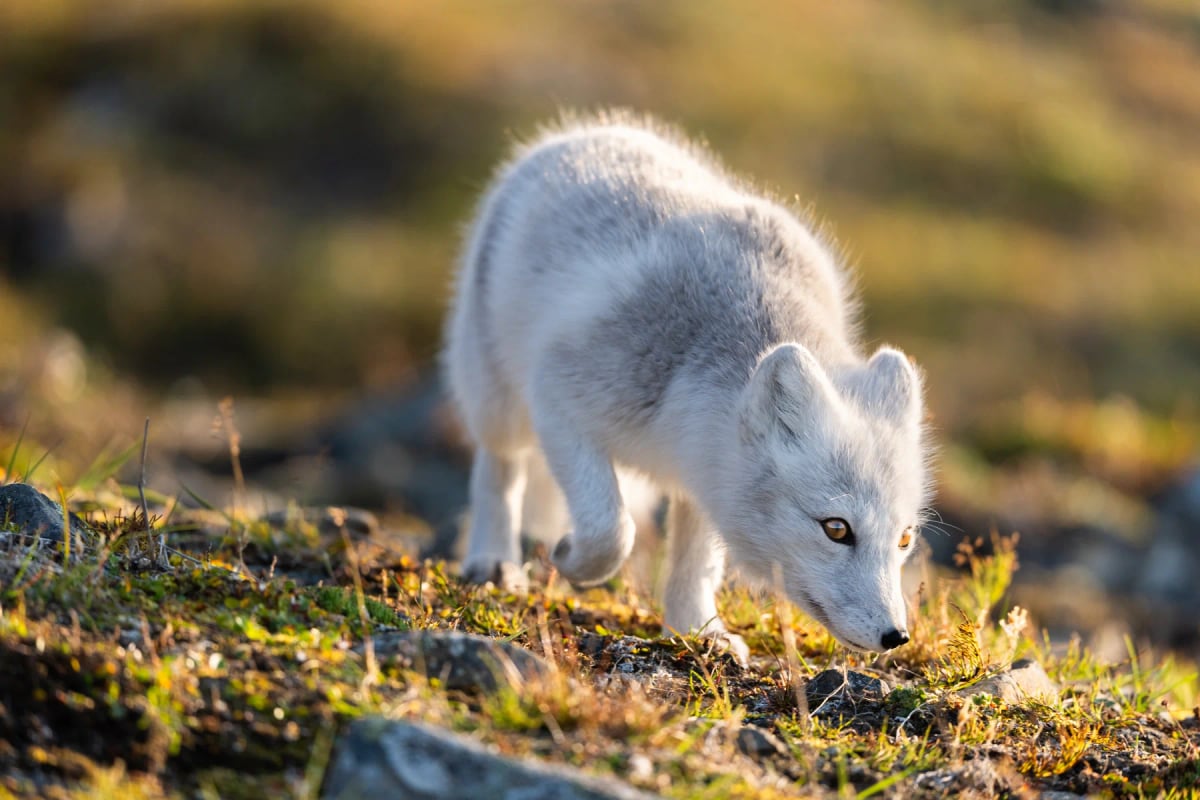
The Arctic fox possesses a set of physical traits that allow it to function in some of the coldest environments on Earth. Its winter coat is among the warmest of any mammal relative to body size, with multiple insulating layers that keep it comfortable down to −50 °C. Small, rounded ears and a short muzzle reduce surface area and limit heat loss. Its paws are covered in dense fur, providing insulation against frozen ground. In summer the coat thins and shifts to brown or grey, matching the exposed tundra vegetation and providing camouflage across a very different landscape.
Behavior
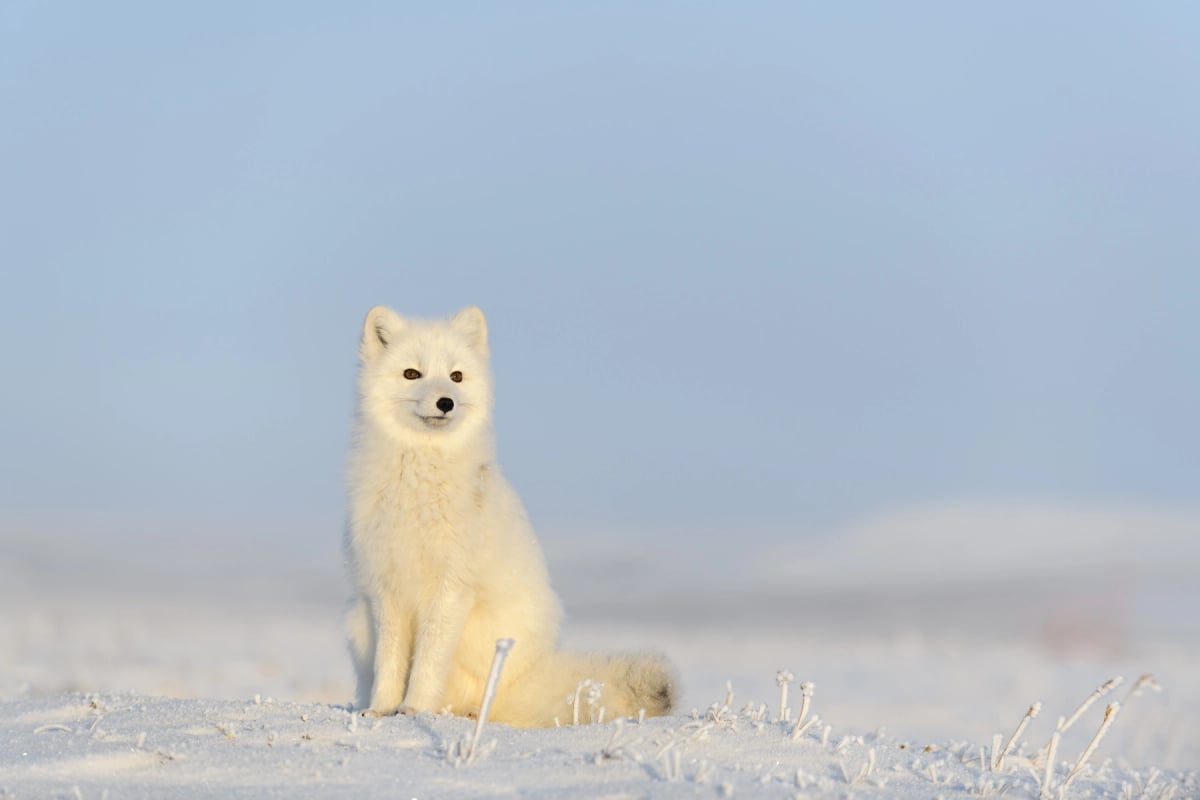
Arctic foxes typically live in monogamous pairs during the breeding season and raise their young in dens excavated into the permafrost, often reusing the same burrow system across many generations. Litter size ranges from a few to more than a dozen pups depending on food availability. Outside the breeding season, individuals roam vast distances across tundra and sea ice in search of food. They are known to shadow polar bears for days at a time, feeding on the remains of seal kills. The species is less territorial than many other foxes and more tolerant of proximity to other individuals.
Conservation
The Arctic fox is classified as Least Concern by the IUCN, with a global population estimated at around 630,000 individuals. However, the Scandinavian mainland population is critically threatened. Intensive hunting in the early twentieth century reduced it to just a few hundred individuals in Norway, Sweden, and Finland. Competition with the red fox, which is expanding north due to climate change, adds ongoing pressure. Conservation programs including legal protection and supplemental feeding have helped local numbers recover slowly since the 1990s. Climate change remains the most significant structural threat to the species over the coming decades.
Where it is found
The Arctic Fox can be found in places such as:
Researched and written by Juan Pablo. Sources: IUCN Red List, scientific literature and regional field guides. Last updated: .
Technical factsheet



Frequently Asked Questions
What does the Arctic fox eat?
The Arctic fox is an opportunistic predator and scavenger. Lemmings are its main prey across most of its range, and their population cycles directly affect fox numbers and reproduction. When lemmings are scarce, it turns to voles, birds, eggs, fish, berries, and carrion. Coastal populations rely heavily on seabirds during summer. It also follows polar bears on sea ice, feeding on the remains of seal kills, and stores surplus food in the permafrost to survive lean periods.
How does the Arctic fox survive temperatures of −50 °C?
The Arctic fox has one of the most effective insulating coats of any mammal relative to its body size. Multiple layers of dense fur trap heat efficiently, and its compact body with small, rounded ears minimizes the surface area that loses warmth to the air. Its paws are also covered in fur. These physical adaptations allow the fox to remain active at temperatures as low as −50 °C without needing to shelter in a burrow or enter any form of hibernation.
Why does the Arctic fox change coat color?
The Arctic fox changes coat color with the seasons as camouflage. In winter its coat turns white to blend into snow and ice, making it nearly invisible to both predators and prey. In summer the coat sheds and regrows in brown or grey tones that match the exposed tundra vegetation. The change is triggered by shifts in day length rather than temperature. Some populations in Iceland and Greenland maintain a permanently grey coat, known as the blue morph.
Is the Arctic fox endangered?
Globally, the Arctic fox is classified as Least Concern by the IUCN, with an estimated population of around 630,000 individuals. However, the Scandinavian mainland population is critically threatened. Intensive hunting in the early twentieth century reduced it to just a few hundred individuals in Norway, Sweden, and Finland. Competition with the red fox, which is expanding north due to climate change, adds ongoing pressure. Conservation programs including legal protection and supplemental feeding have helped local numbers recover slowly since the 1990s.
Where do Arctic foxes live?
The Arctic fox inhabits tundra, sea ice margins, and coastal areas across the entire circumpolar north. Its range spans northern Canada, Alaska, Greenland, Iceland, Scandinavia, and the Russian Arctic, including numerous offshore islands. The species thrives on open tundra and around sea ice, where it follows polar bears and accesses marine food sources. Some individuals travel extraordinary distances across the frozen ocean, with tracked foxes having covered over 3,500 kilometers in a single journey.
Do Arctic foxes follow polar bears?
Following polar bears is a thoroughly documented behavior of the Arctic fox. Polar bears hunt ringed seals on sea ice and leave behind scraps that foxes consume quickly. A single kill can provide enough food to sustain a fox for several days. This relationship is especially important in winter, when other prey is scarce. Foxes have been tracked traveling hundreds of kilometers onto sea ice to follow bears, showing how closely their survival can depend on a much larger predator.