Fossa
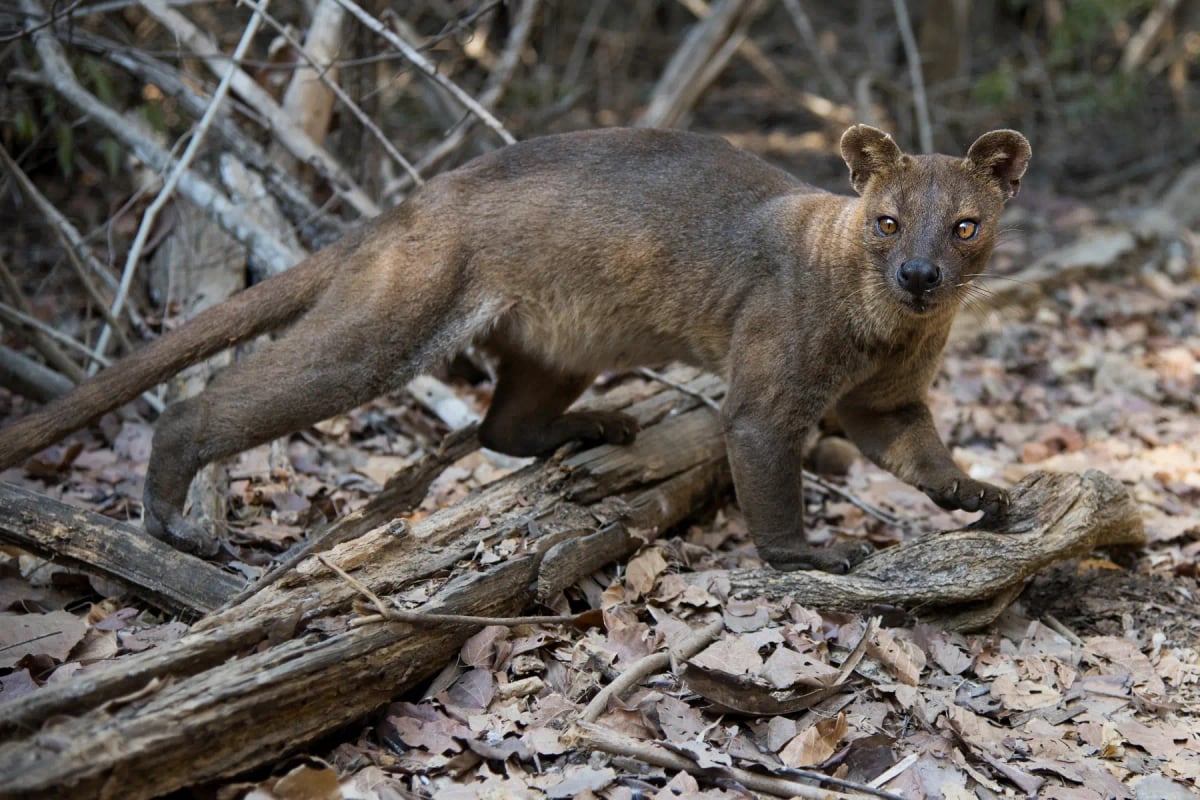
The fossa is Madagascar's largest carnivorous mammal and the island's only apex predator among mammals. Despite its cat-like appearance, it belongs to the family Eupleridae, which is closely related to mongooses. Its body is lean and muscular, typically measuring between 70 and 80 centimeters in length, not counting its long tail, which helps it balance while moving through trees. It has claws that are semi retractile and ankles that rotate backward, letting it climb down trunks headfirst. Lemurs make up a large share of its diet, though it also hunts rodents, birds, and reptiles. Fossas are cathemeral, meaning they can be active at any hour of the day or night depending on conditions. The IUCN classifies the species as Vulnerable, mainly because of widespread deforestation and direct hunting pressure across Madagascar.
Habitat and distribution
Found nowhere else on Earth, the fossa is entirely endemic to Madagascar. It occupies a wider range of forest types than many people expect, from the dense, humid rainforests along the eastern coast to the drier deciduous forests of the west and south. Fossas are also recorded in some areas of degraded forest, though they fare best where continuous forest cover remains intact. Elevation is not a major barrier, as individuals have been observed from sea level up into highland forests. Despite this broad presence across the island, suitable habitat has shrunk considerably due to decades of deforestation, and fossa populations are now increasingly fragmented and isolated from one another.
Diet
Lemurs sit at the top of the fossa's menu and can make up more than half of its diet in forested areas where these primates are common. Beyond lemurs, the fossa preys on tenrecs, rodents, lizards, snakes, and birds, adjusting what it hunts according to what is available in its territory at any given time. This flexibility is part of what makes it such an effective predator. The fossa hunts both on the ground and up in the tree canopy, using sharp claws and powerful legs to close in on prey quickly. In areas where natural prey has become scarce due to habitat loss, fossas occasionally target domestic poultry, which increases conflict with local communities.
Behavior
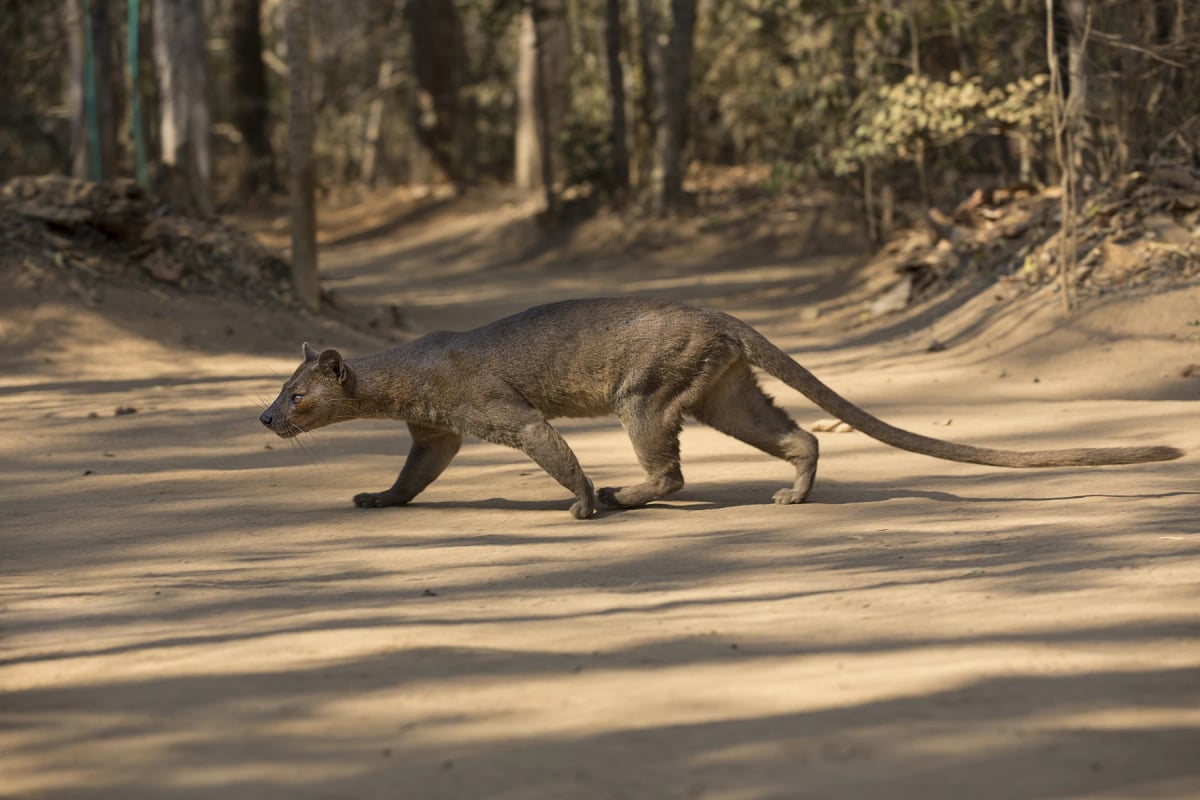
Solitary by nature, adult fossas spend most of their lives alone, coming together only to breed. Each individual patrols a large home range, which it marks using scent glands located on its chest and underside. One of the fossa's most striking traits is its cathemerality: rather than being strictly nocturnal or diurnal, it adjusts its activity to suit conditions, hunting at night, at dawn, or in full daylight depending on temperature, prey availability, and season. In the trees, it moves with remarkable confidence, thanks to rotating ankles that allow it to descend headfirst and a long tail that acts as a counterbalance. On the ground, it covers distance in a low, fluid gallop.
Ecological role
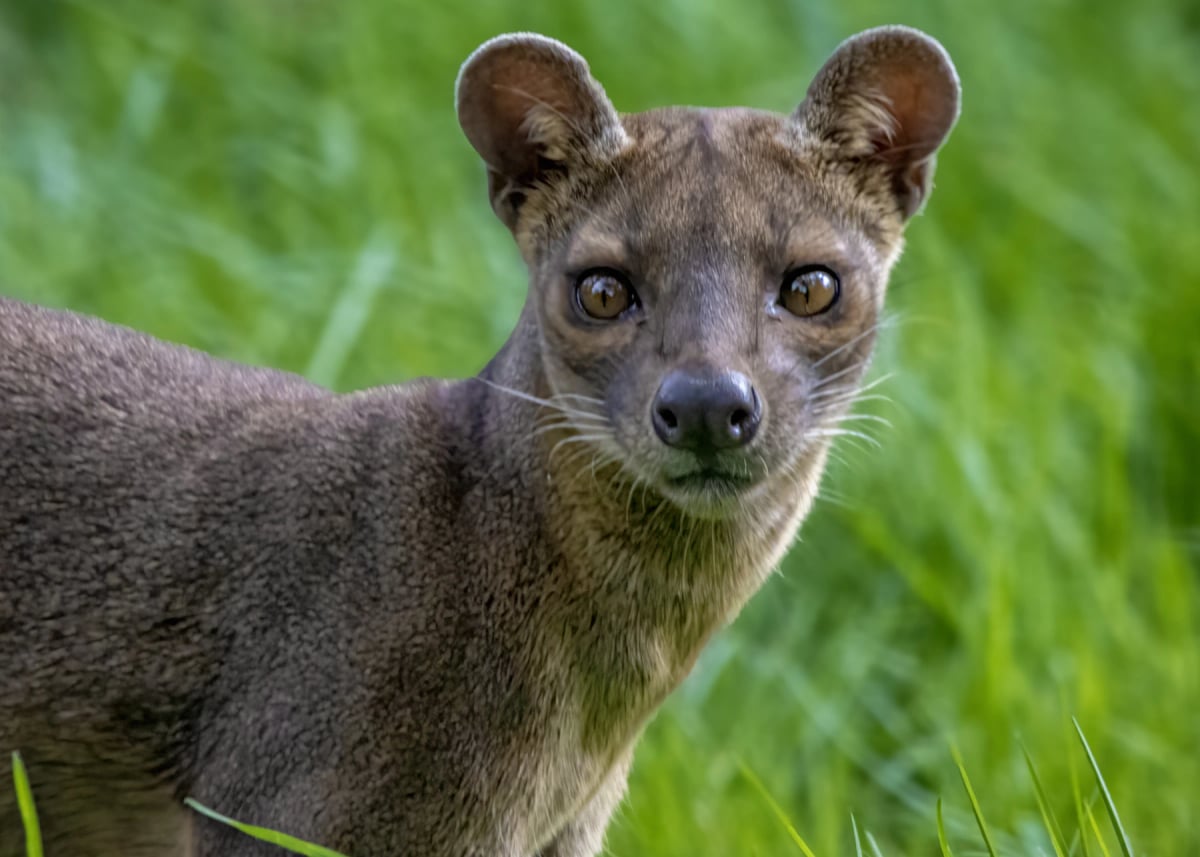
Madagascar's ecosystems depend on the fossa in ways that go well beyond simple predation. As the island's only mammalian apex predator, it keeps prey populations in check, particularly lemurs, which in turn shapes how vegetation regenerates across the forest. Without a top predator controlling herbivore numbers, plant communities can shift in ways that affect the entire ecosystem. The fossa also influences the behavior of its prey species, encouraging movement patterns that prevent any one area from being overgrazed or overbrowsed. Its disappearance from a region tends to trigger a cascade of changes that destabilize the local food web. This makes protecting the fossa not just a matter of saving one species, but of maintaining the health of Madagascar's forests as a whole.
Conservation
The IUCN lists the fossa as Vulnerable, a status that reflects real and ongoing pressure across its range. Deforestation is the single greatest threat: Madagascar has lost a large portion of its original forest cover, and clearing for agriculture continues to shrink and fragment the habitat the fossa needs to survive. Direct hunting also takes a toll, as fossas are sometimes killed in retaliation for taking livestock. Several protected areas across the island provide refuge, including Kirindy Mitea National Park and Ranomafana National Park, where research and monitoring programs are active. Conservation organizations work with local communities to reduce conflict and raise awareness about the fossa's role in the ecosystem, recognizing that long-term protection depends on the support of the people who live alongside this animal.
5 Curiosities about the Fossa
Here are five things about the fossa that tend to surprise people: • Its closest living relatives are not cats but mongooses. The fossa belongs to the family Eupleridae, a group found only in Madagascar. • Females have a temporary trait called transient masculinization: young females develop physical features that resemble those of males, which researchers believe may reduce aggression from adults. • Mating takes place in the treetops, with females choosing a specific tree where they call to attract males over several days. • Fossas are born with their eyes closed and are completely dependent on their mother for the first few months of life. • Despite their size, fossas can leap between tree branches with speed and precision, making them effective hunters both on the ground and high in the canopy.
Researched and written by Juan Pablo. Sources: IUCN Red List, scientific literature and regional field guides. Last updated: .
Technical factsheet
Frequently Asked Questions
What does a fossa eat?
Lemurs are the fossa's main prey and can account for more than half of its diet. It also hunts rodents, tenrecs, lizards, snakes, and birds, switching targets based on what is available. The fossa is equally comfortable hunting on the ground or up in the trees, which makes it a versatile predator capable of catching a wide variety of animals throughout the year.
Where does the fossa live?
The fossa lives exclusively in Madagascar and nowhere else on Earth. It adapts to several types of forest, including the humid rainforests of the east coast and the dry deciduous forests of the west and south. It can be found from sea level up to highland elevations. However, widespread deforestation has shrunk and fragmented its habitat significantly, leaving many populations cut off from one another.
Is the fossa a cat?
It looks like one, but no. The fossa belongs to the family Eupleridae, a group found only in Madagascar that is more closely related to mongooses than to cats. Its cat-like body shape is the result of evolving separately on an isolated island over millions of years, developing similar features to cats simply because they suited the same hunting lifestyle.
Is the fossa dangerous to humans?
The fossa poses very little threat to people. It is a shy animal that naturally avoids human contact and prefers to stay deep in forested areas. Conflicts with people arise mainly when fossas take domestic chickens near villages, which sometimes leads to retaliatory killings. There are no well-documented cases of fossas attacking humans unprovoked, and most encounters in the wild end with the fossa retreating.
How does the fossa climb trees?
The fossa is built for climbing. Its ankles can rotate backward, allowing it to descend tree trunks headfirst, much like a squirrel. Its claws are semi-retractile, giving it a strong grip on bark. A long tail, roughly as long as its body, helps it stay balanced while moving between branches. These traits make it one of the most agile climbers among Madagascar's mammals.
Why is the fossa endangered?
The fossa is classified as Vulnerable by the IUCN. The biggest threat it faces is deforestation. Madagascar has lost a large share of its original forest cover, and clearing for agriculture keeps reducing the habitat the fossa needs. Hunting also plays a role, as fossas are sometimes killed for taking livestock. These combined pressures have left many populations small, isolated, and increasingly at risk.
How big is a fossa?
A fossa's body typically measures between 70 and 80 centimeters from head to tail base, with the tail adding a similar length again. Adults generally weigh between 5.5 and 8.5 kilograms, with males tending to be larger than females. Despite not being enormous in absolute size, the fossa is the largest carnivorous mammal in Madagascar by a considerable margin.