European Wildcat
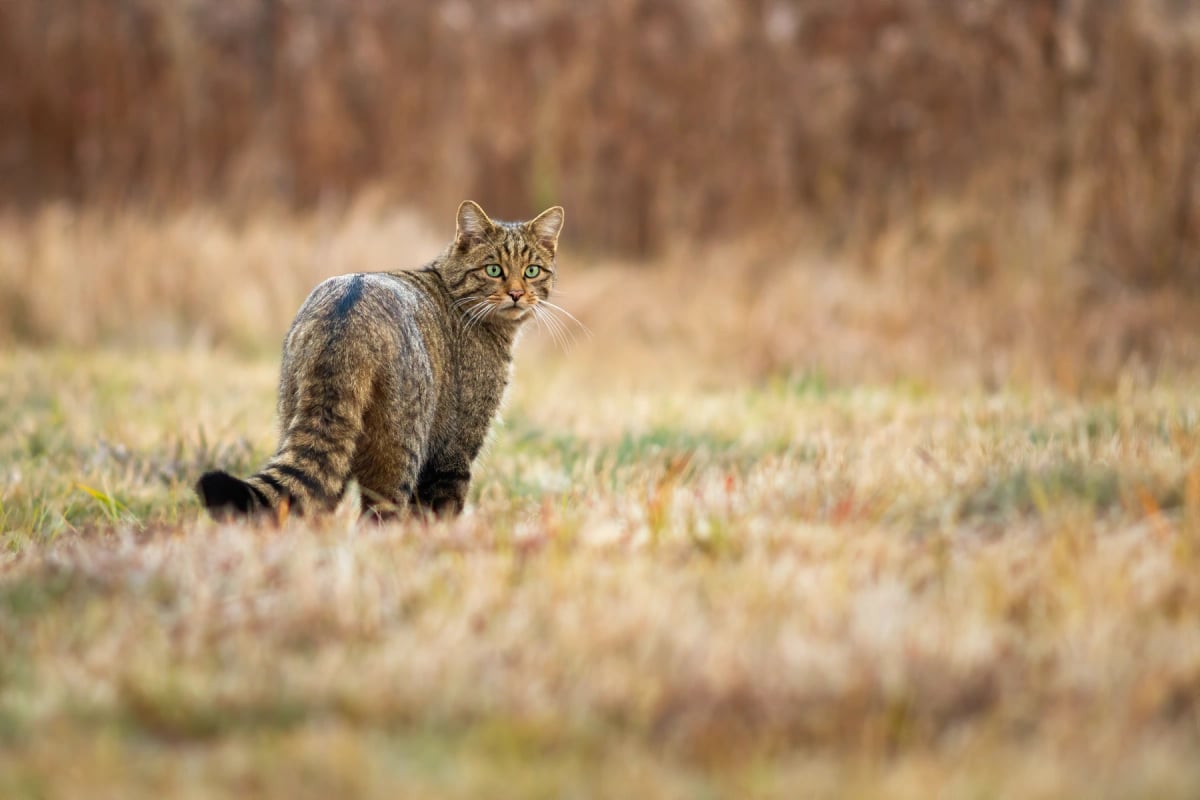
The European wildcat (Felis silvestris silvestris) is a sturdy wild feline native to forests and scrublands across much of Europe. It is noticeably bulkier than a domestic cat, with a broad, flat head, dense fur marked with dark tabby stripes, and a thick tail that ends in a blunt, rounded tip with distinct dark rings. These features reliably set it apart from feral domestic cats. It hunts mostly at night, targeting small rodents, rabbits, and birds, and plays a genuine role in keeping prey populations in check. Each individual holds a territory it marks with scent glands and urine. Crossbreeding with domestic cats is the single greatest threat to the species, as it erodes the genetic identity of wild populations. Habitat loss and road collisions also take a toll. It is listed as Least Concern by the IUCN, though many local populations have declined significantly.
Habitat and distribution
Across its range, the European wildcat shows a strong preference for broadleaf and mixed forests with dense undergrowth, where it can hunt and shelter with ease. It is present across much of Europe, from the Iberian Peninsula in the west through central Europe and into Turkey and the Caucasus in the east. Scotland holds an isolated northern population. The species avoids open agricultural plains and densely built areas, but it thrives in landscapes where patches of woodland sit alongside scrub, meadows, and river corridors. Altitude is not a barrier, as wildcats are recorded in mountain forests well above 2,000 metres in some parts of their range. Connectivity between forest patches is important, since isolated populations face greater pressure from inbreeding and local decline.
Diet
Small mammals make up the core of the European wildcat's diet, with field voles, wood mice, and rabbits being taken most often. Studies of stomach contents and scat across several European countries confirm that rodents alone can account for the majority of prey items year round. When small mammals are scarce, wildcats will take birds, lizards, frogs, and large insects to supplement their intake. Rabbits are particularly important in Spain and Portugal, where they form a significant share of the diet. Unlike domestic cats, European wildcats rarely scavenge and rely almost entirely on prey they catch themselves. Their hunting style is classic for a stalking feline: a slow, careful approach followed by a short, fast rush to close the distance before striking.
Behavior
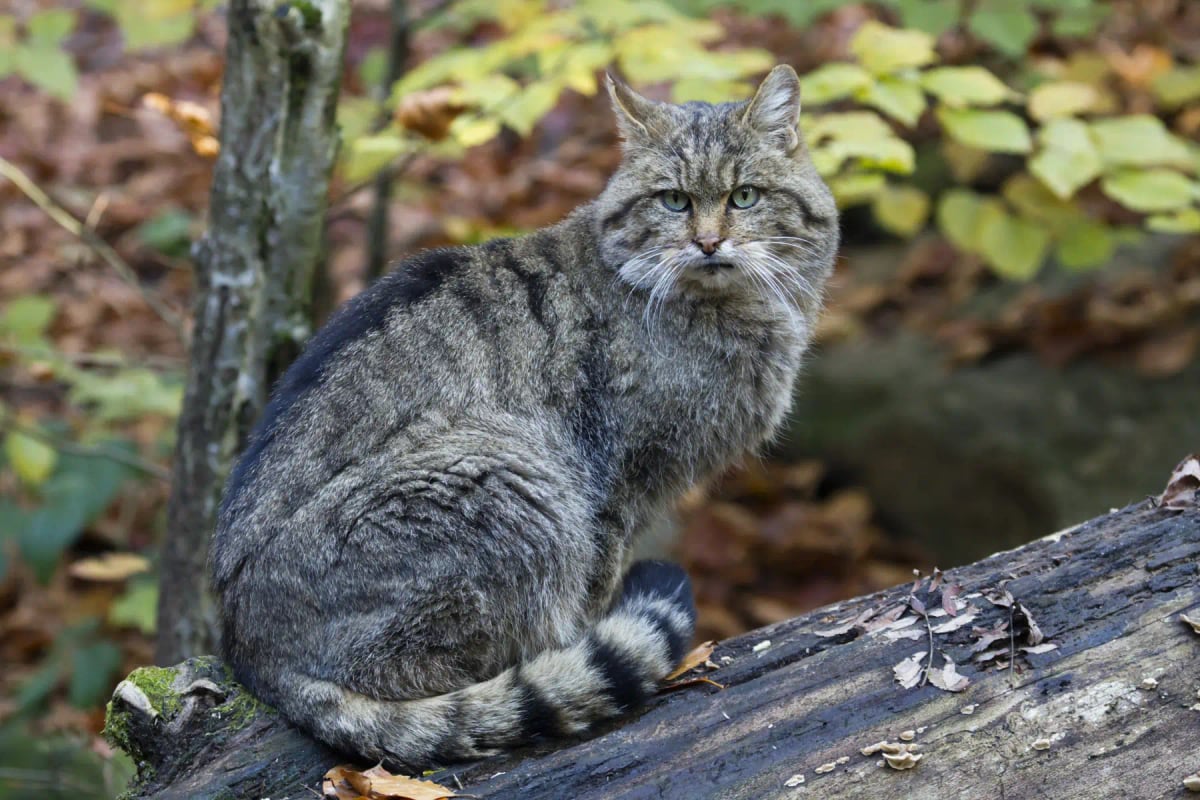
Solitary by nature, the European wildcat spends most of its life alone outside of the breeding season. Activity peaks at dusk and dawn, though individuals in areas with little human disturbance may also hunt during the day. Each cat holds a territory it defends through scent marking with urine, feces, and secretions from glands near the tail. Male territories are larger than those of females and often overlap with the ranges of several females. Mating takes place between January and March, and after a gestation of roughly 63 to 68 days, the female gives birth to a litter of two to four kittens, usually in a den hidden inside a hollow tree, rock crevice, or dense thicket. The kittens stay with their mother for around five months before becoming independent.
Threats
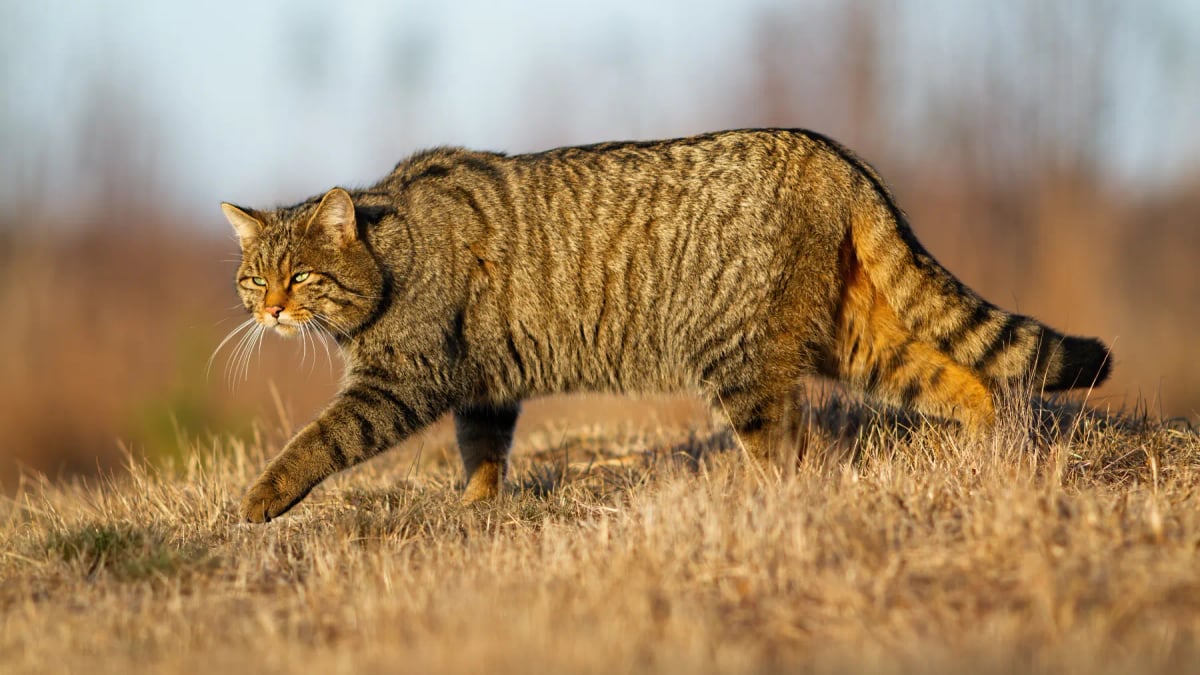
Of all the pressures facing the European wildcat today, hybridization with domestic and feral cats is considered the most serious. When wildcats and domestic cats interbreed, their offspring carry a mix of genes that gradually erodes the distinct genetic identity of wild populations. Genetic surveys in several countries have found that many animals once assumed to be pure wildcats were in fact hybrids. Beyond hybridization, the loss and fragmentation of forest habitat removes the cover wildcats depend on for hunting and denning. Roads running through or near forested areas are a consistent source of mortality, with vehicle collisions recorded as a notable cause of death in countries including Germany, France, and Italy. Persecution, though now illegal across most of the range, still occurs in some areas where wildcats are blamed for taking poultry.
Conservation
Protection under law is a foundation of conservation efforts for this species. The European wildcat is listed on Appendix II of the Bern Convention and on Annex IV of the EU Habitats Directive, which obliges member states to ensure its protection. Genetic monitoring programs now run in several countries to identify pure populations and track the spread of hybridization. In the United Kingdom, a reintroduction program in England is under way, following the local extinction of wildcats centuries ago, with captive bred individuals being released into carefully selected sites. Forest restoration projects that improve habitat connectivity also benefit the species by allowing individuals to disperse and find mates without crossing open or built up ground. Public awareness campaigns help reduce road casualties and discourage the release of domestic cats into wildcat habitats.
Where it is found
The European Wildcat can be found in places such as:
Researched and written by Juan Pablo. Sources: IUCN Red List, scientific literature and regional field guides. Last updated: .
Technical factsheet




Frequently Asked Questions
What does the European wildcat eat?
The European wildcat feeds mainly on small mammals such as voles, wood mice, and rabbits. Rodents make up the bulk of its diet throughout the year. When prey is harder to find, it will also catch birds, lizards, frogs, and large insects. In Spain and Portugal, rabbits are especially important. Unlike a domestic cat, the wildcat rarely scavenges and relies almost entirely on animals it hunts itself.
How is the European wildcat different from a domestic cat?
The European wildcat is noticeably stockier and heavier than a typical domestic cat. Its head is broader and flatter, its fur is thicker, and its tail is distinctly bushy with dark rings and a blunt, rounded tip rather than a pointed one. These physical traits are the most reliable way to tell the two apart at a glance. Wildcats are also far more shy and will almost never approach people or human settlements.
Where does the European wildcat live?
The European wildcat is found across a wide stretch of Europe, from Spain and Portugal in the west to Turkey and the Caucasus in the east. It favors broadleaf and mixed forests with plenty of dense undergrowth. It avoids open farmland and urban areas. Wildcats can live at high altitudes, with individuals recorded in mountain forests above 2,000 metres. Scotland holds a small and critically threatened isolated population in the north.
Is the European wildcat endangered?
Globally, the European wildcat is listed as Least Concern by the IUCN, meaning the species as a whole is not at immediate risk of extinction. However, many local populations have declined sharply. The biggest threat is crossbreeding with domestic and feral cats, which gradually erodes the genetic identity of wild populations. Habitat loss and road collisions add further pressure. Some regional populations, such as the one in Scotland, are critically close to disappearing.
Is the European wildcat solitary or does it live in groups?
The European wildcat is a solitary animal. Each individual lives and hunts alone, coming together with others only during the mating season, which runs from January to March. Every cat maintains its own territory, marked with urine and scent glands. Males hold larger territories than females and may overlap with the ranges of several females. Outside of mating, encounters between adults are uncommon and often involve some degree of territorial tension.
How many kittens does a European wildcat have?
A female European wildcat typically gives birth to a litter of two to four kittens after a gestation period of around 63 to 68 days. Births usually happen in spring, and the mother raises the kittens on her own in a sheltered den, often inside a hollow tree, a rock crevice, or a dense thicket. The young stay with their mother for about five months, after which they become independent and go on to establish their own territories.
Can a European wildcat breed with a domestic cat?
Yes, and this is considered the single greatest threat to the species. European wildcats and domestic or feral cats can interbreed and produce fertile offspring. Over generations, this mixing gradually replaces the wildcat's distinct genetic identity with that of the domestic cat. Genetic surveys in countries including Germany, France, and Spain have found that a significant portion of animals that looked like wildcats were actually hybrids. Controlling feral cat populations near forests is an important conservation priority.