Marsh Deer
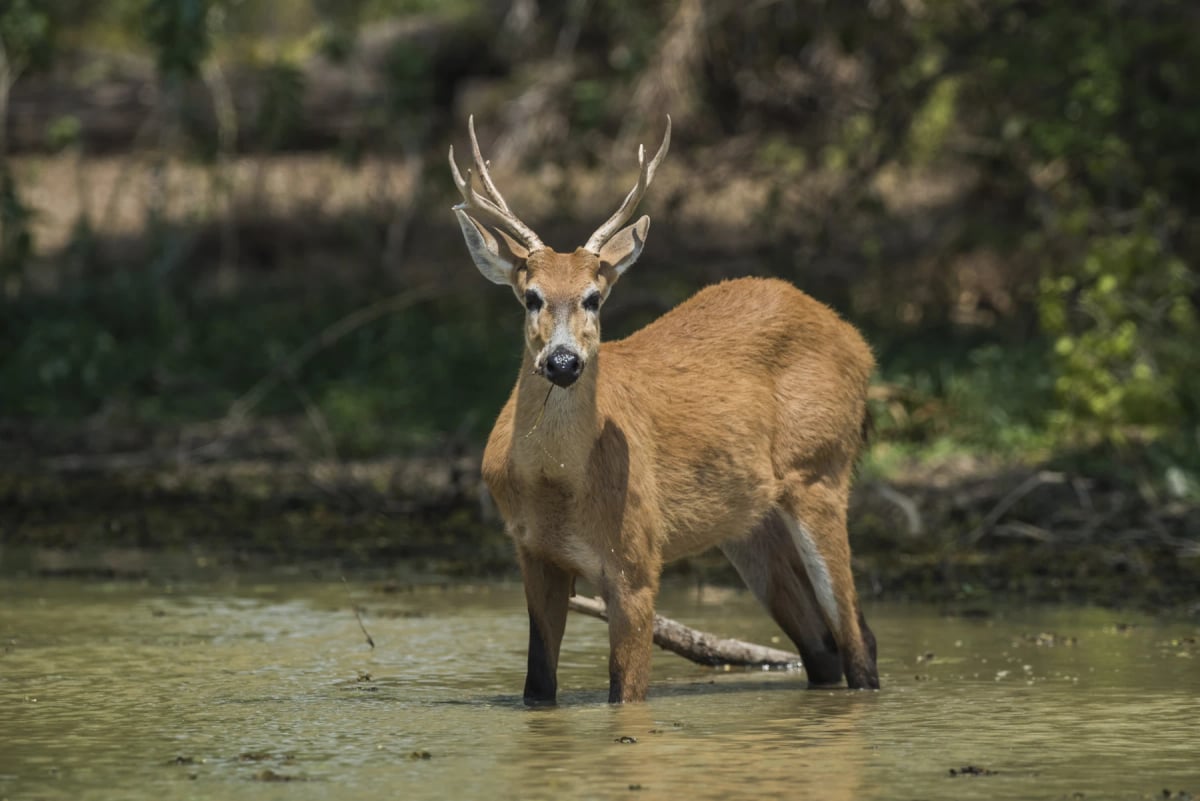
The marsh deer is the largest deer in South America, and everything about it is built for life in the water. Adults stand up to 115 cm at the shoulder and can weigh over 150 kg in the case of large males. Their hooves are wide and slightly webbed, spreading under weight to grip soft mud and prevent sinking. They wade through flooded grasslands and swamps across the Pantanal, the Iberá wetlands, and the floodplains of Bolivia and Paraguay, feeding on grasses, aquatic herbs, and the stems of emergent plants. They are also strong swimmers, crossing rivers with ease. Populations have dropped sharply due to the draining of wetlands, dam construction, disease spread by cattle, and poaching. The IUCN lists the species as Vulnerable, with fewer than 15,000 mature individuals estimated to remain across its range.
Habitat and distribution
Across central South America, the marsh deer is tied closely to wetland landscapes. Its range covers the Pantanal of Brazil and Bolivia, the Iberá wetlands of northeastern Argentina, and the floodplains along the Paraguay and Paraná rivers. Smaller populations persist in parts of Paraguay and in scattered wetland pockets throughout the region. The species depends on flooded grasslands, swamp edges, and riverine marshes where water levels rise and fall with the seasons. It avoids dense forest and dry upland terrain, rarely straying far from standing water. Seasonal flooding shapes where individuals move and feed, and large connected wetland systems are essential for sustaining healthy populations. Habitat fragmentation has pushed many groups into isolated patches, reducing their ability to find mates and fresh feeding grounds.
Diet
Food for the marsh deer comes almost entirely from the wetland itself. It grazes on grasses and sedges growing along flooded margins, browses the stems and leaves of emergent aquatic plants, and pulls up submerged vegetation from shallow water. Aquatic herbs form a particularly important part of its diet during the wet season, when rising water levels push terrestrial grasses out of reach. The deer uses its long legs to wade into flooded areas and reach plants that smaller grazers cannot access. Feeding tends to be most active in the early morning and late afternoon, with animals resting in shaded cover during the hottest hours. Diet shifts somewhat with the season as plant availability changes, but the species remains dependent on wetland vegetation throughout the year.
Adaptations
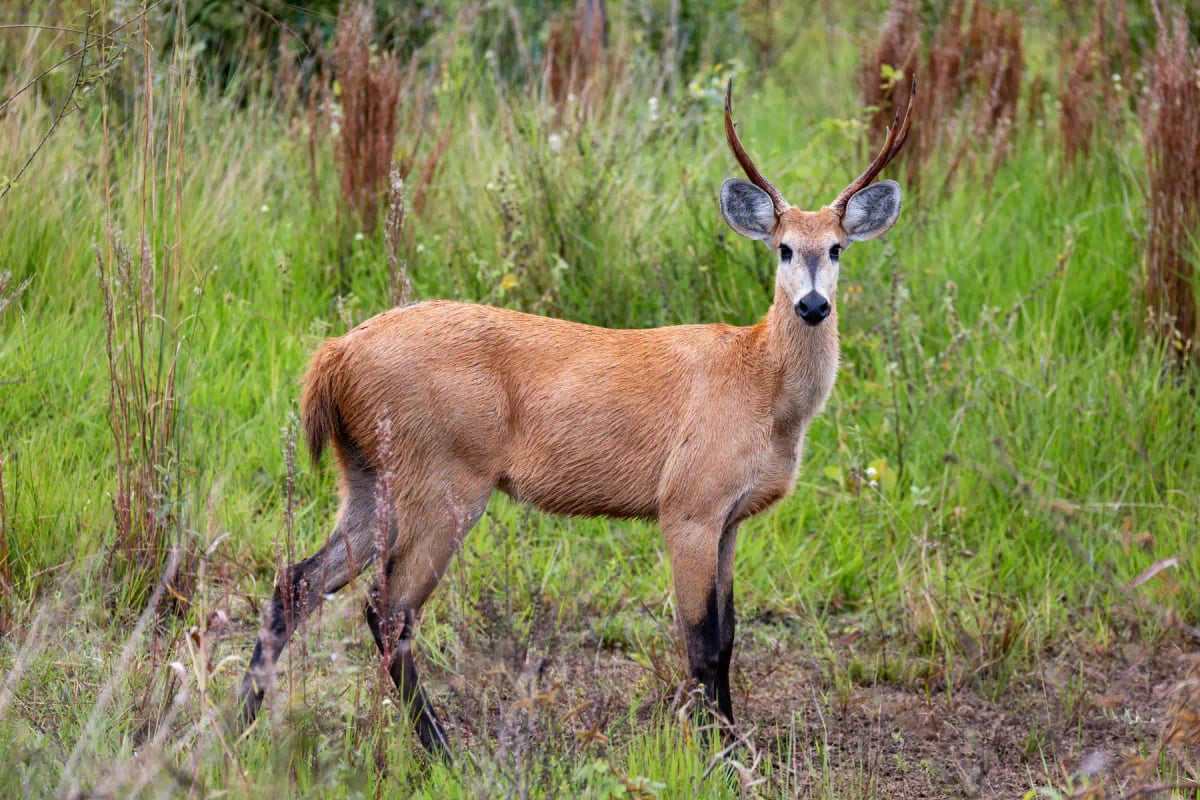
Few large mammals are as well suited to wetland life as the marsh deer. Its hooves are notably wide and bear a small amount of webbing between the toes, which spreads under the animal's weight to distribute pressure across soft mud and prevent sinking. Long legs keep the body well above the waterline during wading, and the deer is a capable swimmer, able to cross rivers and flooded channels with little effort. A coarse, reddish brown coat provides insulation and some protection against biting insects. Males grow large, branching antlers that can span over 60 cm, shed and regrown each year. The senses of smell and hearing are acute, helping the deer detect predators such as pumas and caimans in dense wetland vegetation where visibility is limited.
Conservation
The IUCN classifies the marsh deer as Vulnerable, with fewer than 15,000 mature individuals estimated to remain across its entire range. Wetland drainage for agriculture and cattle ranching has destroyed large portions of its habitat over recent decades. Dam construction along major rivers has flooded some areas while drying out others, disrupting the seasonal flood cycles the species depends on. Domestic livestock pose an additional threat by transmitting diseases such as foot and mouth disease and brucellosis to wild populations. Poaching and collisions with vehicles on roads cutting through wetland areas also take a toll. Conservation efforts include the legal protection of key wetland systems, captive breeding programs in Brazil and Argentina, and ongoing population monitoring. The Pantanal and Iberá wetlands remain the most critical areas for the species' survival over the long term.
Ecological role
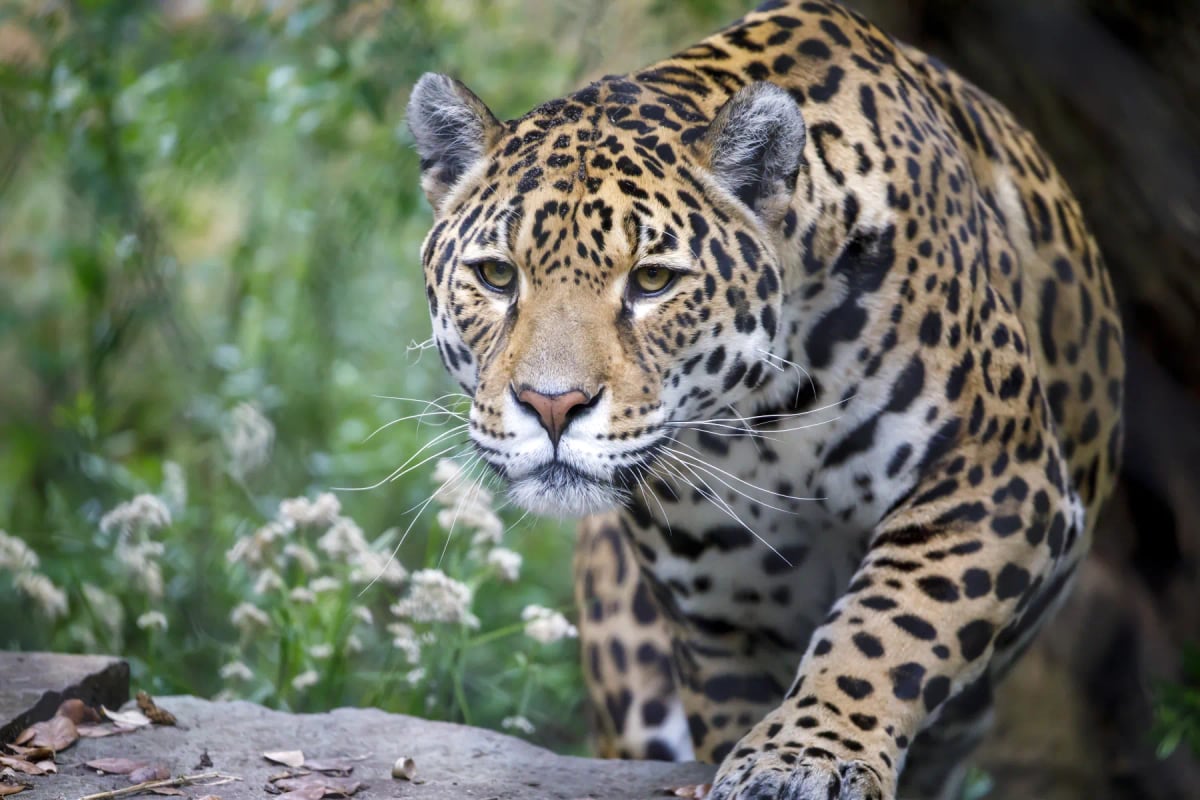
Wetland ecosystems benefit from the marsh deer in several ways. As a large grazer, it trims and opens dense stands of aquatic vegetation, which allows light to reach the water surface and supports a greater variety of plant species beneath. Seeds pass through its digestive system intact and are deposited across wide areas as the deer moves between feeding grounds, contributing to plant dispersal across the wetland. Its trails through flooded vegetation create pathways used by smaller animals, and its wallowing behavior can create shallow depressions that hold water and become microhabitats for invertebrates, amphibians, and fish. As prey, the marsh deer is an important food source for large predators including pumas and, in some regions, jaguars. The species is woven into the food web and vegetation structure of every wetland system it inhabits.
5 Curiosities about the Marsh Deer
Here are five things about the marsh deer that tend to surprise people: • It holds the title of the largest deer in South America, with big males topping 150 kg and standing up to 115 cm at the shoulder. • Its toes have a small amount of webbing between them, a feature shared with very few other deer species in the world. • Males grow impressive antlers with multiple branches that can reach over 60 cm across, which they shed and regrow every year. • The species is largely active at dawn and dusk, spending the hottest part of the day resting in cover near the water. • Domestic cattle are among its biggest indirect threats, as livestock diseases can spread to wild populations and have caused local die-offs.
Researched and written by Juan Pablo. Sources: IUCN Red List, scientific literature and regional field guides. Last updated: .
Technical factsheet
Frequently Asked Questions
What does the marsh deer eat?
Marsh deer feed almost entirely on wetland plants. They graze on grasses and sedges along flooded margins, pull up submerged vegetation from shallow water, and browse the stems and leaves of emergent aquatic plants. During the wet season, when rising water covers drier ground, aquatic herbs become especially important. Their long legs let them wade into areas that smaller animals simply cannot reach.
Where does the marsh deer live?
The marsh deer is found across central South America, in Brazil, Bolivia, Argentina, and Paraguay. Its strongholds are the Pantanal, the Iberá wetlands of northeastern Argentina, and the floodplains along the Paraguay and Paraná rivers. The species sticks closely to flooded grasslands, swamp edges, and seasonal marshes. It avoids dry upland terrain almost entirely and rarely moves far from standing water.
Is the marsh deer endangered?
The marsh deer is listed as Vulnerable by the IUCN. Fewer than 15,000 mature individuals are estimated to survive across its entire range. The biggest threats are the draining of wetlands for agriculture, dam construction that disrupts seasonal flooding, diseases spread by domestic cattle, and poaching. Conservation programs in Brazil and Argentina are working to protect key wetland areas and monitor remaining populations.
How big is the marsh deer?
The marsh deer is the largest deer in South America. Adults stand up to 115 cm at the shoulder, and large males can weigh more than 150 kg. Males also grow branching antlers that can span over 60 cm across. Females are noticeably smaller than males. Despite their size, these deer move through flooded terrain with surprising ease thanks to their wide, slightly webbed hooves.
Can marsh deer swim?
Yes, marsh deer are strong swimmers and take to the water with ease. They regularly cross rivers and flooded channels as part of their daily movements. Their wide hooves spread under their weight to grip soft mud, and their long legs keep most of their body above the waterline when wading. Swimming comes naturally to them, which makes sense given that they spend nearly their entire lives in and around wetlands.
What are the marsh deer's main predators?
The marsh deer's main predators are pumas and jaguars. Caimans may also pose a threat when deer enter the water. Despite being large animals, marsh deer rely heavily on their sharp senses of smell and hearing to detect danger early, since the dense vegetation of wetlands limits how far they can see. Their ability to move quickly through flooded terrain gives them an advantage when fleeing a threat.
When are marsh deer most active?
Marsh deer are most active during the early morning and late afternoon. Like many large mammals in warm climates, they tend to rest in shaded cover near the water during the hottest hours of the day. This pattern helps them avoid heat stress and stay out of sight of predators during daylight. They can also be active at night, particularly in areas where human disturbance is more frequent during the day.