Black Swan
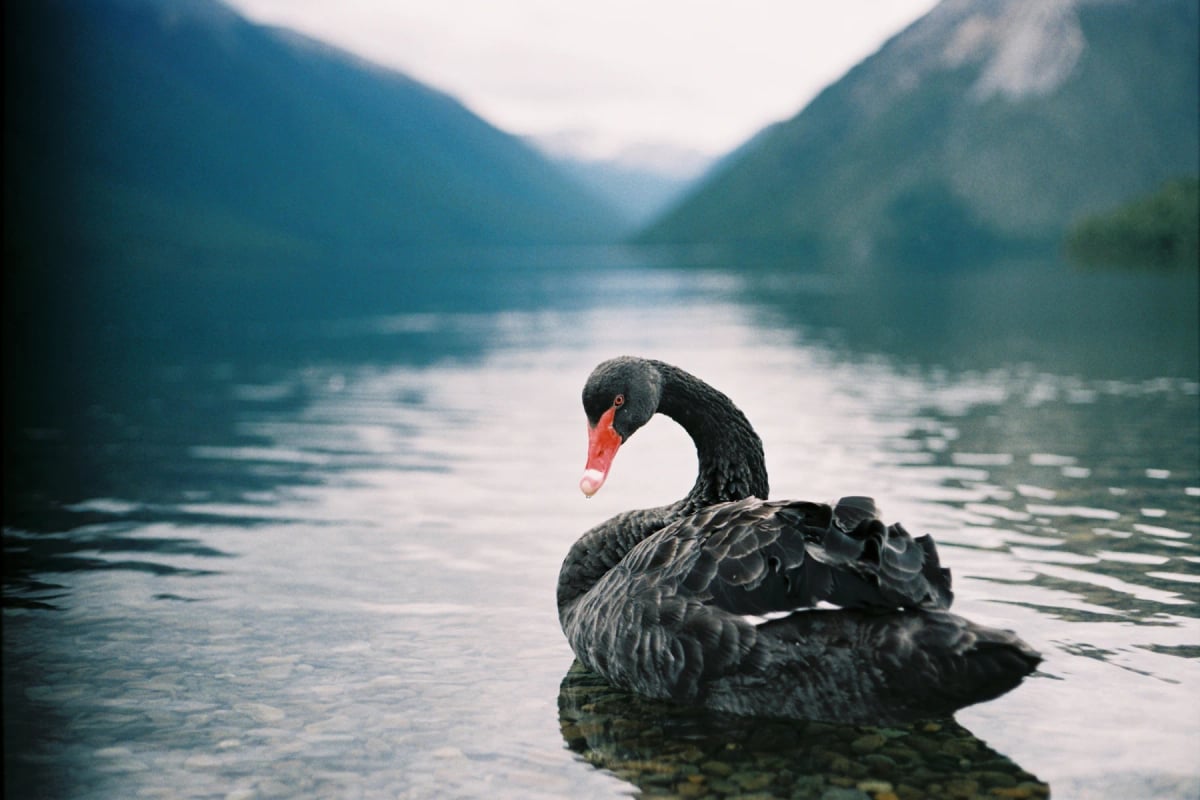
The black swan is native to Australia and now well established in New Zealand, where it was introduced in the nineteenth century. It is instantly recognizable by its entirely black plumage, bright red bill tipped with a white band, and white primary feathers that are only visible during flight. It favors shallow lakes, rivers, estuaries, and coastal wetlands rich in aquatic vegetation. Feeding is almost exclusively on aquatic plants and algae, carried out while swimming or occasionally grazing on land. Breeding pairs form lasting bonds and typically nest after periods of heavy rainfall, constructing large mounds of reeds and grasses near the water's edge. Clutches usually contain four to six pale green eggs, and both parents share incubation duties. Outside the breeding season, birds gather in flocks that can reach into the thousands, shifting location as water levels rise and fall. The global population exceeds one million and the species is listed as Least Concern.
Habitat and distribution
The black swan is native across much of Australia, where it occupies a wide range of wetland environments including shallow lakes, slow-moving rivers, estuaries, and coastal lagoons. It shows a strong preference for areas with abundant aquatic vegetation, which provides both food and nesting material. Populations are most dense in the southwest and southeast of Australia, particularly in Western Australia and Victoria. The species was deliberately introduced to New Zealand in the 1860s and is now firmly established there, especially around Lake Ellesmere and the Rotorua lakes district. Smaller introduced populations exist in parts of Europe and North America, though these remain localized. The black swan is highly nomadic within its native range, moving inland or toward the coast depending on rainfall patterns and the availability of suitable wetland habitat.
Built for water: physical and behavioral adaptations
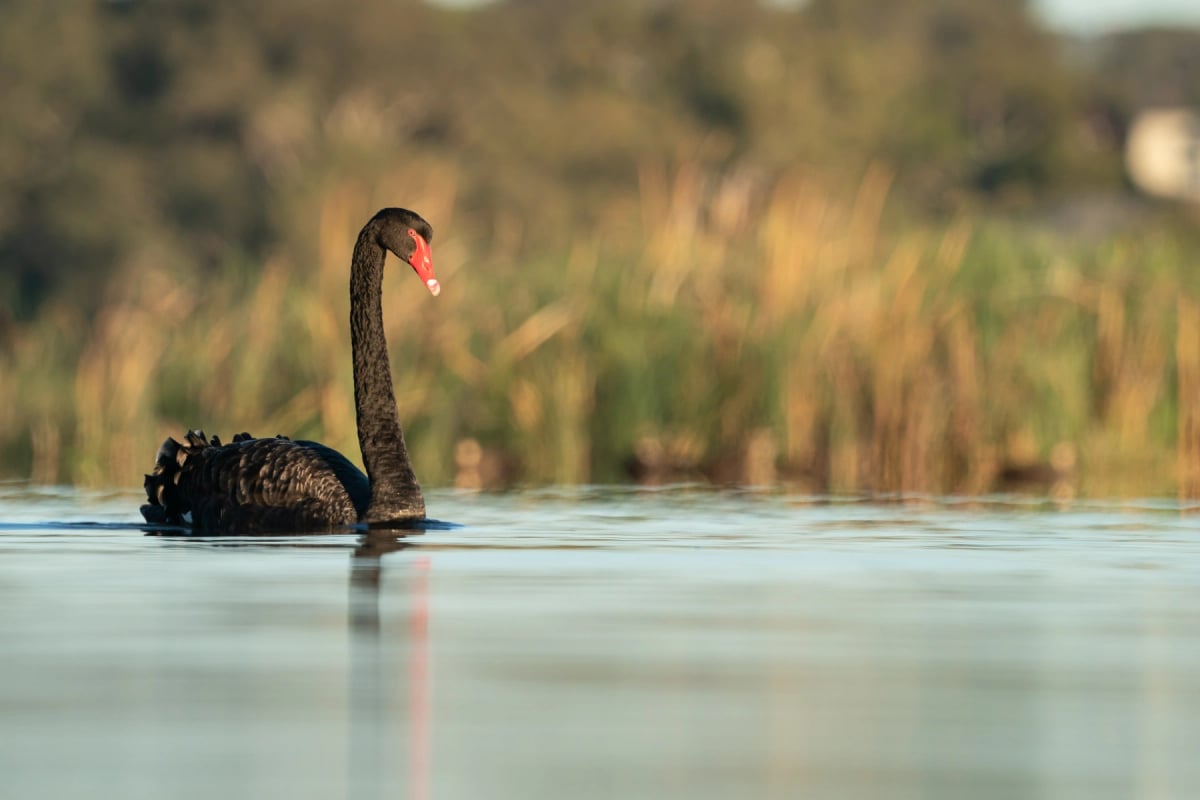
The black swan's entirely dark plumage is produced by melanin pigmentation, which also strengthens feather structure and reduces wear over time. Its long, flexible neck, one of the longest relative to body size among waterfowl, allows it to reach aquatic plants growing in water too deep for most other grazing birds. The bright red bill is broad and serrated along the edges, well suited to cropping vegetation just below the surface. White primary feathers, hidden at rest but revealed during flight, may play a role in flock communication. The species is a strong flier despite its large size, capable of traveling hundreds of kilometers overnight when relocating between wetlands. Its feet are fully webbed and set well back on the body, making it highly efficient in water while somewhat awkward on land.
Behavior and social life
Black swans form monogamous pair bonds that can persist for many years, and both parents take an active role in incubating eggs and raising cygnets. Nests are large platforms constructed from reeds, grasses, and other plant material, typically built at the water's edge or on small islands. Clutches of four to six pale green eggs are incubated for around 35 to 40 days. Outside the breeding season, black swans are highly gregarious and gather in flocks that sometimes number in the tens of thousands at key wetland sites. These gatherings shift location in response to changing water conditions, reflecting the species' nomadic tendencies. Like other swans, they can be territorial and aggressive near the nest, using wing displays and loud bugling calls to deter intruders. Vocalizations include a range of whistles and musical honking notes.
Conservation
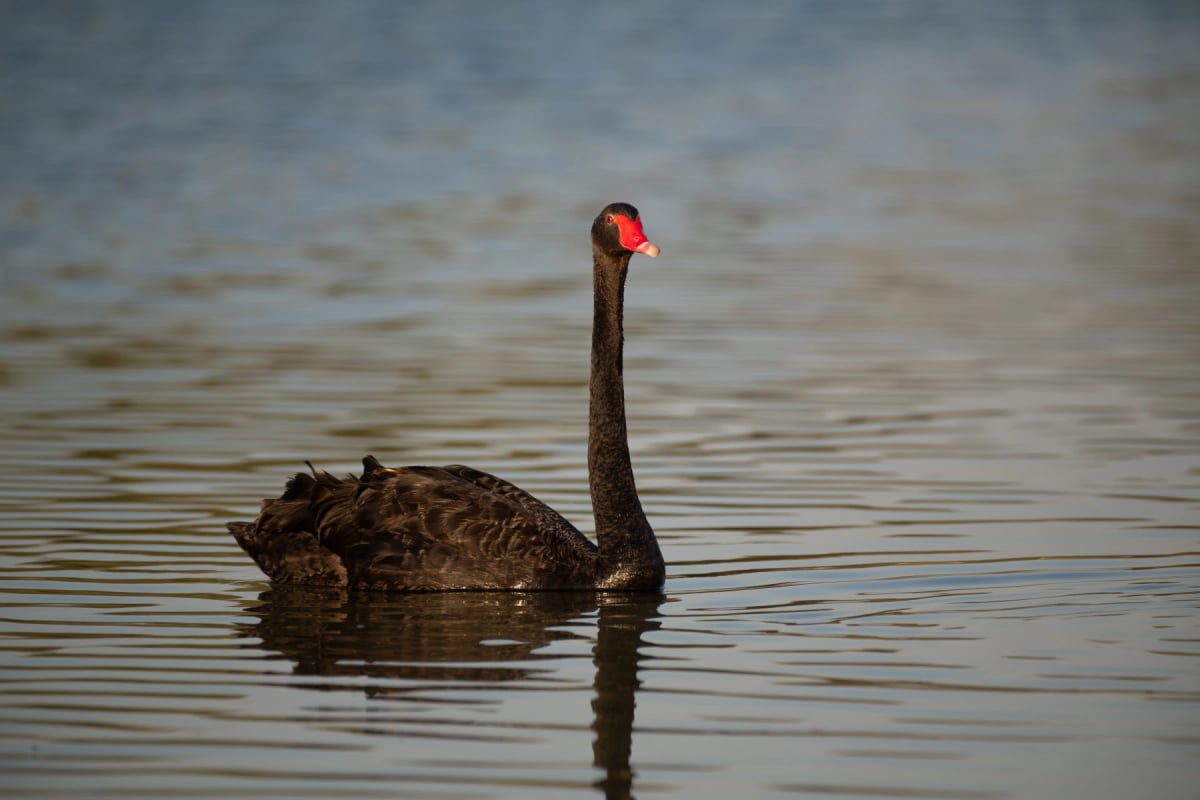
The black swan is listed as Least Concern on the IUCN Red List, reflecting its large and stable global population, which is estimated to exceed one million individuals. The species has benefited from legal protections in Australia, where it is not subject to commercial hunting. In Western Australia it holds cultural significance as the emblem of the state. Wetland drainage, agricultural runoff, and prolonged drought pose localized threats by reducing the availability of suitable habitat, and the species can suffer significant losses during severe droughts when water bodies dry up. However, its nomadic nature and ability to exploit a wide variety of wetland types give it considerable resilience. In New Zealand, introduced populations are carefully managed in some areas where swans compete with native waterbirds for resources. Overall, the outlook for the species remains positive.
Researched and written by Juan Pablo. Sources: IUCN Red List, scientific literature and regional field guides. Last updated: .
Technical factsheet
Frequently Asked Questions
What do black swans eat?
Black swans feed almost entirely on aquatic plants and algae, which they gather by submerging their long necks while swimming. Their serrated bill is well suited to cropping vegetation just below the water surface. They occasionally graze on grasses and other low-growing plants when on land, but the bulk of their diet comes from wetland vegetation. They do not actively pursue fish or other animal prey.
How long do black swans live?
Black swans typically live between 10 and 40 years, depending on conditions in the wild. In captivity, where threats from predators and drought are absent, individuals have been known to reach the upper end of that range. Their long lifespan is matched by lasting pair bonds, with mated pairs often staying together for many years and raising multiple clutches over the course of their lives.
Are black swans aggressive?
Black swans can be quite assertive, particularly during the breeding season when they are protecting a nest or young cygnets. They use loud calls, hissing, and powerful wing strikes to warn off intruders, including humans who approach too closely. Outside of nesting periods they are generally calm and tolerant, especially in areas where they have grown accustomed to people, such as parks and public lake shores.
Why are black swans black?
The black swan's dark plumage comes from high concentrations of melanin in the feathers. This pigmentation is not simply a color trait. It also makes the feathers more resistant to physical wear and UV damage compared with white feathers, which have little or no melanin. The black swan is the only swan species in the world where the entire body is covered in dark plumage, making it genuinely unique among its close relatives.
Can black swans fly?
Yes, black swans are strong and capable fliers. Despite their large size, they can cover hundreds of kilometers in a single night when moving between wetlands in search of better conditions. During flight, their white primary feathers become visible against the otherwise black body, creating a striking contrast. They need a long runway of open water to build up enough speed for takeoff, much like other large waterfowl.
Do black swans mate for life?
Black swans form monogamous pair bonds that often last for many years, and in some cases for life. However, pairs can separate and find new partners if one member of the pair dies or if repeated nesting attempts fail. Both parents share the work of incubation and caring for cygnets, which strengthens the bond between them. This cooperative approach to parenting is one of the reasons long-term pairing is so common in the species.